
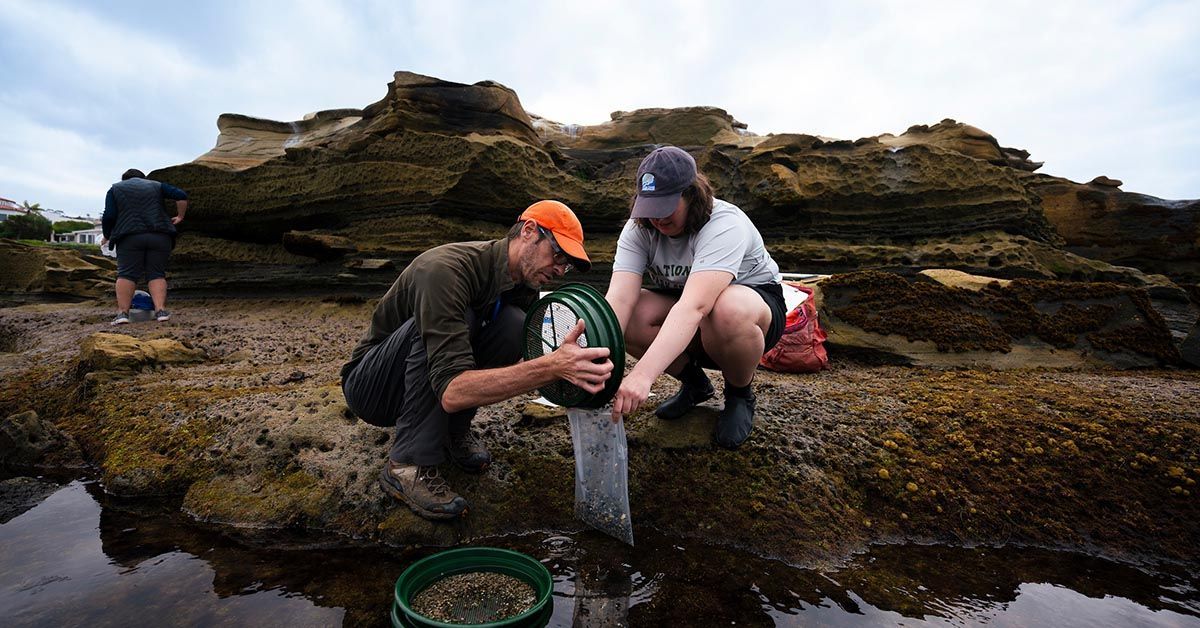
During each site visit, researchers collect select intertidal animals and algae, photograph specimens and preserve them using standardized methods. Specimens are then archived in major California museums and research collections, including the Scripps Benthic Invertebrate Collection, the Natural History Museum of Los Angeles County, the California Academy of Sciences and the UC Berkeley Herbarium, where they will remain available for future study.
Most specimens will undergo DNA barcoding — a process that generates a unique genetic identifier for each species — with further in-depth genome sequencing performed on a representative of each species. Associated tissue samples will be preserved in a long-term frozen archive that can support future genetic research and emerging technologies.
The researchers said most of the samples collected will be microscopic (think: algae scrapings), while many of the charismatic tide pool species — including octopuses, lobsters, sea anemones and large crabs — will largely be left in place, with only a photograph and small tissue samples collected when pertinent.
“Every sample will be tracked, catalogued and preserved — now and for the future,” said Dean Pentcheff, a leading scientist with the Natural History Museums of Los Angeles County, noting that all team members are united in their respect for the organisms they study. “If you love an octopus, you should love an ascidian too, and we all do.”