
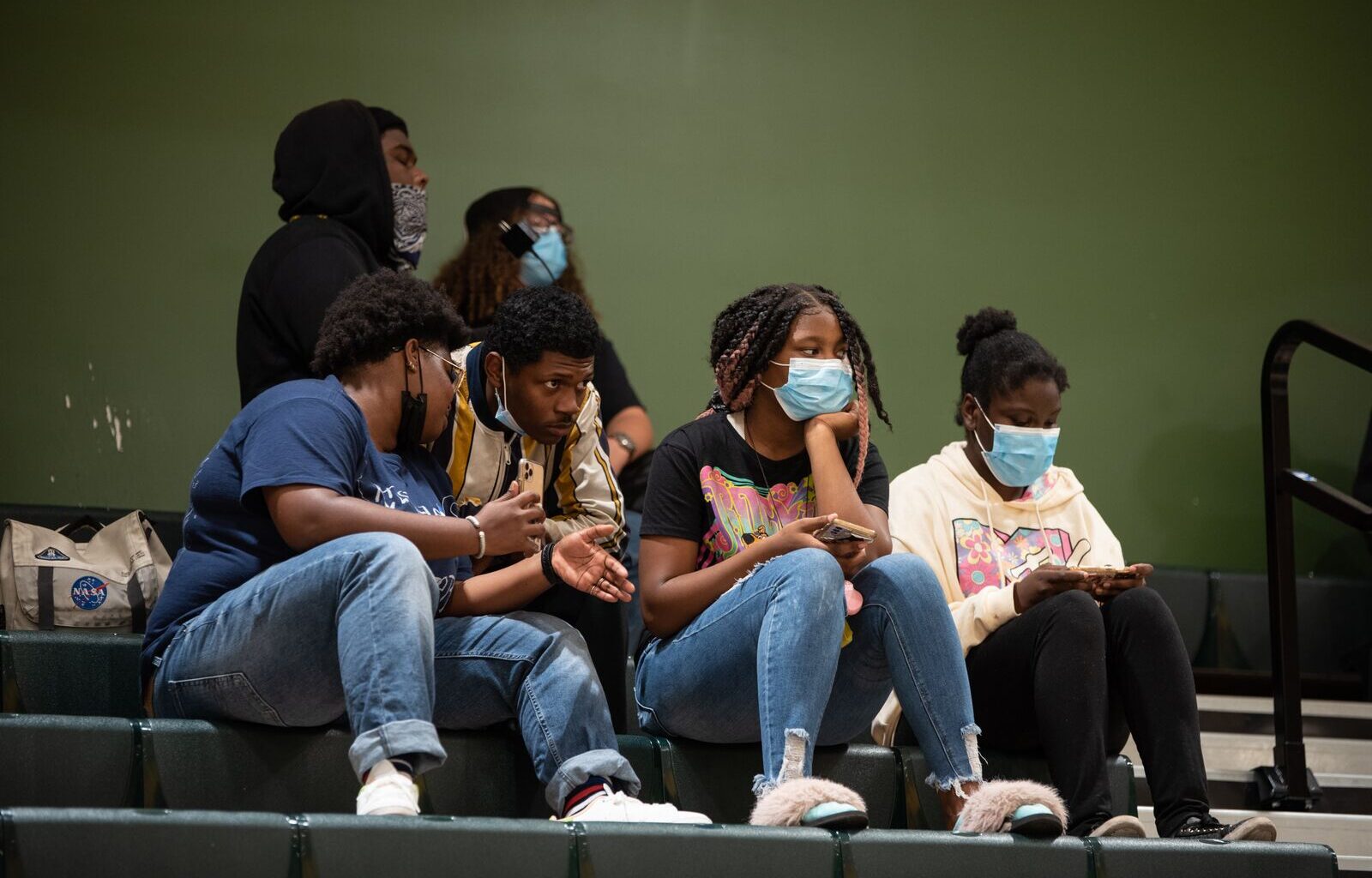
When students return to school on Aug. 10, they’ll have to turn in their phones at the beginning of every school day, and they won’t get them back until the final bell rings.
The Oakland Unified School District board on Wednesday approved a new rule prohibiting students from using cellphones during the day. The board’s decision was in response to Assembly Bill 3216, which required California schools to put limits on, or entirely prohibit the use of smartphones during school hours.
There are exceptions to the ban. Students can use phones for emergencies, if a staff member allows them to, if a doctor decides it is necessary for a student’s health or well-being, or if using a cellphone is part of a student’s Individualized Education Plan. The policy follows the restrictions laid out in the state law.
OUSD middle and high schools have enacted smartphone prohibitions over the last few years, but the new rule makes it a uniform practice across the entire 34,000-student district. It will be up to individual school sites to determine exactly how to collect and store devices and enforce the ban.
Overwhelming support for getting students away from tiny screens
Wednesday’s meeting was the last convening of the school board until August, which meant the agenda was lengthy, and the cellphone policy didn’t come up until 10:30 p.m. While few people chimed in about the ban in person, online comments were overwhelmingly in favor of making schools smartphone-free.
Jessica Sund, parent of an elementary school student, said her second grader is already being negatively impacted by cellphone culture in school.
“She feels left out since she has no phone, and then even the teachers are seemingly distracted by their watches and phones, and the children notice,” Sund commented. “The teachers are on TikTok, kids are on Snapchat, and if you happen to have a child interested in reading and learning, it makes me wonder when she, too, will be negatively influenced by other kids’ usage and want to participate.”
Yvette Hills, parent of a middle schooler and rising high school student, said neither of them has a cellphone, but they constantly talk about how often their peers are using theirs in class. “My biggest concern is the fact that when kids are on their phones, they aren’t interacting with each other, which is a skill that they will need to succeed down the road!”
Several commenters added that the ban should extend to after-school programs, too.
In a survey of district administrators, the vast majority supported a bell-to-bell ban, where students also wouldn’t be allowed to have their phones in between classes or during lunch. Their responses also emphasized the need for OUSD to communicate the standard districtwide, conduct outreach to families, and provide guidance on how exactly to implement the policy at school sites.
Amanda LaBerge, a teacher at Oakland Technical High School, commented that students in her class averaged ten to 12 hours of screen time a day on their phones last year.
“There is so much research and lived experience that clearly tells us this amount of phone/screen usage is not only detrimental to kids’ cognitive development, but also their social-emotional wellness and our community connectedness, with AI usage being yet another layer preventing kids from learning and growing healthily,” she wrote.
Another teacher said using a phone box “was instrumental in getting students to engage fully, reduce distractions and disruptions, and also reduce disputes/altercations due to constant social media use.”
The policy is estimated to cost around $500,000, largely to cover the purchases of pouches or lockers for storage. Nelson Alegria, OUSD’s executive director of safety, said he’ll come back to the board in the fall to present the disciplinary actions that students would face for cellphone violations. He said students won’t be suspended for having their phones, but they could be suspended for social media violations.
OUSD has struggled to contain fights and violence that begin or escalate on social media and then erupt on school campuses. School districts around the country, including Oakland Unified, have sued social media platforms such as Meta, alleging that their products have caused mental health crises in youth.
Director Mike Hutchinson, who represents District 4, abstained from the vote, while directors Rachel Latta, Jennifer Brouhard, VanCedric Williams, Patrice Berry, and Valarie Bachelor supported it. District 7’s Director Clifford Thompson was absent.
“*” indicates required fields