
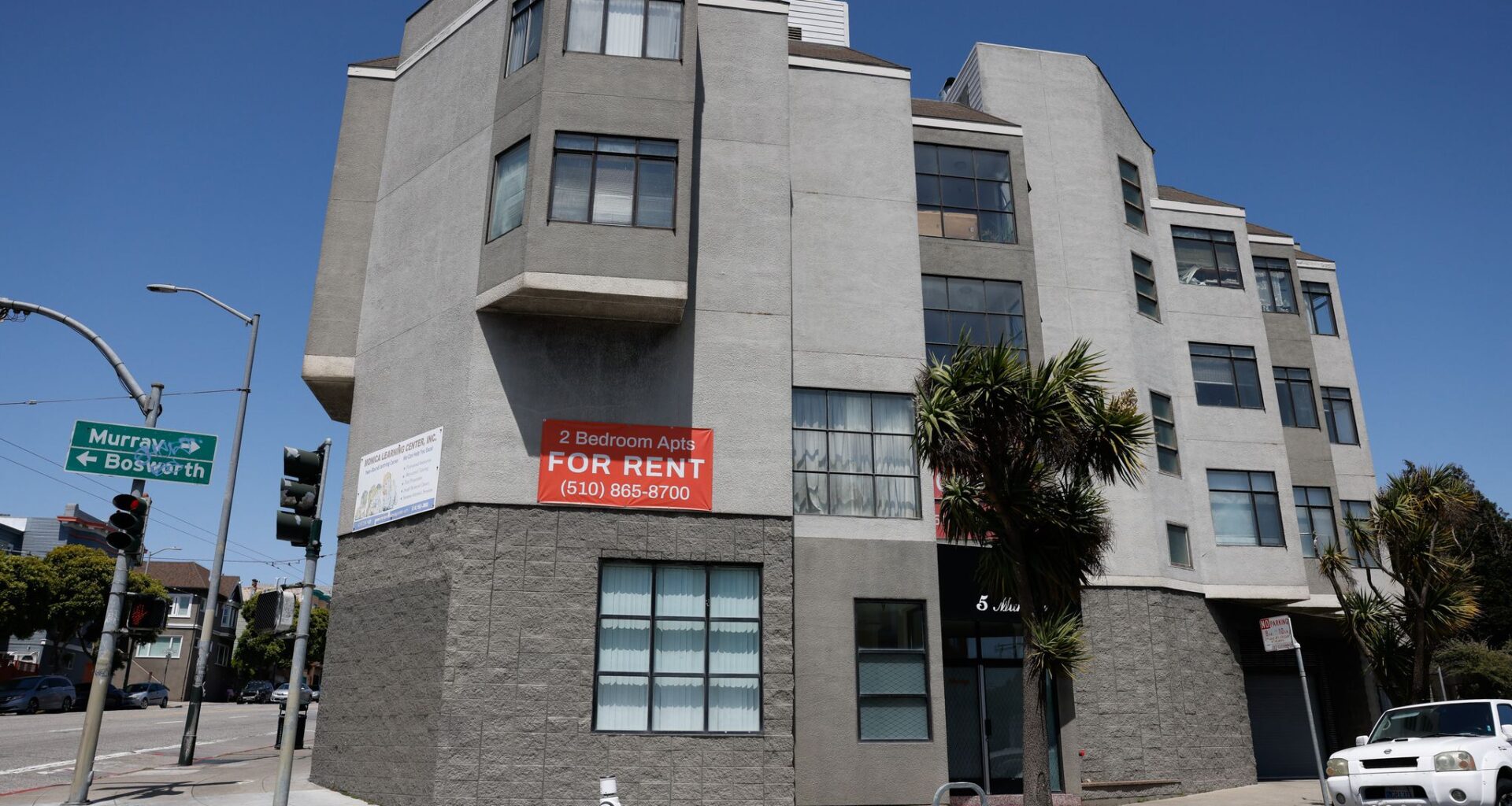
San Francisco rents are rising faster than in any other major city in the U.S., according to Apartment List data.
Lea Suzuki/The Chronicle
Hritik Chalse had found the perfect apartment: a room in a charming, rent-controlled two-bedroom unit in the Mission.
Unfortunately for him, so had nearly a hundred other people.
Chalse, a recent graduate from Duke University, has spent the better part of a month looking for a place to live in San Francisco. Like many of the city’s newcomers, he was drawn by the resurgent tech scene, which has brought a wave of artificial intelligence startups.
Article continues below this ad
It’s also turned San Francisco’s pandemic-cooled rent market red hot. After reaching out about the Mission apartment, Chalse found himself in a video call with 15 other people to tour the spot remotely. About 80 had inquired about it in total.
He didn’t get the apartment.
San Francisco Chronicle Logo
Make us a Preferred Source to get more of our news when you search.
Add Preferred Source
Chalse estimates he’s sent about 20 inquiries so far. Only two or three resulted in a response.
“It’s tedious,” he said.
Article continues below this ad
San Francisco rents are rising faster than in any other major city in the U.S., according to Apartment List data. The monthly median asking price for a one-bedroom unit surged from $2,980 in May 2025 to $3,480 in May 2026, a nearly 17% increase in just a year.
What renters are seeing, said Apartment List economist Rob Warnock, is the “dramatically unhealthy supply-demand relationship we have in the city.”
“If anything, that’s the crisis — the personal scenarios that families would face today if they have to reenter the housing market,” he added.
‘A whole new breed of tenant’
The kind of rents San Francisco is seeing now would have been unimaginable just a couple years ago. The pandemic drained demand for apartments in the city, which many tenants decided were too small or expensive to justify during an era of remote work and unstable employment.
Article continues below this ad
Facing dwindling demand, many landlords were forced to do what had once been unthinkable: lower their prices. The median rent for a one-bedroom rental tumbled from about $3,220 in May 2019 to $2,550 in May 2021, data from Apartment List shows, a greater drop than in any other major U.S. city except Oakland.
But in a little more than a year, the AI boom has squeezed out what little breathing room San Francisco renters got during the first half of this decade.
Inna Rubinchik, a Compass leasing agent who specializes in luxury San Francisco rentals, says she’s getting hundreds of calls and emails each day. Many of the tenants who reach out to her are venture capitalists or startup founders in their 20s or 30s with “a lot of money,” she said. One spent $50,000 furnishing a two-bedroom apartment. (“It’s nice furniture,” she added.)
Those professionals are heeding a simple fact that’s long been true in San Francisco: it’s often more economical to rent than buy. When the types of homes those tenants are interested in can cost eight figures, a $10,000-a-month rental is a fine deal.
Article continues below this ad
“That’s where we are,” Rubinchik said. “It’s a whole new breed of tenant.”
The demand generated by those tenants appears to be pushing up prices largely in the upper end of the market, said city economist Ted Egan. He pointed out that citywide, rents are still down 18% from their pre-pandemic heights after adjusting for inflation.
Another positive indicator, Egan said, is that the city hasn’t seen a surge in the kind of “no-fault” evictions that would suggest landlords are arbitrarily pushing tenants out of rent-controlled units — a major and controversial hallmark of the city’s last big tech boom.
Nonetheless, that doesn’t mean that people moving to or within the city won’t experience violent sticker shock at any price range. Rising cost pressure means that movers within the city could end up paying much more for less.
Article continues below this ad
The rent surge also coincides with a rise in the number of renters saying their landlord illegally raised their rent or provided substandard services. From January to May this year, the San Francisco Rent Board also received a record number of reports for a “decrease in housing services,” which include repairs, water, power and other services.
Charley Goss, government affairs spokesperson for the San Francisco Apartment Association, said that some “lone rogue actors” among landlords could even be taking advantage of the hot market by jacking rents above legal limits.
“People see what the market could be if they had a vacant unit, and perhaps they’re trying to push the envelope,” Goss said.
The great downzoning
Since its early years as a Gold Rush port, San Francisco has glimmered with the promise of untold riches. That persistent hope, whether built on gold or silicon, has brought waves of workers, as well as investors betting on their success.
“The exaggerated housing costs in the Bay Area — California, but especially the Bay Area — is due to our wealth,” said Richard Walker, a California historian and UC Berkeley professor emeritus.
Earlier boom periods were marked invariably by high housing costs. But something changed around the mid-20th century, when San Francisco rents — which had generally kept pace with inflation — suddenly jumped by as much as 25% per year, according to research from the Federal Reserve Bank of Philadelphia.
Experts say the massive surge in housing costs stemmed from a major slowdown in residential development around the 1970s. In coastal cities across the U.S., opposition to development had reached a boiling point, in part due to concerns about projects that had destroyed natural habitats and razed minority neighborhoods.
But the restrictions that resulted also throttled residential construction in already-developed areas. Environmental laws intended to assess the potential impacts of freeways and dams were soon applied in San Francisco to nearly any project, miring apartment proposals in hearings and lawsuits. President Richard Nixon’s 1973 moratorium on new public housing also choked off the pipeline of affordable units.
By 1978, San Francisco had joined the tide of cities restricting development. Facing complaints from homeowners about new apartments being built in their neighborhoods, officials set strict density limits on most of the city, effectively banning new multifamily construction on much of the west side.
It would prove to be perhaps the most consequential housing decision in the history of the city.
At the time, the move seemed to make sense. Like other big cities, San Francisco had been bleeding population to the suburbs for decades. Demand, the Planning Department reasoned at the time, probably wouldn’t increase by much. And by ensuring newly built homes were “compatible with established neighborhoods,” the city might be able to stem the flow.
But even then, there was some concern. “Depending on the extent to which (the downzoning) reduces the availability of suitable housing and housing prices and rents increase,” the Planning Department wrote, “some residents, both current and prospective, may be forced to look for housing outside San Francisco.”
The warning would prove prescient. San Francisco’s population rebounded over the next several decades, and rents surged. By the dot-com boom of the late 1990s, the city found itself ill-prepared to absorb the explosive demand — and wealth — created by the tech industry.
Cranes in the sky?
By the time the dot-com bubble burst, San Francisco officials realized the old zoning rules weren’t working. Despite some community pushback, they began to allow for denser development — but only in the formerly industrial areas on the east side of the city. As a result, almost all the new housing in San Francisco continues to be built in SoMa, Mission Bay, Dogpatch, Bayview and adjacent neighborhoods.
But those sporadic bursts in construction haven’t been enough to keep rents within reach for many existing and prospective residents, said Sarah Karlinsky, director of research and policy at the UC Berkeley Terner Center for Housing Innovation.
“We start seeing cranes in the sky as the market really takes off, but then not enough housing is built during that period,” Karlinsky said. “Then there’s a cooldown in the economy and the rents soften, so nothing gets built, and then things come roaring back and — lo and behold — there’s not enough housing.”
Walker, the historian, said there’s not much anyone can do about San Francisco’s boom-and-bust cycle. But he does think that slowing down the boom — which he believes is actually a bubble — could mitigate AI’s social and economic effects. For example, Walker said, raising taxes on stock trading or wealth would discourage investment, decreasing the chances an AI crash would result in a 2008-like recession.
“It’ll come down,” he said. “They all do.”
Most economists say the best solution is instead to just make it easier to build more housing. Egan, the city economist, says that if San Francisco loosens its restrictions on development, it won’t take such a massive increase in rents for developers to justify building. Mayor Daniel Lurie’s new “Family Zoning” plan allows for denser builds in the city’s western and northern neighborhoods, though critics have accused it variously of going too far and not far enough.
And while San Francisco has seen a spike in housing proposals, it could be years before that materializes into new units, said Warnock, the Apartment List economist. “We have just had a very poor track record in recent history … of preparing for that new boom in growth.”
For now, Chalse, the recent grad, will just have to keep scrolling through Facebook housing groups until he finds a place. The one bright spot, he said, is that the longtime San Francisco renters he’s talked to have been empathetic.
After all, they’ve all gone through the same thing.