
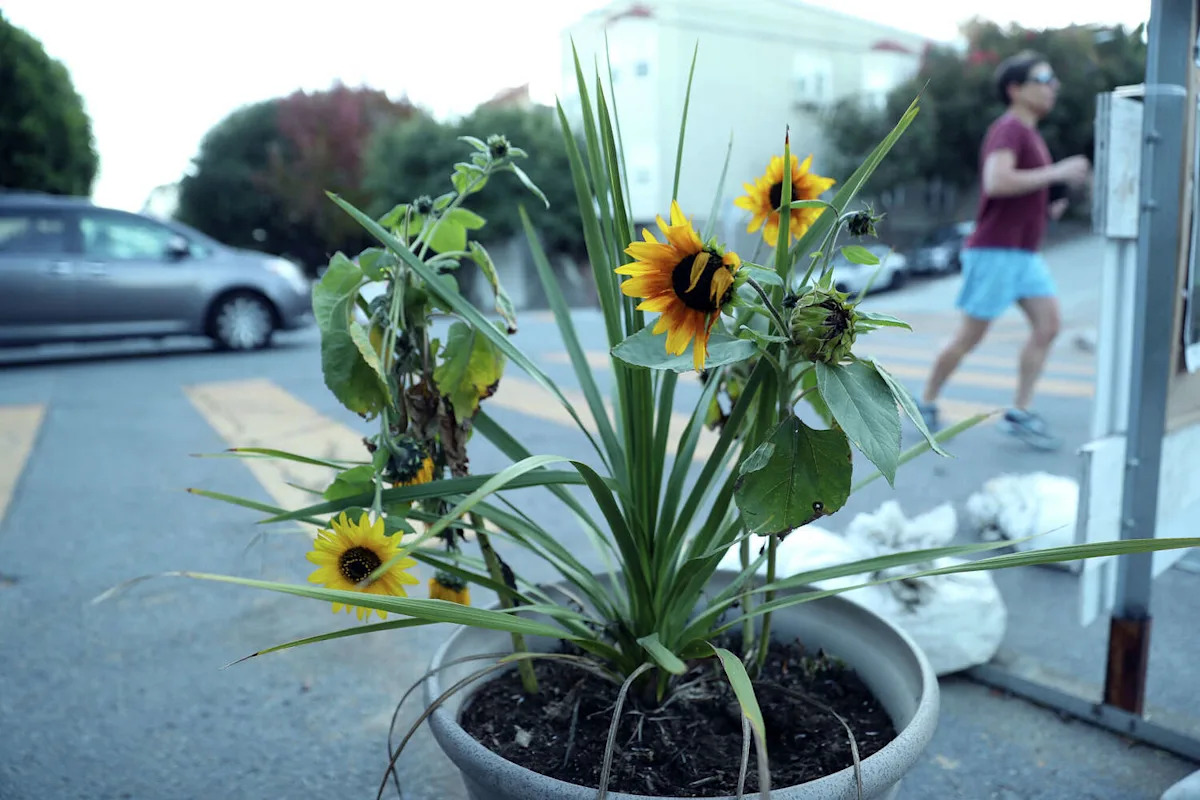
San Francisco neighborhood groups will be allowed to place planters and murals in some daylighted intersection corners under a new 24-month pilot program approved by the city’s transit board, an effort meant to turn no-parking zones into more protected public spaces.
The San Francisco Municipal Transportation Agency announced the Safety Zone Program earlier this month, saying it will pair state-mandated daylighting with bike racks, soft-hit posts, painted safety zones, concrete elements and community-led beautification.
One unusual part of the plan, called Community Corners, lets eligible neighborhood organizations and adjacent businesses add planters or street murals to painted daylighting zones.
Daylighting is the practice of keeping the curb area closest to a crosswalk clear so pedestrians and drivers can better see one another.
California’s daylighting law, signed in 2023, generally bars stopping, standing or parking within 20 feet of the approach side of a marked or unmarked crosswalk, or within 15 feet where a curb extension is present.
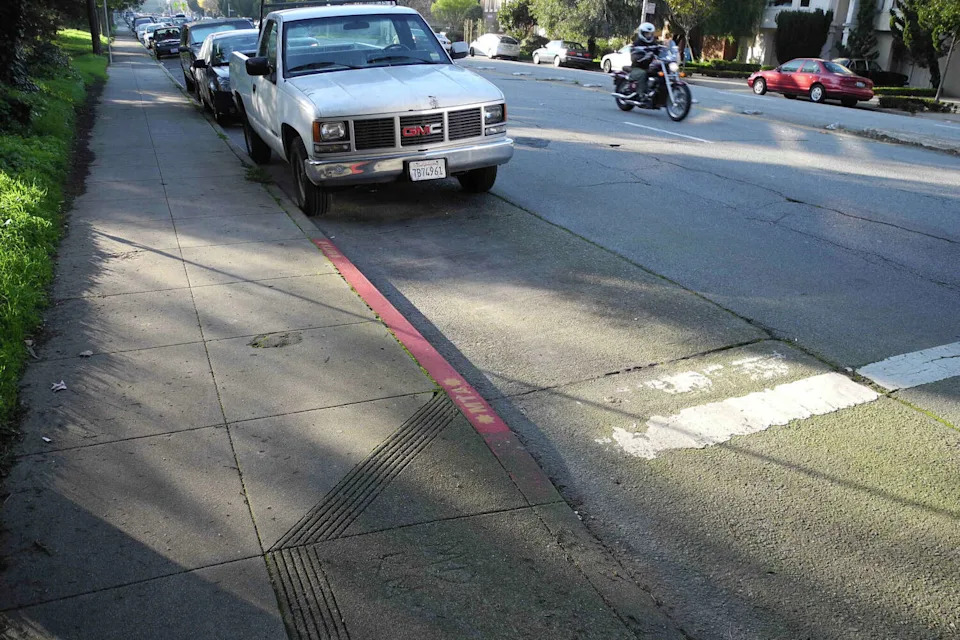
A red curb is seen at Fulton Street and Second Avenue in San Francisco. San Francisco wants to make more daylighted corners harder to block – and more attractive. A new pilot lets neighborhood groups add planters and murals, but they’ll have to pay a fee, maintain the installations and carry insurance for planters. (SFMTA)
That creates a tension for San Francisco’s new program: The spaces exist because parked vehicles can block visibility, but some of them may now hold other obstacles.
SFMTA says the additions are meant to reinforce the safety purpose, not undercut it. The agency’s board materials say the program’s design requirements are intended to keep visibility clear, and the city says planters must comply with dimensional, clearance and maintenance rules set by the transportation director.
The program will not be open to just anyone. Eligible applicants include nonprofit organizations, community benefit districts, merchant associations, established community-based organizations and businesses next to a proposed daylight zone.
Registrants must pay a $50 fee before placing amenities in the street, and annual registration must be renewed.
They also must accept maintenance and liability obligations.
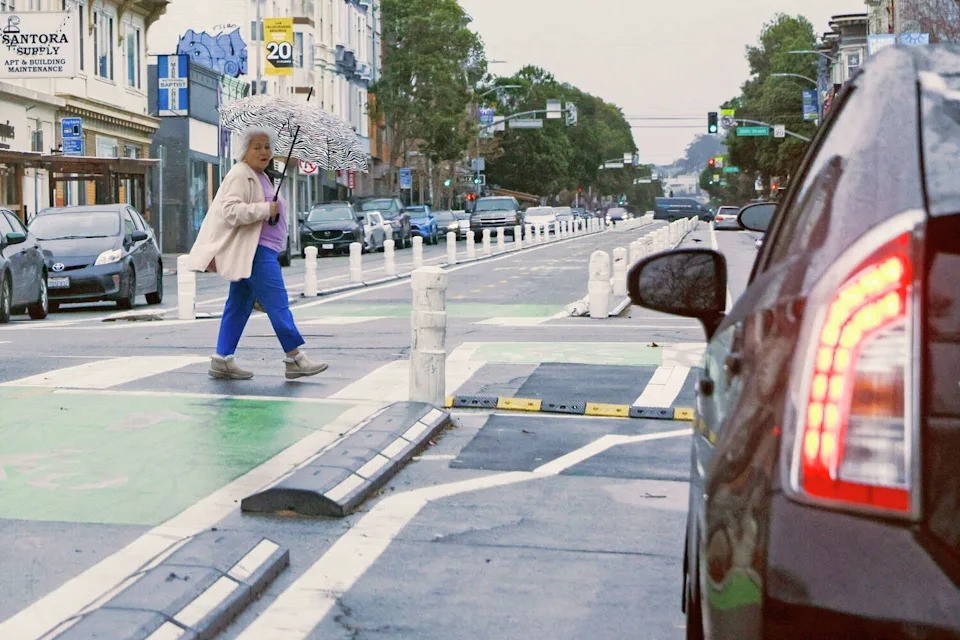
Pedestrians use the crosswalk along 19th Street at Valencia Street in San Francisco. San Francisco wants to make more daylighted corners harder to block – and more attractive. A new pilot lets neighborhood groups add planters and murals, but they’ll have to pay a fee, maintain the installations and carry insurance for planters. (Santiago Mejia/The Chronicle)
Under the board-approved rules, registrants are responsible for placing, maintaining and removing the installations at their own expense. They must agree to hold harmless, defend and indemnify the city for claims related to the placement or maintenance of the amenities.
For planters, they must carry insurance at a level set by SFMTA’s transportation director in consultation with the city’s risk manager.
That insurance requirement could limit participation by smaller neighborhood groups that support the idea but lack administrative capacity or funding.
The program also requires community groups to pay for planters or murals, including installation costs.
If a painted safety zone is not already in place, a registrant may also be required to install one at its own expense, subject to city approval.
SFMTA said Community Corners will focus on existing daylit zones that are near-side, stop-sign-controlled and on low-volume streets.
The broader Safety Zone Program will prioritize proactive improvements at higher-risk locations, including the city’s High Injury Network, intersections with pedestrian crash history and areas near schools and senior centers.
The agency said about 65% of state-mandated daylighting – red-painted curbs 20 feet before crosswalks – is already in place across San Francisco, including more than 2,300 intersections near schools.
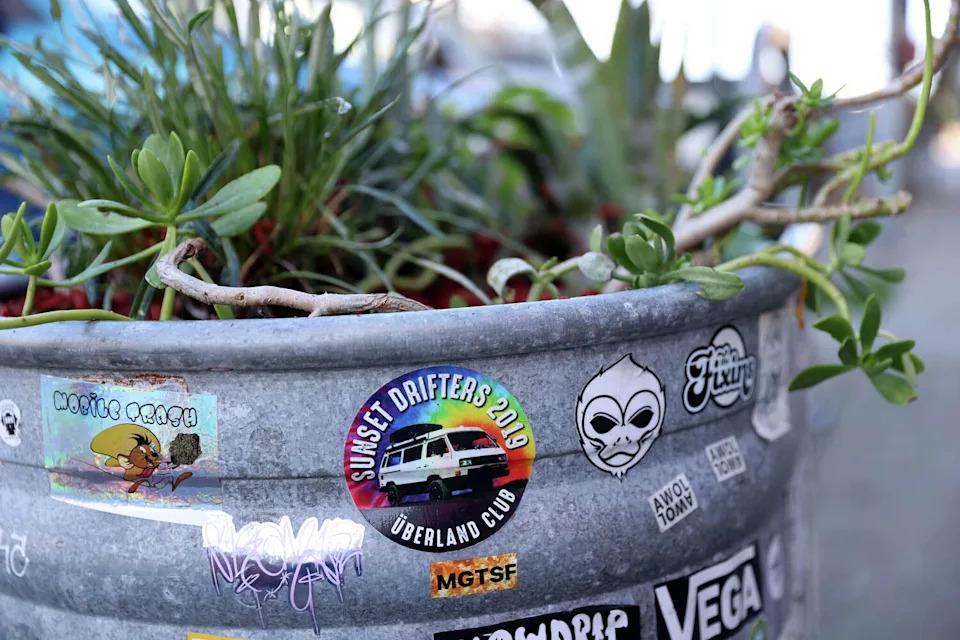
Planter on Noriega Street in the Outer Sunset neighborhood of San Francisco, Calif. San Francisco wants to make more daylighted corners harder to block – and more attractive. A new pilot lets neighborhood groups add planters and murals, but they’ll have to pay a fee, maintain the installations and carry insurance for planters. (Scott Strazzante/The Chronicle)
The agency also plans to create about 50 new painted safety zones each year, adding to more than 500 existing protected spaces that could be enhanced by community groups.
“We believe that vibrant streets are safer streets,” Mayor Daniel Lurie said in a statement. “And by combining proven safety improvements with community-led beautification, we are creating safer intersections and public spaces that reflect the pride and character of our neighborhoods.”
The pilot gives SFMTA broad authority to revoke or modify a registration at any time. Street murals also may require review by other city departments, including the Arts Commission, and cannot contain advertising.
“Daylighting is a vital, proven street safety tool that is mandated by the State,” said Julie Kirschbaum, SFMTA’s director of transportation. “Through the Community Corners program, we are amplifying these safety benefits while also allowing neighborhoods and local businesses to transform public spaces by designing beautiful elements that reflect their community’s unique character.”
The program is scheduled to expire two years after taking effect unless the SFMTA Board extends it.
Subscribe
There’s more to San Francisco with the Chronicle. Subscribe today for just 25¢.
This article originally published at San Francisco’s new ‘daylighting’ plan lets groups put planters in no-parking zones.