
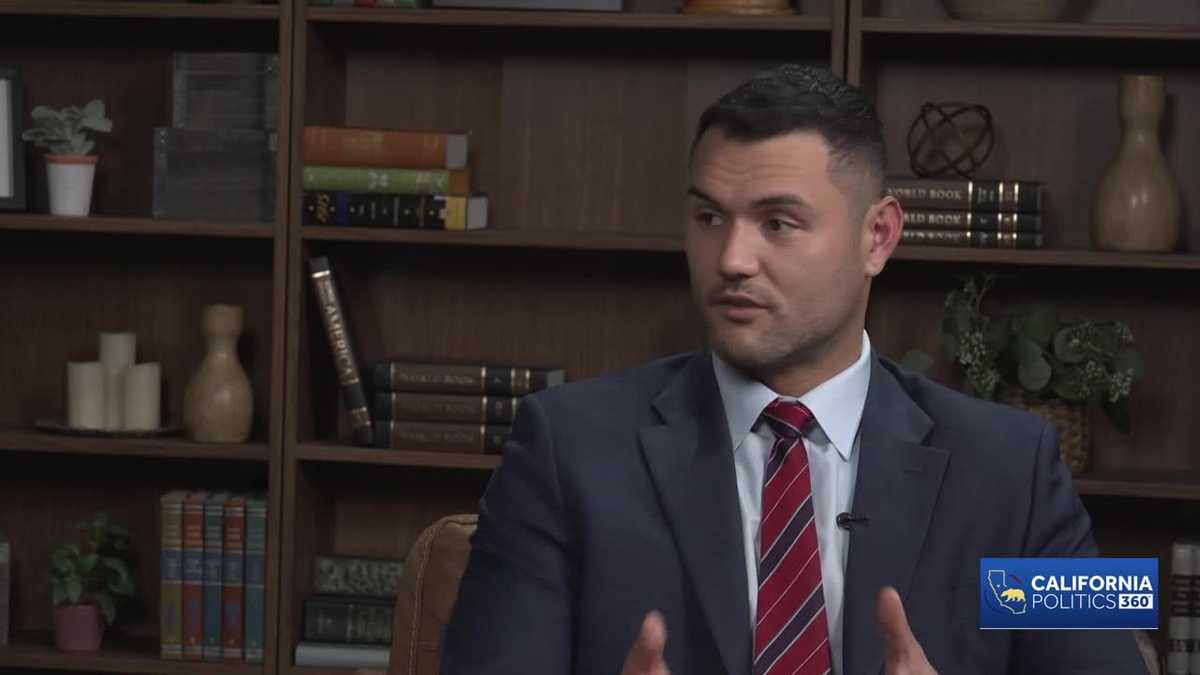
Assemblyman David Tangipa says California should spend more on veterans than undocumented immigrants | CA Politics 360
As Summerman David Tangipa, thank you so much for making time for us. It’s always great to join you. So what do you make of this last minute deal with the Howard Jarvis Taxpayers Association and Governor Newsom, essentially Democrats in the legislature to. Basically make it harder to raise special taxes at the local level they’re putting that on the ballot as part of this deal. Just what do you make of how all of this fleshed out? I think that is part of the great compromise. I think that there was *** lot of fear when it comes to with the Sa Prop 13 Act actually coming to fruition, which the majority party. Truly just thought that they were in *** hole, you know, they were in *** hole that they actually had to reach out to Howard Jarvis and negotiate, and they had to reach out to the minority party and negotiate. So for the first time in *** long time, uh, the minority party Howard Jarvis brought the Democrats Governor Newsom to the table and said let’s figure out something and actually compromise with this constitutional amendment. So it should go down as something that we see as *** win for all people that. The Howard Jarvis tax save Prop 13 was going to retroactively pull back all of the taxes collected due to those property transfer taxes and everything. That’s where they feared that part of giving up all of the money that they’ve already raised for their taxes. And then we were able to get raising those local earmarked taxes to *** 2/3 majority so that way we could protect the people of California from the insatiable hunger that it seems the majority and local municipalities have for other people’s assets. But on that note, I think there are some who appear to be up. Upset that there isn’t the real estate transfer tax situation which you know the local taxpayer Protection Act was trying to address. I know this is *** situation heavily watched in LA because of, you know, that big tax essentially um what do you say to those people who are upset about maybe how that didn’t make it in? It is not done yet and I think that there are negotiations happening on that when it comes to. I’m obviously we’re hearing about AB3 736 and different things that really focus on that ULA stuff, but also it looks like LA County is pushing their own thing to actually bring back to the table because clearly it’s not working for them. I mean, it’s an unfortunate reality that my colleagues can’t simply look at history and find out when you overtax everything nothing happens and you actually get less in revenue. That’s happening in LA, so they’re learning the lesson themselves and I think some changes are going to come that will. In the future, another measure on the ballot that you all passed this week, ACA 20 to which the chairman of the budget, you’re, you being the vice chairman, but the chairman Jesse Gabriel has said that this is *** common sense measure. It will help build up the state’s reserves. What’s your response to that? You know, I understand the importance of having *** rainy day fund. The big thing that I struggle with and why I didn’t support it was our rainy day fund and the constitutional mandate to put in is about 10% right now. We’re $15 billion from maxing out that portion. So why not just put the money into the rainy day fund now instead of using it for, in my opinion, passion projects and not prioritizing the people of California. Last year they raided the rainy day fund to make sure that they were paying for illegal immigrant healthcare. I think that’s irresponsible because when we are in truly hard times we need to make sure that the Californian citizens get the priority first and that’s why I actually introduced an amendment first. It would actually be *** larger rainy day fund. It would prioritize the citizens of California and it would make it *** constitutional mandate to pay off the debts like unemployment insurance that the business community is asking for because every single entity in the state of California is about to get *** tax raise. Because the majority and the governor are raising every single person’s taxes in the state, you know, payroll taxes from the federal government because California is the only state that didn’t pay that back. The governor switching gears to the budget but sort of staying on this topic, the governor told us that it’s something he wants to sort of figure out before he leaves office what solutions could be found to help pay this off. Are you confident like as we wait for *** budget deal which presumably is expected to come. Maybe over the weekend Monday, um, do you expect that to be at all in the state budget we’ll see this week? Do I expect it? No. Just clearly no. If you weren’t going to pay off unemployment insurance with *** $98 billion surplus, if you’re not going to pay off unemployment insurance with *** record budget and record revenue, I don’t expect you to pay off unemployment insurance right now, and we should have done so, and it’s very easy for us to do so when it comes to allocation. The money properly that we currently have, my colleagues in the supermajority keep beating the drum that this is all because of Trump cuts, Trump cuts, Trump cuts. Well, in 2022, 2023, that was *** $98 billion surplus with Joe Biden in office and they didn’t pay off the debt. And typically when it comes to cuts, those metastasize as lower money in your total budget. Our budget is $355 billion. We have never had more money available to the state of California in California’s history. So they try to talk about Trump cuts. It really looks like on paper *** Trump bump that is bailing out the state’s reckless spending policies. You know, on Trump cuts, Democrats right now, as they’re, you know, in this moment, we’re recording this earlier in the week, they’re negotiating the state spending plan and how to handle the cuts from HR 1, they say is part of the tension in these negotiations. What, what’s your response to that, um, just given that they do point to the Trump administration for some of these gaps in healthcare and other social services? The easy thing that people really need to realize, and it should bother everybody, is that our budget is *** reflection of our priorities, and it bothers me that we spend 8 to 10 times more on illegal immigrant services out of the general fund. Than we do for our veterans here in this state, it bothers me that we can spend $30 million on *** syphilis outbreak campaign than spend money on the priorities of Californians. It bothers me that we can spend $8 million on condom distributions by non-governmental organizations and then people tell me we don’t have enough money. And I think that’s what people need to see is that we have everything that we could possibly imagine in this state, but to blame an administration that simply is telling the state if you want all of these things, you want to pay for illegal immigrant health care, you wanna expand Medi to include Ozempic and not life saving care. You do that yourselves because these hits are happening because of California’s irresponsible spending addiction and when the budget in 2016 was about $170 billion and it’s $355 billion today, an increase of over 100%, and nothing has gotten better. And the majority party has every single statewide seat. They have full power and authority in the assembly. They have full power and authority in the Senate. There is nobody to blame other than the mayor in that respect with with the budget with this deal that maybe we’ll we’ll know more about on Monday. Presumably the budget gets passed July 1st or sometime within there. What do you make of that condensed timeline to unpack really ultimately what the state spending plan looks like for the next year? Uh, really it’s. We, it’s *** boom or bust budgeting system here and it gives me quite *** bit of anxiety as *** vice chair for the state budget because I believe that we should have significantly more deliberations, uh, you know, the the governor gives us *** proposed budget in January and then all of *** sudden second week of May, now we’ve got to sprint. You’ve got 8 weeks to. Negotiate or debate there’s not too much negotiation when it comes to the minority party in this, um, but there’s no negotiation there is no negotiation. I’m kind of like told instead of uh consulted and I understand. I mean California is getting everything that it voted for and I hope people realize that, but this the system that we do it. I think it is very irresponsible for what *** lot of people brag about calling us the 4th largest economy in the world and allocating resources, probably need *** little bit more direct time with more people in the room that’s significantly more transparent. Jesse Gabriel, the budget chairman, he would say that there are dozens of hearings by the subcommittees throughout the year. On some of these state spending items, what would be your response to that? So I have *** lot of respect for the chair of the budget. I think Jesse does *** really good job at least trying to work within the tools that are given to him, and I’ll tell you this for about 8 weeks, especially when they get the May revise, he has an entourage everywhere he goes of legislators, legislators all. Asking hey Jesse what about my project and what about my project and what about my project and what about what can I do to bring things back to the district and I get that and I understand that that that pressure is there um you know and I think what Jesse would say to me is you know. Spend more time working in this system, but this is the system that we currently have today. Now I want to change the system, but that can only happen if California decides to make changes at the legislative and at the state level. And so those are part of my goals and something that we’re going to make sure that we’re focused on is just bringing things to attention, you know, exposing the dome, seeing how the sausage is made is what I often joke about. Uh, and then they can realize like, OK, if we have the hunger to change this system, it’s gonna take people and the politicians to do so. What do you expect with this budget? I know we don’t know yet what Democrats are working out, but what do you expect to see by the end of this upcoming week? I believe that the budget will get passed mainly because uh we don’t get paid. If we don’t, and so it’s almost easy to assume they’ve they’ve usually met the constitution’s deadline and then it’s, I mean it’s interesting to me that Governor Newsom’s budget technically is more conservative than the legislature’s budget, um, so what compromises are they gonna have there it’s. You know, it may be on how much money is spent on the $100 in the assembly budget. There’s $100 million to go to combat the federal administration on deportations and legal services, you know, that’s something that wasn’t in the governor’s budget prior to, and there are things that the legislature has put in that. I don’t know if the governor will agree to that, so it’s going to be interesting because right now the debate is really between the majority party and the governor, and we on the minority are playing quite *** bit of defense right now. But do you, is it fair to say you expect this budget to raise. Costs for people in the state. The biggest thing that people need to realize is we have *** record budget with record revenue, and now we have record taxes, *** digital software tax, *** medical tax or MCO tax, and. Potentially even *** potential ceiling or raising the property transfer taxes at the local level or at least allowing that to happen and I, it should really baffle people that again when you have more money. Than any other state than most states combined. I mean think about Texas’s budget. Texas has *** biannual budget of around $300 billion so split in two, it comes out to around $150 billion *** year for *** state that only has about 5 or 6 million less people than us. It’s *** larger state geographically, but in California we have *** $355 million budget and. It, it, it again is indicative to me that we have an insatiable hunger, the majority party for taxing and spending and so much spending, um, that isn’t going back to the people of California. You, you can’t, you can’t defend this budget to me by blaming the federal administration on cuts when you can spend. Billions of dollars on illegal immigrant services and only *** couple $100 million on our veterans. I think our veterans and the men and women service members should be prioritized first. We shouldn’t have *** single one of them on the streets. I think the one out of every 5 Californians that can’t pay their utility bills today need to make. Sure that they can make ends meet first. I think that we need everybody to be able to afford gas, groceries, and the services, and I think that the young families and young generations need to be able to buy *** home prior to any other country’s citizens getting any benefits because I think that’s what Californians truly want. Is there anything else you think we should know heading into next week? Well, I, I don’t think so. OK, Miss Ellman, thank you. Thank you.
Assemblyman David Tangipa says California should spend more on veterans than undocumented immigrants | CA Politics 360

Updated: 8:25 AM PDT Jun 28, 2026
California Assemblyman David Tangipa shared his views on the state’s budget negotiations, focusing on tax increases, spending priorities, and the implications of California’s $350 billion budget. Talngipa discussed a recent compromise involving the Howard Jarvis Taxpayers Association, Governor Gavin Newsom, and Democrats in the legislature to make it harder to raise special taxes at the local level. “For the first time in a long time, the minority party, Howard Jarvis, brought the Democrats, Governor Newsom, to the table and said, let’s figure out something and actually compromise with this constitutional amendment,” Tangipa said. He described the agreement as a win for all Californians, noting that it raises the threshold for local earmarked taxes to a two-thirds majority. When asked about the exclusion of the real estate transfer tax from the compromise, Talking Pod acknowledged ongoing negotiations. “It is not done yet,” he said. “It looks like LA County is pushing their own thing to actually bring back to the table, because clearly it’s not working for them.” He added that overtaxing can lead to reduced revenue, a lesson he believes Los Angeles is learning firsthand. Tangipa also addressed ACA 20, a measure aimed at building up the state’s reserves, which he did not support. “The big thing that I struggle with and why I didn’t support it, was our rainy day fund,” he said. “Why not just put the money into the rainy day fund now instead of using it for, in my opinion, passion projects and not prioritizing the people of California?” He criticized the use of reserve funds for initiatives like health care for undocumented immigrants, arguing that Californians should be prioritized during hard times. On the topic of unemployment insurance debt, he expressed doubt about its inclusion in the upcoming budget. “Do I expect it? No. Just clearly no,” he said. He criticized the state’s failure to pay off the debt despite record surpluses and revenues, attributing the issue to what he called “reckless spending policies.” Tangipa responded to claims by Democrats that budget gaps are due to cuts from the Trump administration. “Our budget is $355 billion. We have never had more money available to the state of California in California’s history,” he said. “So they try to talk about Trump cuts. It really looks like on paper, a Trump bump that is bailing out the state’s reckless spending policies.” He expressed frustration with the state’s spending priorities, noting that more is spent on services for undocumented immigrants than on veterans. “It bothers me that we spend 8 to 10 times more on illegal immigrant services out of the general fund than we do for our veterans here in this state,” Tangipa said. He argued that Californians should be able to afford basic necessities like gas and groceries and that young families should be able to buy homes before benefits are extended to non-citizens. Tangipa criticized the state’s budgeting process, which he described as rushed and lacking transparency. “The governor gives us a proposed budget in January, and then all of a sudden, second week of May, now we’ve got to sprint,” he said. “You’ve got eight weeks to negotiate or debate.” He called for more deliberation and transparency in the process. Despite his concerns, Tangipa predicted that the budget would be passed on time. “I believe that the budget will get passed mainly because we don’t get paid if we don’t,” he said. He noted that the debate is primarily between the majority party and the governor, with the minority party playing defense. He concluded by emphasizing the need for change in California’s legislative and state-level systems. “If we have the hunger to change this system, it’s going to take people and the politicians to do so,” he said.KCRA 3 Political Director Ashley Zavala reports in-depth coverage of top California politics and policy issues. She is also the host of “California Politics 360.” Get informed each Sunday at 8:30 a.m. on KCRA 3.
California Assemblyman David Tangipa shared his views on the state’s budget negotiations, focusing on tax increases, spending priorities, and the implications of California’s $350 billion budget.
Talngipa discussed a recent compromise involving the Howard Jarvis Taxpayers Association, Governor Gavin Newsom, and Democrats in the legislature to make it harder to raise special taxes at the local level.
“For the first time in a long time, the minority party, Howard Jarvis, brought the Democrats, Governor Newsom, to the table and said, let’s figure out something and actually compromise with this constitutional amendment,” Tangipa said. He described the agreement as a win for all Californians, noting that it raises the threshold for local earmarked taxes to a two-thirds majority.
When asked about the exclusion of the real estate transfer tax from the compromise, Talking Pod acknowledged ongoing negotiations.
“It is not done yet,” he said. “It looks like LA County is pushing their own thing to actually bring back to the table, because clearly it’s not working for them.”
He added that overtaxing can lead to reduced revenue, a lesson he believes Los Angeles is learning firsthand.
Tangipa also addressed ACA 20, a measure aimed at building up the state’s reserves, which he did not support.
“The big thing that I struggle with and why I didn’t support it, was our rainy day fund,” he said. “Why not just put the money into the rainy day fund now instead of using it for, in my opinion, passion projects and not prioritizing the people of California?”
He criticized the use of reserve funds for initiatives like health care for undocumented immigrants, arguing that Californians should be prioritized during hard times.
On the topic of unemployment insurance debt, he expressed doubt about its inclusion in the upcoming budget.
“Do I expect it? No. Just clearly no,” he said.
He criticized the state’s failure to pay off the debt despite record surpluses and revenues, attributing the issue to what he called “reckless spending policies.”
Tangipa responded to claims by Democrats that budget gaps are due to cuts from the Trump administration.
“Our budget is $355 billion. We have never had more money available to the state of California in California’s history,” he said. “So they try to talk about Trump cuts. It really looks like on paper, a Trump bump that is bailing out the state’s reckless spending policies.”
He expressed frustration with the state’s spending priorities, noting that more is spent on services for undocumented immigrants than on veterans.
“It bothers me that we spend 8 to 10 times more on illegal immigrant services out of the general fund than we do for our veterans here in this state,” Tangipa said.
He argued that Californians should be able to afford basic necessities like gas and groceries and that young families should be able to buy homes before benefits are extended to non-citizens.
Tangipa criticized the state’s budgeting process, which he described as rushed and lacking transparency.
“The governor gives us a proposed budget in January, and then all of a sudden, second week of May, now we’ve got to sprint,” he said. “You’ve got eight weeks to negotiate or debate.”
He called for more deliberation and transparency in the process. Despite his concerns, Tangipa predicted that the budget would be passed on time.
“I believe that the budget will get passed mainly because we don’t get paid if we don’t,” he said.
He noted that the debate is primarily between the majority party and the governor, with the minority party playing defense.
He concluded by emphasizing the need for change in California’s legislative and state-level systems.
“If we have the hunger to change this system, it’s going to take people and the politicians to do so,” he said.
KCRA 3 Political Director Ashley Zavala reports in-depth coverage of top California politics and policy issues. She is also the host of “California Politics 360.” Get informed each Sunday at 8:30 a.m. on KCRA 3.