
His new bill, Assembly bill 1556, lays out the rules a sober housing provider must follow to be eligible for state funding. Each provider must have a policy to handle relapses, which is supposed to help the resident get sober again, but also can include evicting them if they continue to use alcohol or drugs and do not follow the policy. That worries critics, including Sharon Rapport, director of California state policy for the Corporation for Supportive Housing, who fears it could put people back on the streets.
Unlike last year’s bill, AB 1556 doesn’t limit the amount of state money that could go to sober housing. The bill comes with no additional funding, meaning the more money that goes to sober housing, the less will be left for the low-barrier housing needed for people who aren’t ready to overcome their addiction, Rapport said. That’s even more worrying because the Trump administration also is prioritizing sober housing for federal funds – creating an even bigger gap in low-barrier housing, she said.
“We don’t really want to see Trump policy implemented in California at the state level,” she said.
This year, Haney is expecting a more positive reaction from Newsom. “The governor’s office has been very collaborative and responsive from the beginning this time around,” he said.
Solutions to homelessness
Most people in California agree that homelessness is a problem. But exactly how much would it cost to solve it? And how could California get there?
It turns out, the state has never actually done that math publicly. Assembly Bill 1165 would force the state to do just that. The bill by Assemblymember Mike Gipson, a Gardena Democrat, would require the California Department of Housing and Community Development to create a financial plan to solve homelessness, as well as performance metrics for success, by January 2028.
That would include determining how much money the state would need to meet the housing needs of everyone who is homeless now or expected to become homeless in the future, and how the state could achieve that goal.
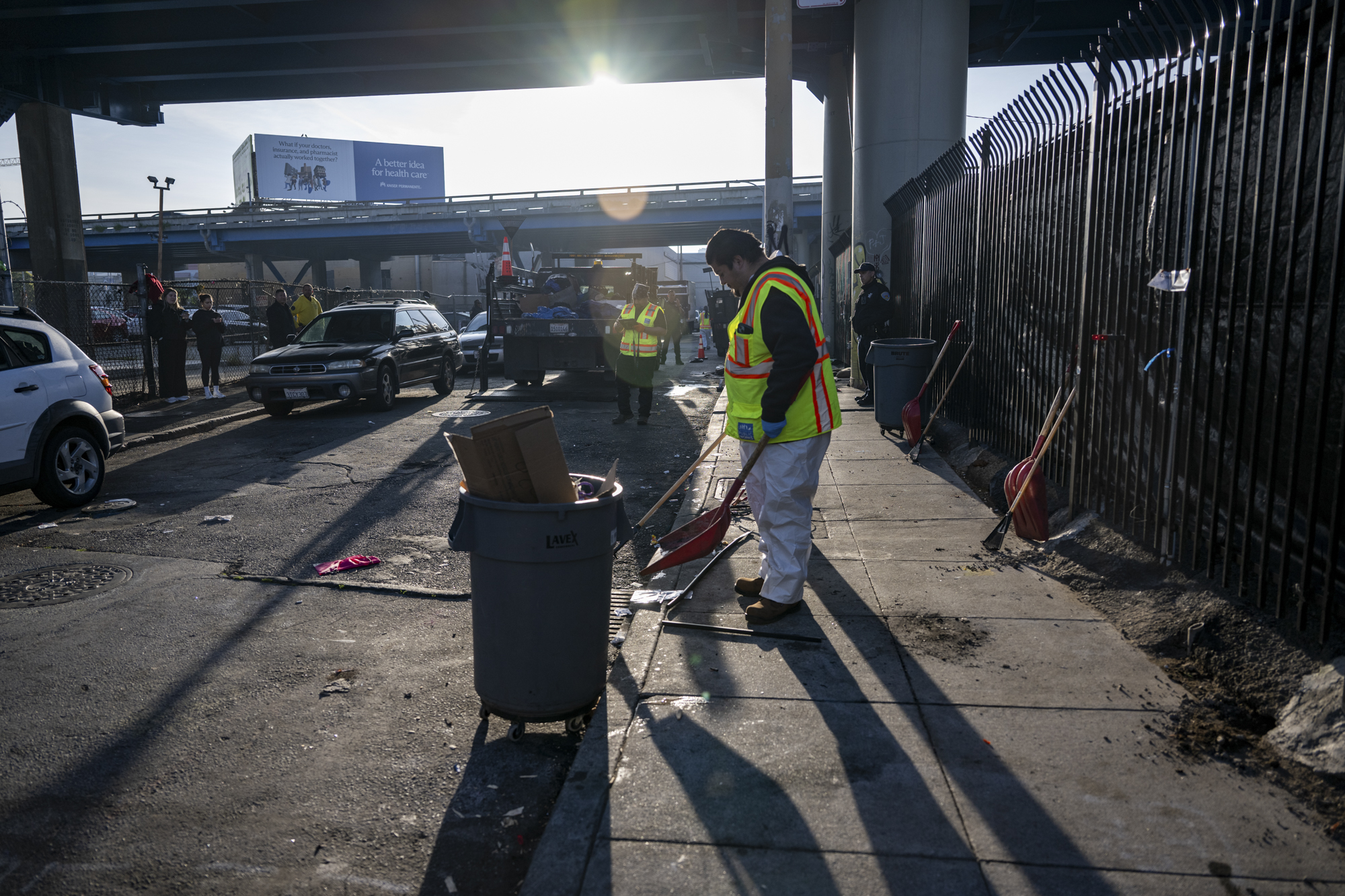 Department of Public Works employees clean up debris after a sweep of an encampment on Merlin Street in San Francisco’s South of Market neighborhood on Jan. 27, 2026. (Beth LaBerge/KQED)
The state has estimated California must plan for 2.5 million homes over the next eight years to meet demand and ease the state’s affordable housing shortage. AB 1165 would require the state to go into more detail about what resources are needed, and lay out a plan to meet that goal.
The Corporation for Supportive Housing estimates it would take $8.1 billion a year for 12 years to solve homelessness. The budget the legislature proposed this month includes $900 million for Homeless Housing, Assistance and Prevention funds – the state’s main source of homeless funding.
If it passes, AB 1165 could help hold legislators and the next governor accountable and push the state to spend its homelessness funds more wisely, Rapport said. A 2024 audit found the state failed to track its homelessness spending or measure results.
The bill doesn’t come with new resources to fight homelessness, meaning implementing a plan to end homelessness could be tough in the current tight budget environment.
Another measure, Assembly Bill 1924, would require the California Interagency Council on Homelessness to establish a statewide strategy to prevent homelessness before it happens. If passed, the plan would need to be in place by July 2027.
Prevention has become an increasingly popular way to tackle homelessness, as it’s much easier and cheaper to help someone hold onto their housing than it is to re-house them once they wind up on the streets. Organizations already using this strategy have found that giving someone several thousand dollars can allow them to avoid homelessness.
Like AB 1165, the prevention bill also comes with no new funding.
Forcing cities to report homelessness and housing data
How much data on homelessness should California cities that aren’t getting state funds be required to report to the state? That’s the question behind a bill by Senator Catherine Blakespear, which has received pushback from some of her colleagues.
Counties, continuums of care (regional groups that coordinate homelessness services) and the 14 largest cities are eligible for money from the state’s Homeless Housing Assistance and Prevention program. In exchange for the funds, those entities must report certain data about their homeless populations, the services they offer, and the progress they’ve made getting people off the streets.
Blakespear, a Democrat from Encinitas, wants the rest of California’s cities, even if they get no funding, to report that data, too.
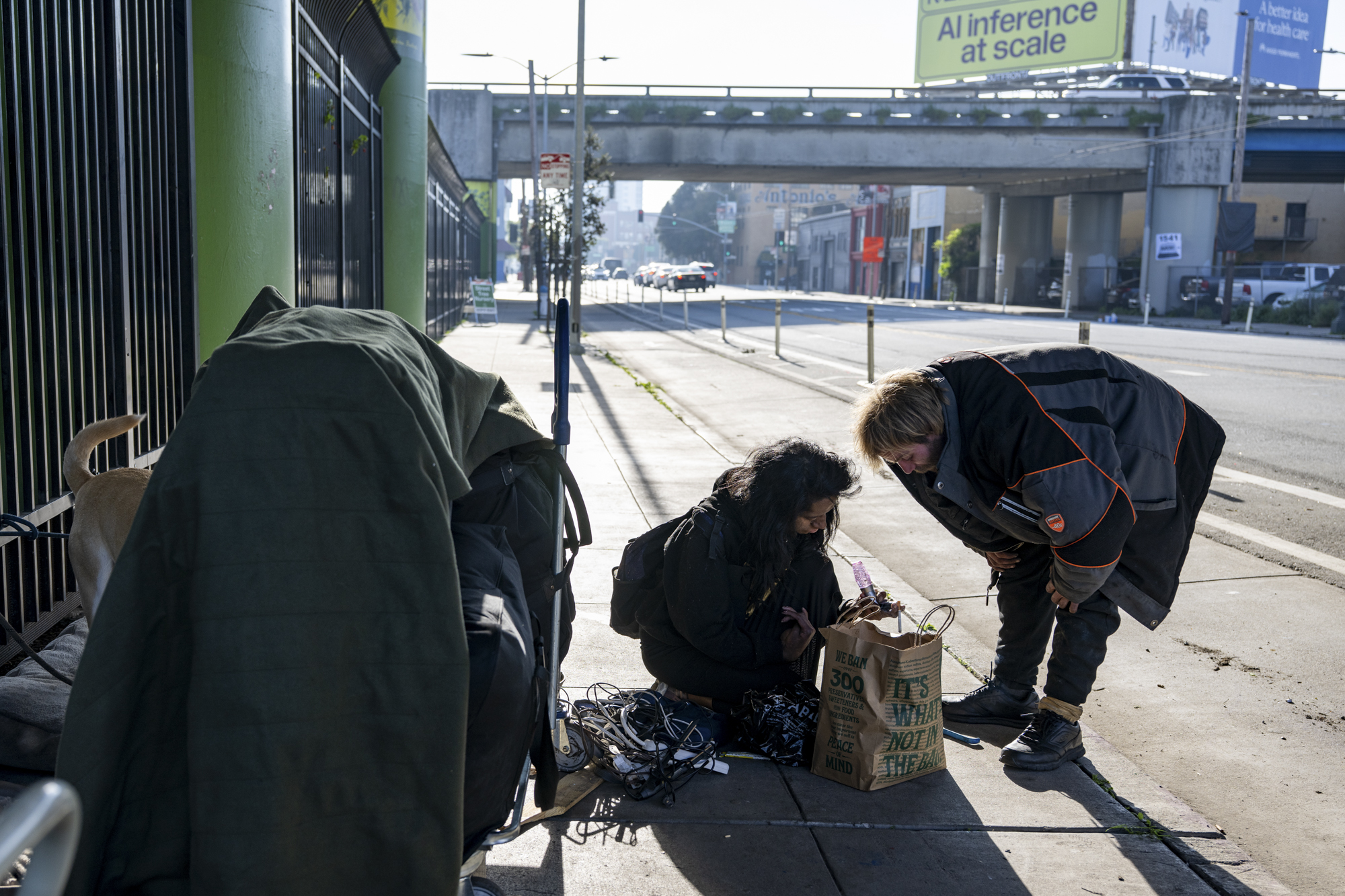 Teesha Baldree (left) and Jacob Miles go through their belongings after moving from Merlin Street to nearby Fifth Street in San Francisco on Jan. 27, 2026, following a scheduled encampment sweep. (Beth LaBerge/KQED)
“Homelessness is a regional problem that does not stop at city or county boundaries,” she said during a recent Senate floor hearing.
Senate Bill 866 alarmed some city leaders, who complained they don’t have the staff or money to compile that extensive amount of data. Dozens of cities oppose the bill, as does the League of California Cities.
As a concession, Blakespear agreed to exempt all cities with 50,000 or fewer people – eliminating about half of California’s cities.
But that wasn’t enough to appease some of her colleagues, including Republican Senator Marie Alvarado-Gil from Modesto, who called the bill an un-funded mandate for cities.
“I have to ask,” she said, “if we have this level of opposition, not just from rural communities, not just from Republican-represented communities, but from cities across the state, why do we have a half-cooked bill on this Legislature’s floor?”
No arrest warrants for people who miss court dates
Assembly Bill 2122 doesn’t specifically mention unhoused Californians, but advocates say it would have big implications for people who sleep outside.
Cities around California are cracking down on street homelessness, leading to increasing numbers of arrests and citations in some places.
People are ticketed for unauthorized camping, but they can also be cited for other offenses such as loitering, trespassing, public urination, violating park rules, and more. Typically, the police hand them a paper citation that says when they are supposed to show up in court.
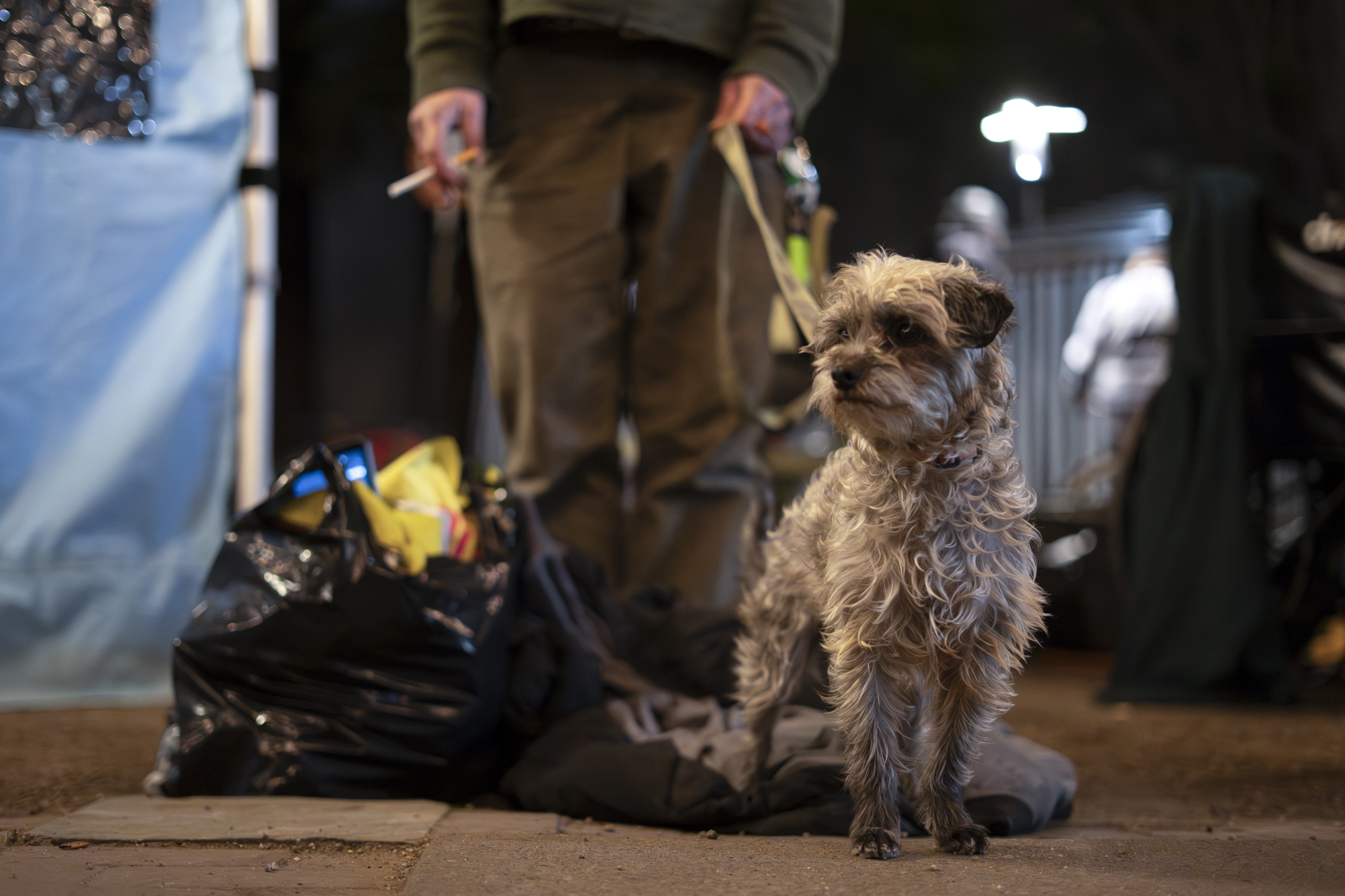 Felony, a Chihuahua-poodle mix, stands on a leash beside owner Kali Donlin outside the Gubbio Project at St. John’s the Evangelist Episcopal Church on Feb. 2, 2026, in San Francisco. (Gustavo Hernandez/KQED)
It’s common for unhoused people to miss those court dates – they may lack transportation, be unable to leave their belongings or pets unattended, or simply lose track of the date amid the unpredictability of life on the street. When that happens, the court issues a bench warrant for their arrest. The next time they encounter the police, they could go to jail.
Not only does that cost the city money, but it also could make it harder for the person to get housing, Rapport said.
Assembly Bill 2122, by Assemblymembers Ash Kalra and Josh Lowenthal, would change that. If someone is cited for an infraction (which could include loitering or other minor offenses) and then misses their court date, they could not be jailed as a result. It would also prohibit courts from issuing arrest warrants for people who fail to pay traffic tickets.
The bill applies only to infractions. Different cities classify crimes differently – in some places, an offense such as loitering might be an infraction, while in other places it could be a misdemeanor.
The California State Sheriffs’ Association is opposed to the bill, and says it sends the message that it’s acceptable to fail to appear in court.
RVs on city streets
As unhoused Californians increasingly turn to vehicles for shelter, multiple legislators have turned their attention to addressing the resulting rows of RVs, trailers and lived-in cars lining streets up and down the state.
Last year, Assemblymember Mark Gonzalez, a Los Angeles Democrat, pushed through a bill intended to make it easier for local governments to dispose of inoperable RVs parked on their streets. The goal was to address vehicles that create blight in neighborhoods and are breeding grounds for bad behavior, he said.
He ended up amending the bill to apply only in Los Angeles and Alameda counties. But by making that change, Gonzalez inadvertently made the law basically unusable.
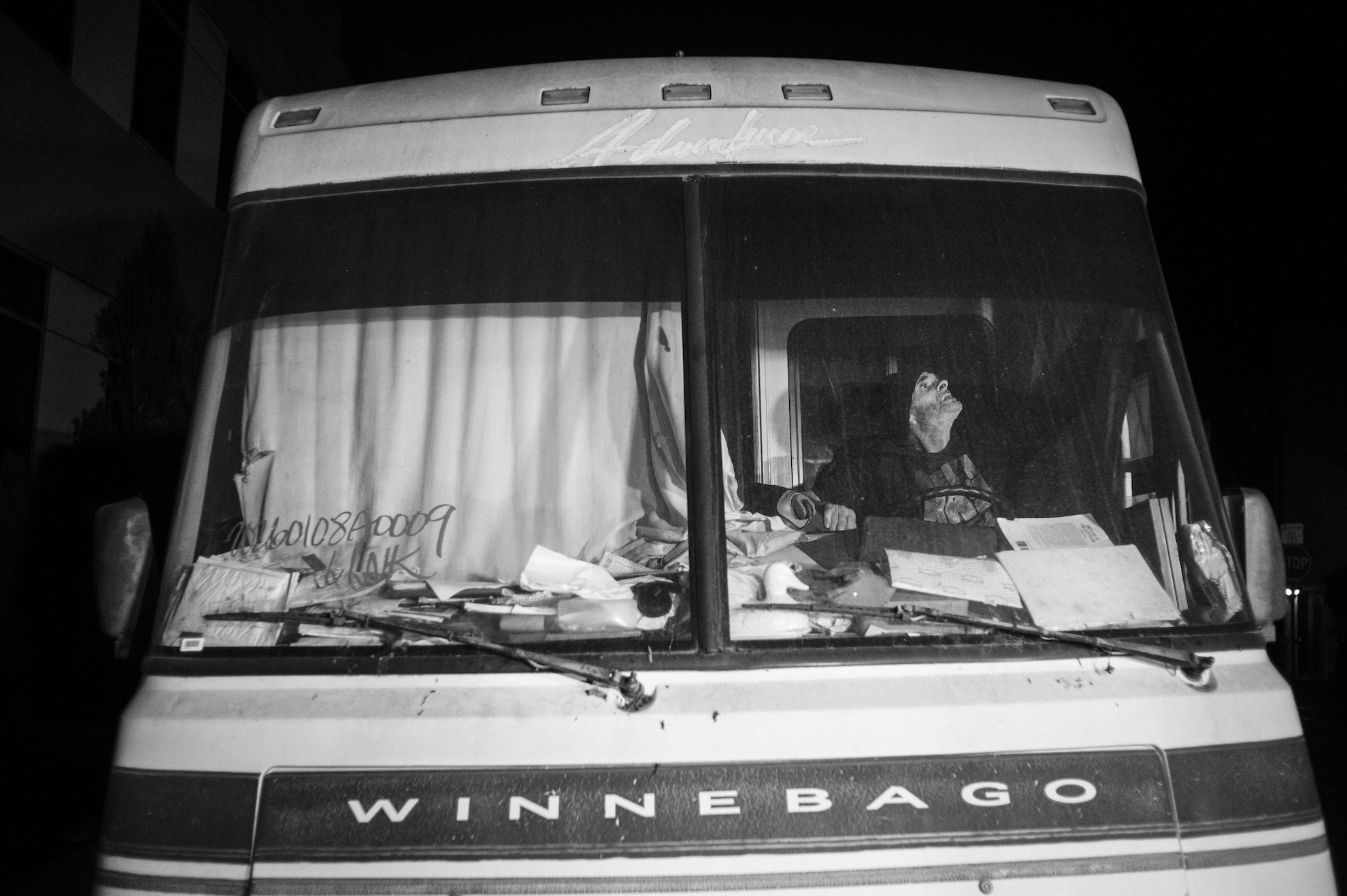 Bob Kauffman, 70, closes the blinds to his RV in San Francisco, Calif., on Jan. 21, 2026. Kauffman has been towed three times since the city’s Large Vehicle Refuge Permit Program, and has been navigating new parking restrictions that aim to eliminate RVs in the city. Since his RV is inoperable, he’s had to pay $700 to tow it out of the city’s tow-yard, and paying $107 in San Francisco Municipal Transportation Authority fees. (Pablo Unzueta for El Tecolote/CatchLight Local)
While the counties of Alameda and Los Angeles themselves could use the law to dispose of RVs, the cities within them could not. The Los Angeles City Council found that out the hard way, when it voted to establish an RV disposal program, only to have it shot down in court.
Assembly Bill 647 fixes that oversight by allowing cities within those two counties to destroy RVs valued at $4,000 or less. Opponents worry the bill will lead local governments to seize more lived-in RVs, forcing people out of the relative safety of a vehicle and onto the street.
This article was originally published on CalMatters and was republished under the Creative Commons Attribution-NonCommercial-NoDerivatives license.