
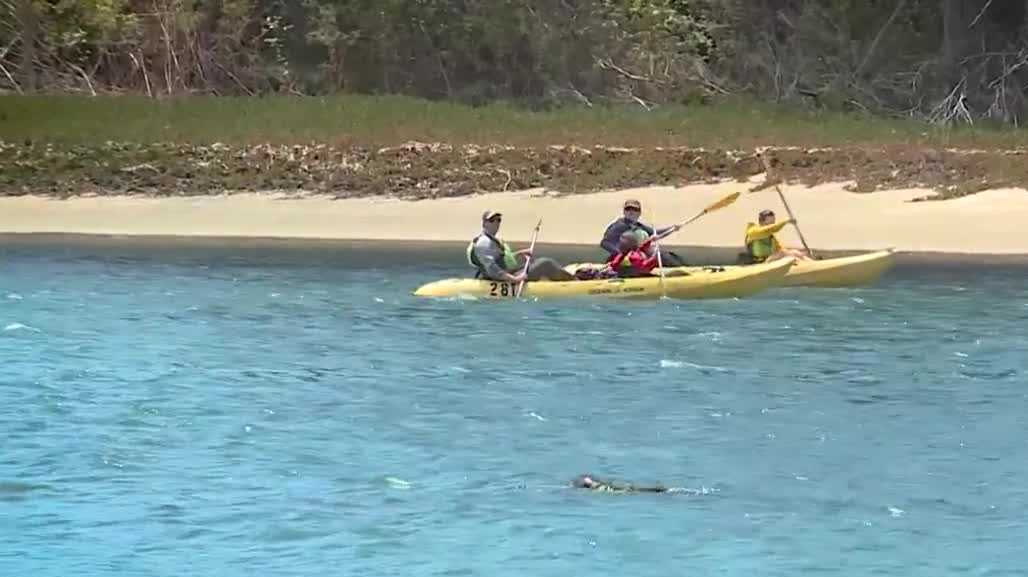
Wildlife experts are urging visitors to Central Coast beaches to keep their distance from seals and sea lions to prevent harmful stress to the animals. The Marine Mammal Center reports that between 26% and 30% of the animals they rescue over the last four years were interfered with by humans or dogs prior to their rescue. “Thirty-one percent of those marine mammals, in terms of the type of behavior, was physical behavior, meaning touching, pouring water on, trying to feed, dragging the animal by its flippers back toward the water because they think that a sea lion can’t be out of water,” Giancarlo Rulli, a spokesperson for the Marine Mammal Center, said. These interactions can stress both sick and healthy marine mammals, making recovery harder for the animals and interfering with rescue efforts. “It may not be the cause of the actual rescue. There could be an underlying ailment, there could be an entanglement. But it’s the fact that it’s that added extra stressor to an already stressed animal that is entirely preventable,” Rulli said. Otter Savvy, a nonprofit focused on reducing disturbances to sea otters, is working to better understand human impacts on the animals and create educational materials to mitigate those disturbances. “I always say they live paycheck to paycheck energetically. They’re basically using up energy as it comes in. They don’t really lay on a fat layer very well. And so they’re really sensitive to extra costs,” Gena Bentall, director and senior scientist at Otter Savvy, said. Bentall added, “Sea Otter Savvy is really looking to better understand human disturbance to sea otters. And then use what we learn to create outreach and educational materials to try to mitigate that disturbance. Help people have guidelines and tips that they can follow.” While some cases involve intentional harassment or torment of marine mammals, experts say those instances are rare. Most of the time, people are simply curious or believe they are helping, but even well-intentioned interactions can put the animals at risk. Experts emphasize keeping a safe distance from marine mammals and reporting sick or distressed animals to the Marine Mammal Center so trained responders can assist.
Wildlife experts are urging visitors to Central Coast beaches to keep their distance from seals and sea lions to prevent harmful stress to the animals.
The Marine Mammal Center reports that between 26% and 30% of the animals they rescue over the last four years were interfered with by humans or dogs prior to their rescue.
“Thirty-one percent of those marine mammals, in terms of the type of behavior, was physical behavior, meaning touching, pouring water on, trying to feed, dragging the animal by its flippers back toward the water because they think that a sea lion can’t be out of water,” Giancarlo Rulli, a spokesperson for the Marine Mammal Center, said.
These interactions can stress both sick and healthy marine mammals, making recovery harder for the animals and interfering with rescue efforts.
“It may not be the cause of the actual rescue. There could be an underlying ailment, there could be an entanglement. But it’s the fact that it’s that added extra stressor to an already stressed animal that is entirely preventable,” Rulli said.
Otter Savvy, a nonprofit focused on reducing disturbances to sea otters, is working to better understand human impacts on the animals and create educational materials to mitigate those disturbances.
“I always say they live paycheck to paycheck energetically. They’re basically using up energy as it comes in. They don’t really lay on a fat layer very well. And so they’re really sensitive to extra costs,” Gena Bentall, director and senior scientist at Otter Savvy, said.
Bentall added, “Sea Otter Savvy is really looking to better understand human disturbance to sea otters. And then use what we learn to create outreach and educational materials to try to mitigate that disturbance. Help people have guidelines and tips that they can follow.”
While some cases involve intentional harassment or torment of marine mammals, experts say those instances are rare. Most of the time, people are simply curious or believe they are helping, but even well-intentioned interactions can put the animals at risk.
Experts emphasize keeping a safe distance from marine mammals and reporting sick or distressed animals to the Marine Mammal Center so trained responders can assist.