
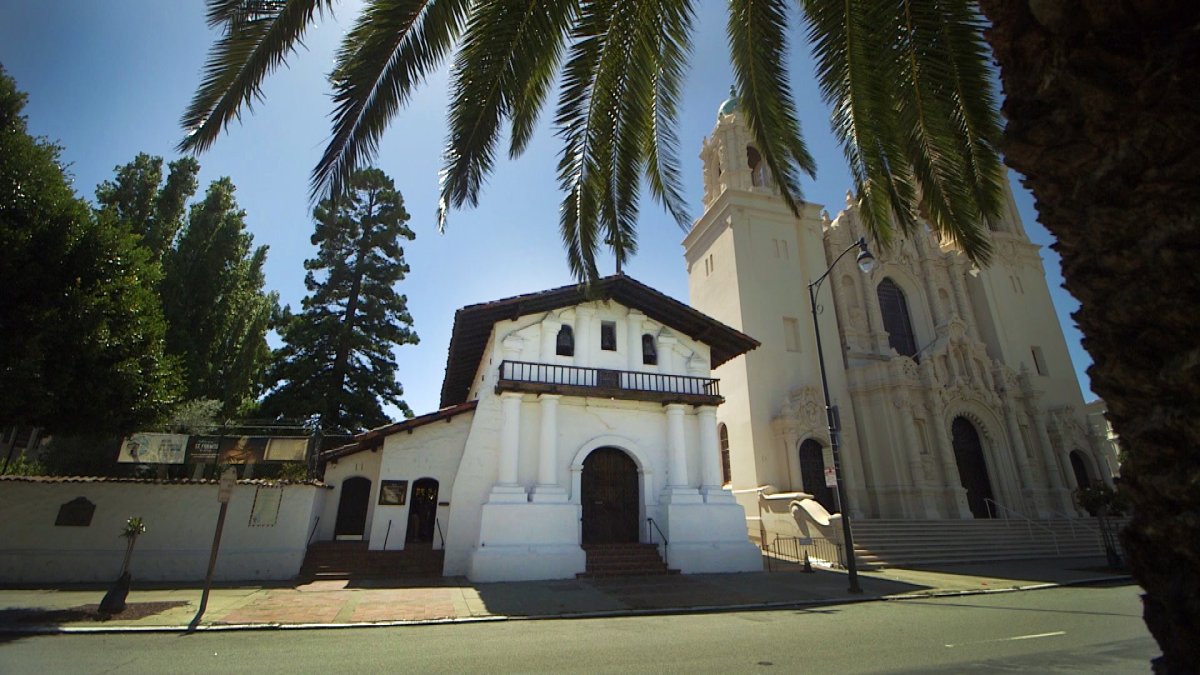
On June 27, 1776, seven days before the Declaration of Independence was signed in the East, a group of weary travelers arrived in what would become San Francisco and began to scratch their lives into the verdant valley that would become the Mission District — and the sand dunes and serpentine rock of the future Presidio.
They were led 1,200 miles on a trek that wound through heat and snow by Spanish Lt. Col. Juan Bautista de Anza. Though it was officially a flex of the Spanish Empire, the settlers themselves were of Mexican, African, Indigenous and European blood.
“A lot of them were fairly poor,” said Lance Beeson, a descendant of Lt. José Joaquin Moraga, who guided the expedition the last leg of the trip. “They didn’t have a chance to own land where they were recruited from.”
There were 30 soldiers in the party along with their wives and more than 100 children. They were chasing a promise of land to this new world they called Yerba Buena, which was already occupied by Ohlone Indians who the colonists endeavored to “save” through their Catholic faith and the new mission they constructed from adobe bricks and redwood timber that became Misión San Francisco de Asís – later Mission Dolores.
Joe Rosato Jr./NBC Bay AreaJoe Rosato Jr./NBC Bay Area
Mission Dolores is considered the oldest existing building in San Francisco — built in 1776 following the arrival of the Anza party in what was then called Yerba Buena.
Two days after their arrival, the settlers stood beside Laguna de Dolores, a lake near present-day Mission Dolores, and held a mass giving thanks for their safe arrival. Many historians count that mass as the unofficial beginning of San Francisco — while many indigenous people rue that day as the end of a way of life.
Every year on June 27, Beeson and members of Los Californianos, a group of mostly Anza expedition descendants who celebrate the achievements of their Hispanic kin, gather in the Presidio with music, costumes and horses to mark the arrival of the Anza Expedition. As San Francisco marks its 250th anniversary this year, there was more intention behind the gathering.
“Every year we have a ceremony where we read the names,” Beeson said. “And the descendants get up and put a flower on a screen and feel good about themselves.”
The arrival of the expedition with its ranks of families still rings with those linked through ancestry.
Joe Rosato Jr./NBC Bay AreaJoe Rosato Jr./NBC Bay Area
Lance Beeson, a descendant of Lt. José Joaquin Moraga of the Anza party, sits in an adobe home in Moraga, built by Moraga’s grandson.
“The pride that those of us who are descendants of this expedition are amazed that our families made it,” said Julia Macias Brooks, a descendant of the Anza party.
But the arrival of the colonists and the 250th anniversary of San Francisco carry another meaning for descendants of indigenous tribes who welcomed the arrival of the colonists — only to end up laboring for them, subjects of their evangelical intent, scrubbed of their own culture and succumbing to foreign diseases that killed thousands.
“This is not a celebration for us. This is a remembrance of when the dark years began for us,” said Gregg Castro, a member of Ramaytush Ohlone. “Within a very few years, our people were already gone, a lot of our people were already enslaved, and our way of life had been radically changed.”
The founders of Mission Dolores set out to convert the indigenous locals, whose beliefs and customs the parishioners viewed as heresy. Castro said the result was the whitewashing of an entire culture.
“In Ramaytush, almost none of the culture survived,” Castro mourned, sitting on a picnic bench in the Presidio where an Ohlone village once stood. “We only have a small word list, but none of our stories, songs, rituals, ceremonies, dances, none of that survived.”
Joe Rosato Jr./NBC Bay AreaJoe Rosato Jr./NBC Bay Area
Gregg Castro of the Ramaytush Ohlone said the arrival of the Anza Expedition in June 1776 marked the end of a way of life for indigenous people living in what became San Francisco.
Before spreading out across the new lands that would become San Francisco, the new population would establish the new mission and a village in the Presidio. It gave the Spanish Empire a foothold to protect the Golden Gate Strait from the potential arrival of Russians and the British Empire.
Perhaps the complicated founding of San Francisco would set the tone as a place where adventurers seeking the gleaming gold nuggets of prosperity would find their way to the city by the bay — making and breaking dreams for more than 250 years.
“There is a commonality present in the history of San Francisco, is people come here seeking their fortune,” said Beeson, pondering the achievements of his ancestors. “And that’s exactly what they did. They were seeking their fortune, seeking a change.”
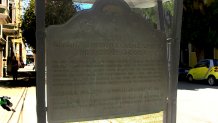
Joe Rosato Jr./NBC Bay AreaJoe Rosato Jr./NBC Bay Area
A plaque hanging near Camp and Albion streets in San Francisco’s Mission District celebrates a mass held by members of the Anza party on June 29, 1776, which many historians consider the unofficial founding of San Francisco.