
A gray tempest tore through Oakland University’s Student Center on the drenched, humid morning of June 26.
Board of Trustees meetings at universities generally hold about as much entertainment value as paint drying. Perhaps especially enthralling paint. But paint still.
Oakland’s meeting was the exception.
It was devastating.
The memory of the dead was invoked.
Frequently.
Matilda Dodge Wilson was said to have cared about the data center in every way.
It is quite possibly the most times her name was uttered in a single morning since her wake.
Both sides claimed her spirit as their comrade. But the only fair assessment is that if by some dark necromancy, the heiress was brought back from the nether and asked about a data center — or data infrastructure project, as some float at the new preferred vernacular — she would likely only reply, “What the devil is that? Also, how would it affect the foxhunts here?”
Tensions ran hot on more than just the morals of the departed, however.
There have been rather chill protests and clear discontent over the data infrastructure project since its conception.
Today was not that.
“I have not seen this much [security] on campus,” Marcus Johnson, the former student congress president, contemplated for a moment — pausing with the thoughtfulness befitting a leader, “since the Charlie Kirk memorial.”
The event was packed. Attendees flooded the banquet hall.
“I raised my kids here and lived here for 40 years,” said Sharon Thomas, a Rochester local. “It’s scary for me, and for them. All the pollution.”
Security punctuated the flows of people, like buoys on a shipping lane. Catchy signs protesting the center were held by almost everyone in the last rows.
The traditional row of academic rulebreakers.
Board of Trustees meetings are tedious, dense and uninteresting by their very nature. Dry. Sterile things. The dull ennui pain is unique only to taxes, funerals and city hall meetings.
Many city hall clips have claimed internet virality for their heated tenor and choice prose. Frustrated local officials scramble around an audience much more volatile than the overly involved housewives and politics freaks that they were stereotypically used to.
Oakland’s meeting was right at home among such viral moments.
Senior Vice President Mackey would hunt for words, seeking cover from speeding verbal projectiles between audience uproar.
He handled it rather skillfully.
Mackey has been holding dialogue with the opposition for many months now. He has heard it all.
To call him numb to the criticism is undoubtedly unfair. It is most unlikely that one has had such insults cast upon them and feels nothing.
But you wouldn’t know by his eyes. Like the wryest of poker players.
The same could not be said of the board more broadly. Shortly after Mackey completed his presentation, it was passed to the board. A recess was called.
Security and faculty ensured the crowd was tempered.
The board voted unanimously, with one abstention, to continue exploring the data infrastructure project.
The protesters dispersed. Unhappy.
What could have gone so wrong?
The site was moved to appease critics. The original site impeded heavily upon the campus’s Native American Heritage site. The board seemed to expect some concession for it.
They were met with increased vitriol. Why? Both sides need to think outside the box. The board should consider that not all students benefit equally from the project.
The board appeared genuinely surprised that moving the site failed to reduce opposition. That surprise reveals a deeper disagreement than simply location.
Students in the liberal arts are not broadly anticipating novel discoveries and job opportunities from AI. There is no English program in the world begging for a supercomputer.
The same can be said of many programs. It is hard to imagine the benefits presented to a student studying history, accounting, public relations and most other liberal arts programs.
They exist. Assuredly. But they are not obvious.
The programs that benefit engineering, IT, medical and other fields that use large models use them disproportionately compared to other fields.
The group of protesters was remarkably diverse, but there were some noticeable absences.
“I would not say there is a massive rift, divided by program,” added Marcus, “but the sciences seem to go one way, and the arts go the other.”
The university — and academia more broadly — stand at an impasse.
Random Access Memory (RAM), data storage and computing are becoming dramatically more expensive.
This past week, Microsoft announced price increases across its catalog due to increased component costs and discontinued its console with the largest storage requirement.
This is not an isolated incident. Apple and other companies all over the tech sector have made similar plays. What makes Microsoft’s increase unique is that they justified it by citing a doubling in component cost since just last year.
And predicting another doubling expected by the end of next year.
AI, consoles and strong computers all need the same RAM to make anything happen.
The market for individuals skilled with AI is also expected to increase dramatically.
Even assuming the protesters got their staunchest wish, and the project was struck down entirely, it would only necessitate a similar future project.
If future trends continue, that project could end up being more expensive. If some of the world’s biggest companies have to cut back on data capabilities, universities will likely share the same fate.
Waiting will make it more expensive and, barring a fabulous AI bubble burst, the university will need it more.
So, how to iron the crease?
The university needs to clarify how the project benefits the whole student body.
Even the students who never touch AI or data sciences during their time at university.
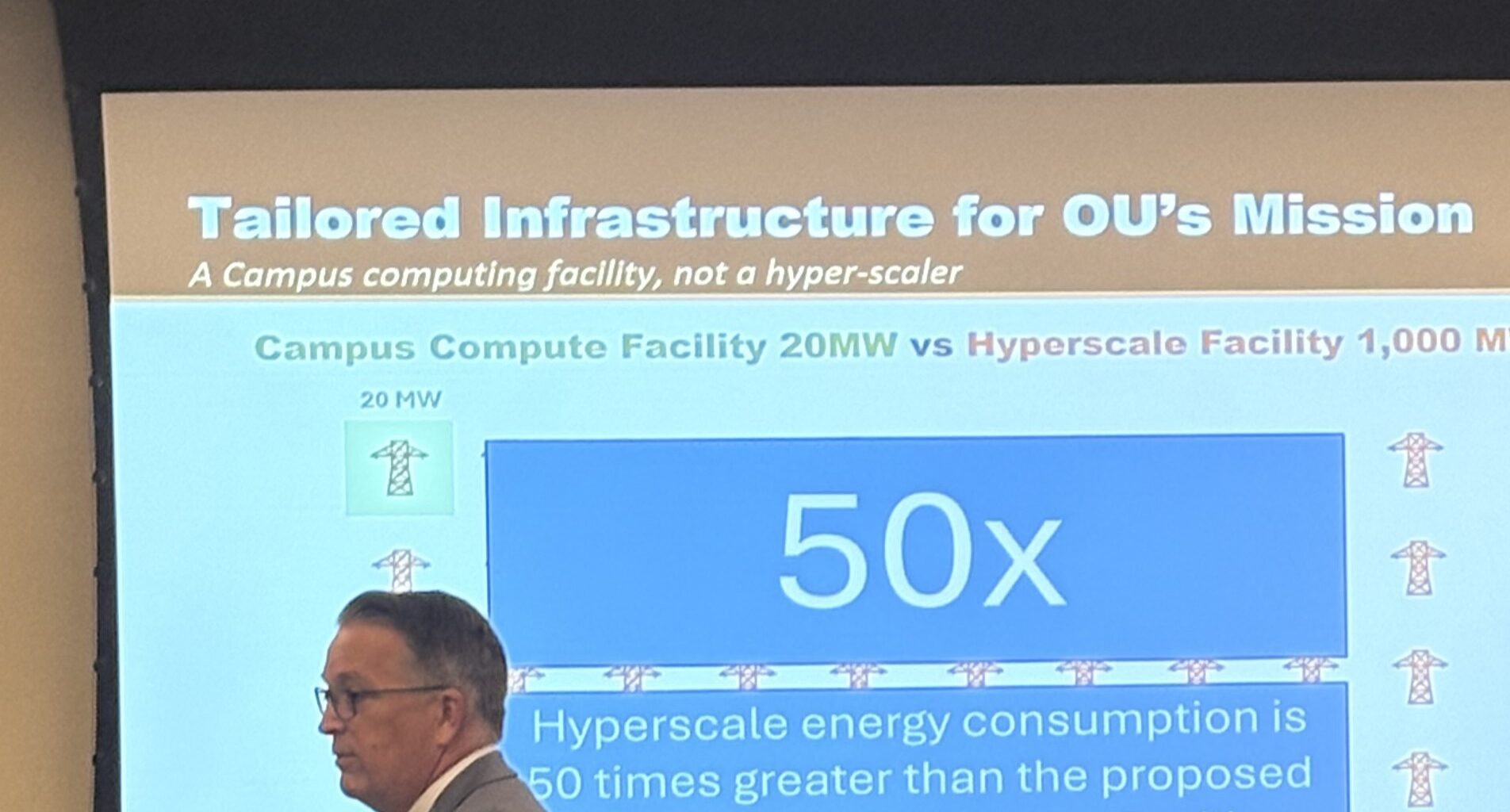
The current project guidelines indicate that a majority of the compute will be made available for lease to commercial partners. In the near future, the power to compute may be a rare commodity that could represent a serious income stream for the university.
What would that money do? What could it do?
The board should also be less timid in describing the research potential the project may yield.
It is also time for the naysayers to exercise creative negotiation and concession.
If the university must give more to some departments, at the cost of some beautification, what will they be willing to give to others?
One truth Matilda Dodge Wilson might have appreciated is that it is pitiful to be a chariot driver in a world full of automobiles.