
Shannon Grove is wrapping up 16 years representing Kern County first in the California Assembly and later in the State Senate.
As a fiery Kern County conservative, it might sound odd, but she takes great pride in working. across the aisle with Democrats to get legislation she believes in passed in both houses.
“Obviously it’s been difficult at times but I’ve been able to build relationships on both sides of the aisle,” she said.
In her career, Grove was first elected to the Assembly in 2010, taking the seat being vacated by another Kern County Republican, Jean Fuller, who was termed out of office as the California’s term limits began to take effect.
Fuller moved on to the State Senate, and, eight years later the same thing happened; Fuller was termed out and Grove was elected to her seat again.
Over the years she has earned a reputation for her conservative views and advocacy for the private sector, especially the oil and gas industry and agriculture.
But there’s a lot more.
One of her proudest achievements in the assembly was her role in closing down state facilities for the developmentally disabled that just locked up young people with disabilities and instead got funding to place them in the community.
She said the young people were just “warehoused” before that.
“It was bad, really bad,” she said.
She said success on helping get the young disabled people out made her the first Republican.
“Why can’t people who have disabilities enjoy the same things in life that everyone does?
She’s also been named “Champion of the Disabled Community” four times.
She’s well known in Kern County for her advocacy for the oil industry, under siege from Democrats who want to put it out of business in the battle over climate change.
Again, she reached out to Democrat to help pass legislation to allow permits to be issued for new wells.
One of her last projects in the Senate is a bill to limit the crimes that diversion can be given to criminal defendants, allowing them to skip jail time and even an arrest record.
SB 1373, a bill she co-authored with State Sen. Susan Rubio (D-West Covina). According to Grove’s office, SB 1373 “will ensure that those who commit certain crimes are no longer eligible for diversion; it will give judges the discretion to deny diversion, and it will ensure that prosecutors have more tools in their tool chest to make sure inauthentic cases do not receive diversion.”
Grove’s story begins long before Sacramento.
A United States Army veteran, small business owner, mother, and lifelong Kern County resident, Grove entered politics with a belief that rural California deserved a stronger voice in state government. In 2010, voters elected her to the California State Assembly, where she served three terms before being elected to the State Senate in 2018.
Over the years, Grove became known as one of the Legislature’s most outspoken advocates for agriculture, energy, water infrastructure, public safety, and the communities that often feel overlooked by policymakers hundreds of miles away in Sacramento.
Like many legislators who represent large urban districts, Grove’s focus has never been concentrated on a single city. Instead, her district stretches across vast portions of the Central Valley and includes dozens of rural communities whose economies depend on farming, oil production, manufacturing, and small business.
That perspective shaped much of her legislative career.
“I have always believed that every community deserves a seat at the table,” Grove said. “Whether it’s a small town or a large city, the people I represent deserve someone willing to fight for them.”
Throughout her tenure, Grove authored and supported legislation addressing human trafficking, public safety, economic development, veterans’ issues, and workforce opportunities. She eventually rose to become Senate Republican Leader, one of the highest-ranking positions within the Legislature.
She said she’s very proud of her work to strengthen penalties for human traffickers and the men who hire prostitutes
She has also worked with Paris Hilton to protect teens who were often abused
at “troubled teen schools.” after being removed from their homes
While her work in Sacramento often focused on statewide issues, she took care of projects and programs much closer to home.
For residents of Taft and the Westside, Grove has long been a familiar face and supporter of local initiatives.
One of the most significant examples came when the Walter Glenn Natatorium faced an uncertain future. After years of closure and mounting operational challenges, Grove worked alongside local leaders and legislators to help secure more than $600,000 in state funding that ultimately helped bring the facility back to life. The funding became a critical piece of the effort that allowed the community’s only public swimming facility to reopen after being closed for several summers.
The reopening was more than a recreational achievement. For many families, it restored access to swimming lessons, youth programming, and a place to cool off during some of Kern County’s hottest summer months.
Grove’s support of local youth has extended beyond infrastructure projects.
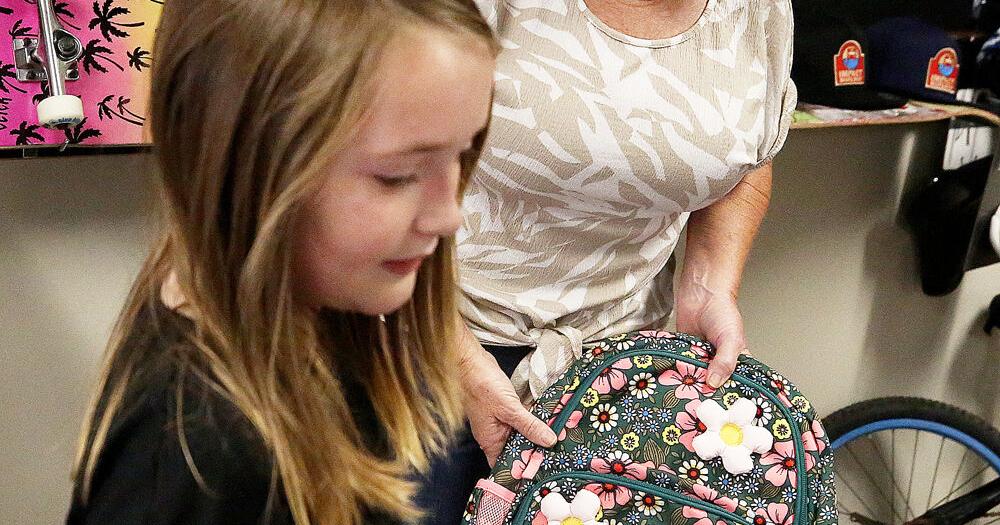
For years, she has organized annual backpack drives throughout the region, helping distribute hundreds of backpacks filled with school supplies to students preparing for the new school year. In 202, Grove put more than 400 backpacks into the hands of children in Taft and Lake Isabella through partnerships with schools, community organizations, and volunteers.
Her office has also made a point of recognizing local success stories.
In 2025, Grove awarded a California State Senate Certificate of Recognition to the Almost All Wheels program, a West Side Recreation and Park District initiative designed to teach youth bicycle repair, micro mobility maintenance, workforce skills, and mentorship. The recognition highlighted a program created by local leaders who believe young people can learn valuable life lessons through hard work, restoration, and service to others.
Those efforts may never generate statewide headlines, but they represent the type of community investment Grove says has always mattered most.
The senator has attended countless local events, ribbon cuttings, school functions, nonprofit celebrations, and community gatherings throughout her district. While legislative accomplishments often dominate political résumés, many local residents remember Grove for something simpler — showing up.
As her legislative career moves toward its conclusion, Grove says she remains optimistic about the future of California’s rural communities.
“There is so much potential in places like Taft,” Grove said. “The people here work hard, care about their neighbors, and never stop fighting for their community.”
For Taft, that support has been visible through grants, recognitions, youth programs, educational opportunities, and community partnerships that have strengthened local organizations over the years.
Whether helping secure funding for the Natatorium, recognizing Almost All Wheels, supporting local students through backpack drives, or simply maintaining a presence in the community, Shannon Grove has left a mark in Kern County that extends beyond legislation.
When her years in public office are eventually measured, the numbers will tell part of the story — Assembly Member, State Senator, Senate Republican Leader, and more than a decade in Sacramento.
Now she hoping to move to serve on to the State Board of Equalization and will be in a runoff Democrat Nelson Esparza.
Her plans if she wins?
“My goal is just tocontinue to fight for the taxpayer,” she said.