
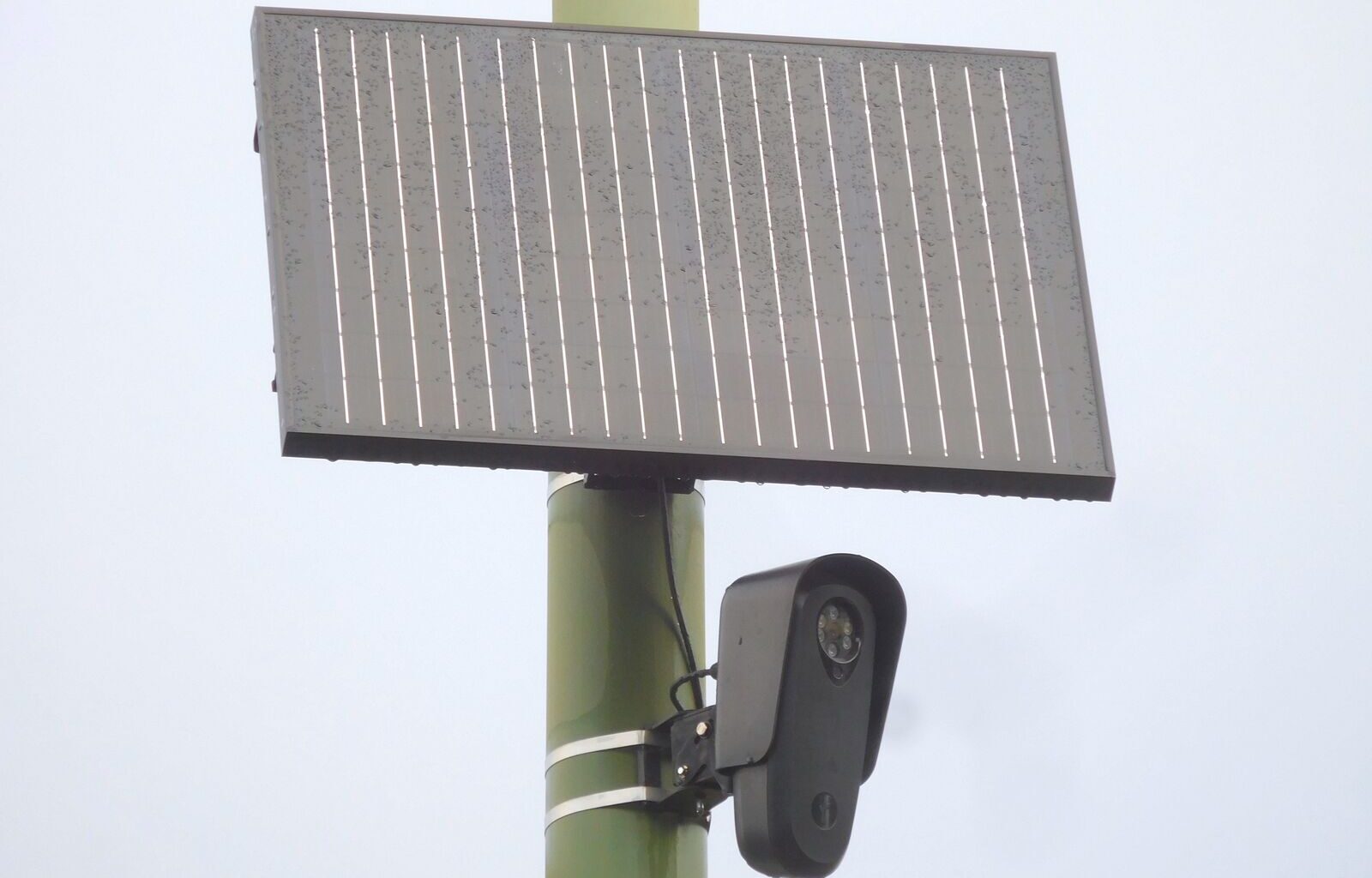
Alameda County’s new $2.4 million contract extension with Flock Safety, approved by the Board of Supervisors on Tuesday, includes automated license plate readers, which capture data from the backs of passing vehicles; pan-tilt-zoom cameras that provide operators with a real-time view of public areas; and a fleet of drones.
The sheriff’s department will also have access to Nova, software that allows users to centralize data from computer-aided dispatch and record management systems and access open-source intelligence data.
But Alameda County leaders’ approval of the powerful new police surveillance technologies comes just as new concerns about who can access all this sensitive data were aired out.
Last month, San Francisco police revealed that a “fusion center” known as the Northern California Regional Intelligence Center (NCRIC) accessed data from San Francisco’s Flock system. A different fusion center, the Western States Information Network, illegally searched NCRIC’s data on behalf of out-of-state and federal agencies.
California law bars the state’s law enforcement agencies from sharing license plate reader data outside of the state, but officials have repeatedly violated this rule.
SFPD shared data collected from OPD’s Flock system with multiple federal agencies, according to reports last year. These violations have received more public scrutiny during the Trump administration because license plate readers have been used by ICE and others to track immigrants, or by police in Texas and other states that have outlawed abortions against people seeking reproductive healthcare.
Sheriff’s office staff said Tuesday at the supervisors’ meeting that they conducted an audit and confirmed that the Northern California Regional Intelligence Center and the Western States Information Network accessed the county’s system and improperly shared data. They said these searches were for legitimate law enforcement purposes and only applied to a small fraction of the overall searches conducted over the past year.
Sheriff Yesenia Sanchez said she responded by reducing the number of agencies her office directly shares data with. Sanchez said that her office has taken significant steps to prevent further abuses of state law.
“I am disclosing to you and the community what happened, and what corrective actions we took,” Sanchez said, adding that her office “shut off half the state” in response.
Concerns about Flock and how police use its data aren’t new
Some county officials have expressed reservations about Flock, citing news reports detailing how the company’s surveillance tools have been used by law enforcement track people seeking reproductive healthcare and search for undocumented immigrants. The sheriff stressed that the agreement with Flock is a “bridge” contract while the county conducts a request for proposals from other vendors for a future agreement.
This promise didn’t assuage Supervisors Nikki Fortunato Bas and Elisa Márquez, who voted against the contract.
Bas said she appreciated some additional safeguards the sheriff incorporated into the agreement, but asked to hold the item to consider further changes proposed by Secure Justice, a nonprofit government watchdog group. Brian Hofer, Secure Justice’s executive director and an Oakland resident, sued Oakland last year for allegedly sharing license plate reader data with federal police.
“For me, this isn’t about the technology. I know we need it,” Márquez said. “But we need to have stronger safeguards in this county, which we currently don’t have.”
Supervisors David Haubert and Nate Miley were unmoved by these arguments. Miley said he wouldn’t be doing his job if he denied the sheriff access to this technology. The sheriff has already addressed concerns previously expressed by the board, he said. This included outlining restrictions around sharing of data, affirming the county’s control and ownership of Flock data, and demanding immediate notification of breaches, among other things.
Haubert stated bluntly that he doesn’t believe the Flock cameras are being misused.
“These cameras are meant to keep us safe,” Haubert said. “I don’t believe that they are widely used by ICE. Has it been that it’s happened? I don’t think it’s widely used by the federal government. I don’t think it’s used to surveil people.”
While ICE doesn’t have direct access to Flock cameras, local law enforcement agencies outside of California have knowingly and purposefully shared data from their own systems with that agency, according to 404Media. And Flock’s surveillance capabilities are vast: Oakland’s license plate reader system captured data from over 638 million license plates last year.
Haubert argued that if the board didn’t take action on Tuesday the sheriff would be out of contract with Flock. It’s not clear what would have happened if the county had postponed its decision.
Oakland approved its current contract with Flock last December. But as of several months ago, OPD acknowledged that it hadn’t finalized the contract, according to the Oakland Observer. In April, OPD told The Oaklandside that the contract process was ongoing.
Haubert also dismissed the critique that Flock cameras disproportionately target people of color. He recognized Brenda Grisham, a Black Oakland business owner and mayoral candidate, who was sitting in the audience during the supervisors’ meeting to express support for Flock. Grisham has been a vocal defender of Flock in other cities, including Richmond and Berkeley.
“There is never going to be a perfect system, but we have the system working for us,” Grisham said during Tuesday’s meeting. She said that her daughter’s car was recently stolen and recovered with help from license plate readers. Grisham was one of a handful of people who urged the board to approve the contract, including another Oakland mayoral candidate, Mindy Pechenuk.
Roughly 40 people asked the board to spike the deal with Flock, with many raising familiar concerns about how this technology can infringe on privacy and civil liberties. Mike Katz, the director of the advocacy group Oakland Privacy, pointed out that the county’s agreement with Flock retains data captured on the license plate reader system for 365 days, which is far longer than in most other jurisdictions.
A homeowner and business owner who identified himself as Jordan warned the board that Alameda County is becoming more embedded with Flock with each passing year, making it harder for officials to extract themselves from their relationship with the company.
“They are not acting in good faith. They do not have the best intentions,” said Jordan.
“*” indicates required fields