
In 2004, 83% of California voters backed Proposition 59 — known as the “Sunshine Amendment” — which had a unique provision. It said state and local government bodies must construe statutes, court rules or other regulations broadly if they further the people’s right of access and narrowly if they limit access. This was meant to force the government to err on the side of openness.
Sometimes it worked as intended, including an Orange County case in which a Superior Court judge held in 2013 that a county database should be considered a public record and not be exempted because it was “software.” Since this was arguably a gray area, the decision pivoted on Proposition 59. A much bigger victory came in 2020, when the California Supreme Court unanimously barred governments from charging record requesters not just for copying costs but for the time workers spent assembling the records.
But in the big picture, the Golden State continues to be plagued by bureaucracies that slow-walk the release of requested documents, claim they can’t be found or simply never respond to requesters who don’t have the deep pockets to sue to force action.
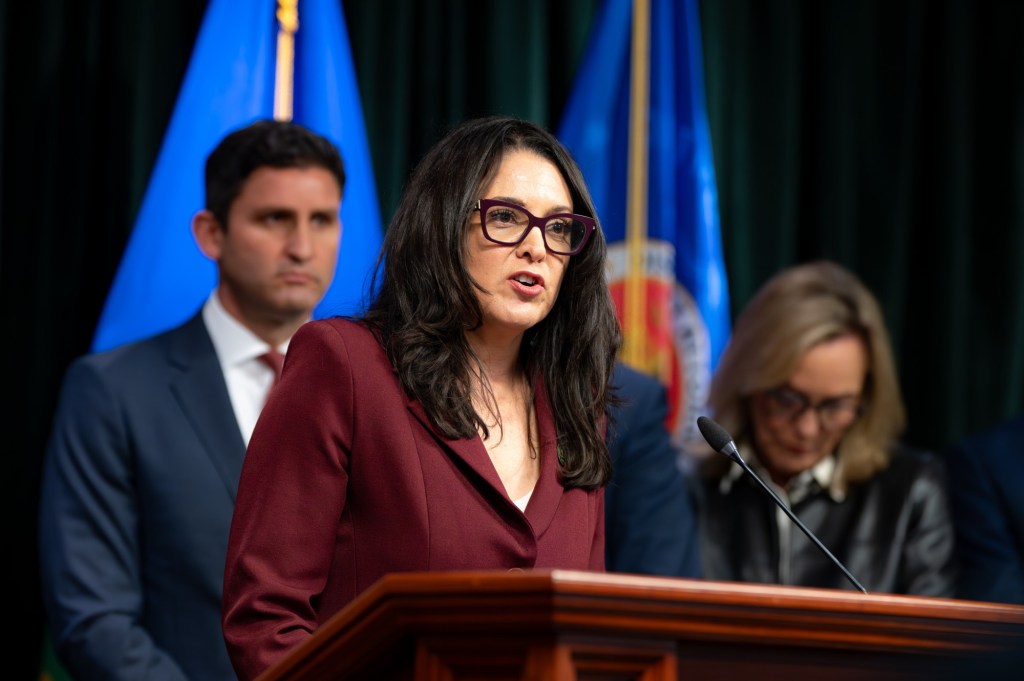
This backdrop made it astounding to see Assemblymember Blanca Pacheco, D-Downey, drum up support this spring for a bill that was a frontal assault on Proposition 59, premised on the idea that openness laws were being abused by some members of the public at great cost to government agencies. Assembly Bill 1821 not only would have allowed state and local agencies to charge people who file numerous records requests an unspecified, uncapped fee, it would allow those agencies to sue a member of the public merely for filing a public records request.
This week, after many critics noted that state law already gave agencies tools to deal with onerous record requests, Pacheco sharply scaled back the scope of her bill. This led the First Amendment Coalition to drop its previously fervent opposition. So perhaps transparency advocates dodged a bullet, since the bill was co-sponsored by the California State Association of Counties and the League of California Cities, which have ties to many members of the Legislature.
But her decision does nothing to change the fact that government officials — very much including those in San Diego — still know how to thwart the clear intent of Proposition 59.
For one example, last November, local activist Paul Krueger wrote for the Opinion pages about his efforts to get the city to provide more information about its response to a legal ruling that Mayor Todd Gloria blasted regarding the 30-foot height limit for construction in the Midway/Pacific Highway district. Aides to City Attorney Heather Ferbert refused to provide information, making the absurd claim that Ferbert’s office was “prohibited by the City Charter from giving legal advice to anyone but our client, the City of San Diego” — as if providing basic details about government actions was akin to legal counsel.
For a second, on June 27, another local activist, Danna Givot, wrote on our pages about the city Planning Department’s secretiveness on far-reaching housing policies it was developing behind closed doors. “I have been submitting questions to Planning Director Heidi Vonblum for a year without a meaningful response,” she wrote.
As Krueger wrote last year, the city has “a two-tiered ‘caste’ system of information sharing.” Those who support the mayor’s development policies get phone calls returned quickly. Those who don’t get little or nothing.
So much for Proposition 59 telling local officials they “must construe statutes, court rules or other regulations broadly if they further the people’s right of access and narrowly if they limit access.” So much for Gloria’s history of presenting himself as a good-government reformer. So much for Ferbert’s claims on the campaign trail in 2024 that if elected city attorney, she would be the independent voice that residents need at City Hall.
State transparency laws are welcome and necessary. But they are readily thwarted by the bad faith of elected leaders like San Diego’s mayor and city attorney.