
FRESNO, Calif. — Fresno is once again number one in the nation’s agricultural industry, topping $9 billion in 2024, according to the county’s Department of Agriculture.
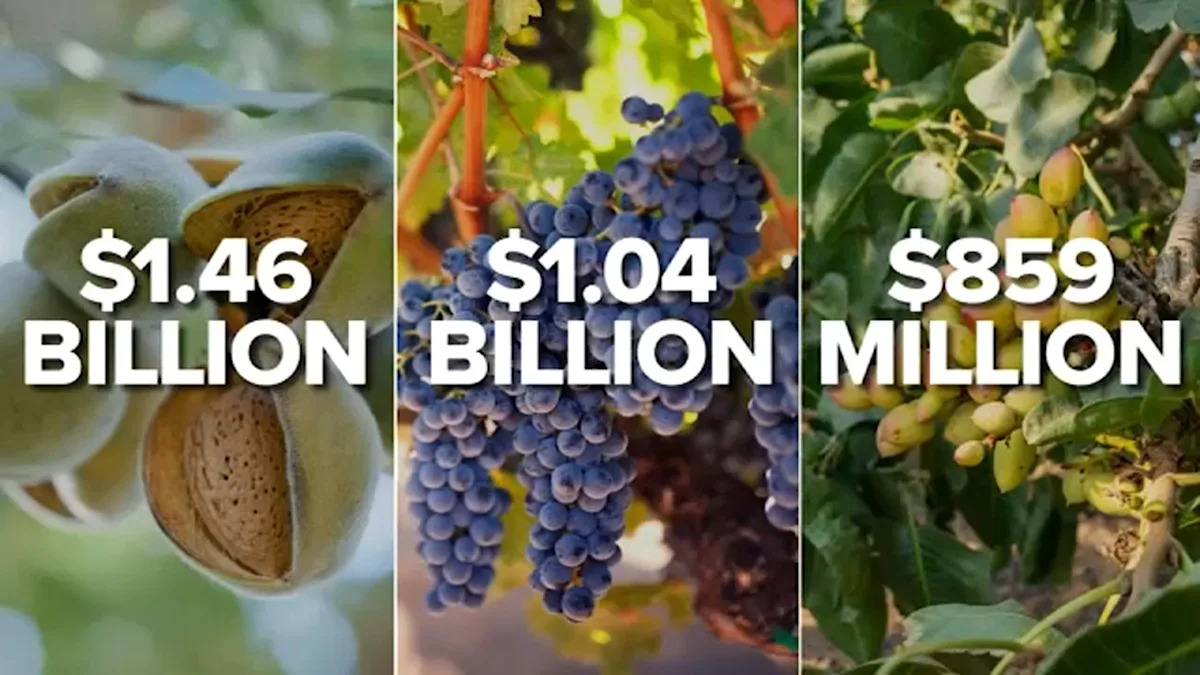
In particular, county officials said Fresno’s fruits and nuts, and its livestock and poultry sectors saw significant increases, at around 19% and 9% respectively. Almonds, grapes and pistachios took the lead for crops overall, with a combined total value of $3.36 billion.
Fresno also exported 96 unique commodities to 91 countries worldwide last year.
This year, the department released a report on economic contributions, adjacent to its annual AG Crop and Livestock report. Tuesday, the Fresno County Farm Bureau said while 2024’s industrial increase was a win, they’re worried about economic impacts moving forward.
“We’ve faced some very difficult times the last four years, from a combination of issues,” said Ryan Jacobsen, CEO of the Fresno County Farm Bureau.
Jacobsen added that less than average market prices, rising input costs, and higher interest rates have been a part of the problem. He also said that although 2024 was a good year for water in Fresno County, but several officials and farmers agree that shortages remain a concern.
“If we had all the water that we needed, I would be, probably, against adding solar farms. But we know that that’s not the case. And it’s not going to be the case,” said Fresno Agricultural Commissioner Melissa Cregan.
Others take a harder stance on solar farms.
“I don’t agree with it at all. Because it would never go back to farmland,” said Nisei Farmers League President Manuel Cunha, Jr.
Meanwhile, Fresno remains one of the world’s largest agricultural exporters. But farmers fear that, too, could change if the water supply decreases, including the possibility of relying on other regions for agricultural products. Jacobsen said if that were the case, it could impact not only the local AG production, but the economy and food quality, as well.