
Angelenos are getting ready to celebrate the 250th Independence Day across the city. But did you know California didn’t join the U.S. until 74 years after the Declaration of Independence was signed?
This week, Steven Hackel, a history professor at U.C. Riverside who specializes in early America, joined LAist’s AirTalk with Larry Mantle to discuss what our state was like at that time.
He said in 1776, California was one of the most densely settled regions in the Western Hemisphere. The state was populated with over 100 different tribal nations speaking a wide range of languages, according to Hackel.
“Wherever there was land — and animals and plants — people were living,” he said.
Keep up with LAist.
If you’re enjoying this article, you’ll love our daily newsletter, The LA Report. Each weekday, catch up on the 5 most pressing stories to start your morning in 3 minutes or less.
A complex economy was already common in Indigenous communities. He characterized it as a two-tiered system: communities relied on resources in their immediate area for survival, and participated in a “tremendous” exchange of goods, including spices and obsidian.
Spanish colonial influence was still “fairly light … but changes were afoot,” according to Hackel.
Most Indigenous communities remained in their ancestral villages, although missions across the state were growing. For the Indigenous people forcibly brought to the missions, the rebellions were “almost immediate,” he said.
California also wasn’t entirely cut off from the rebellion on the East Coast. When Spain joined France to support the colonies against England, California missions paid a tax to fund the Spanish military’s efforts.
Though it wasn’t yet part of the union, Hackel said that with their in-state rebellions and financial support of the colonies, our state was “integrated into this larger age of revolutions.”
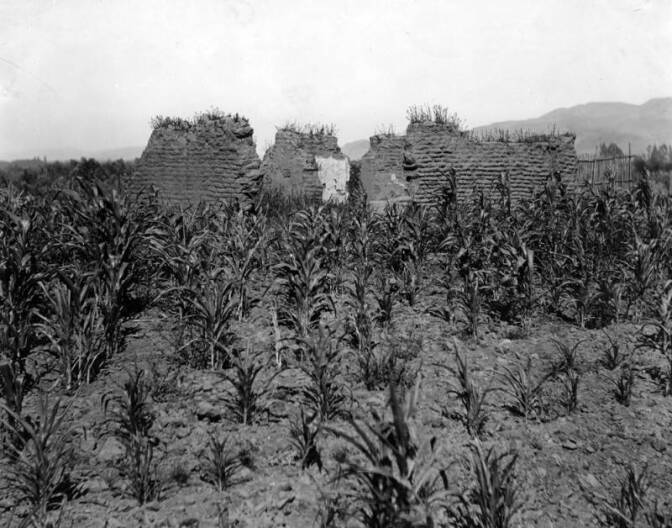
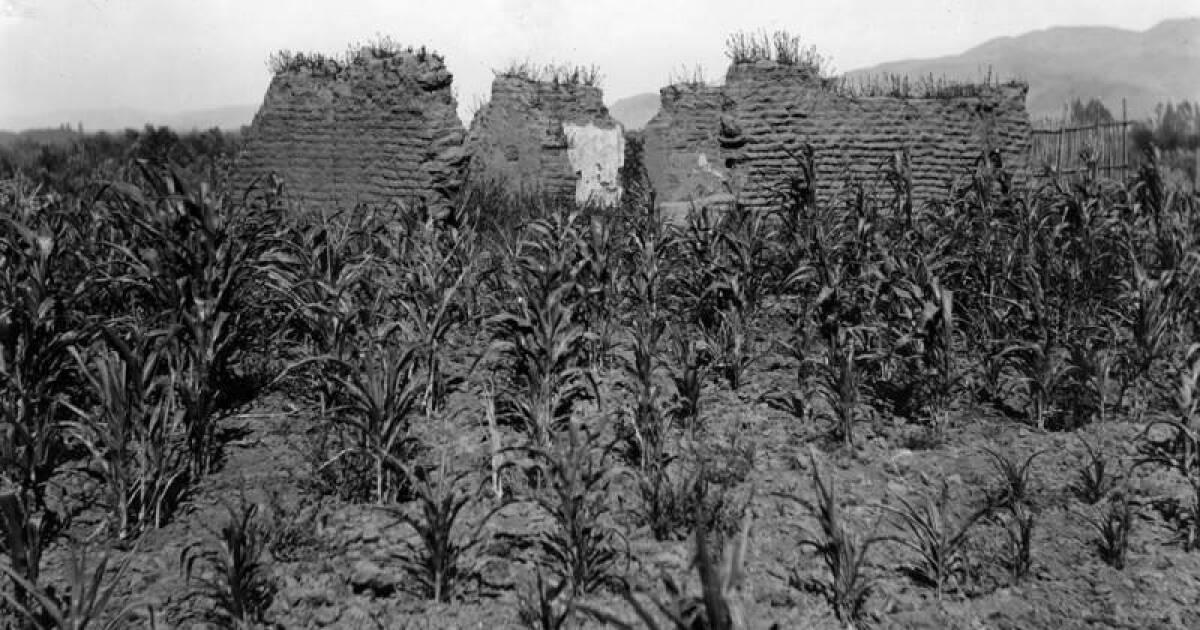
The ruins of Mission San Gabriel Arcángel, which was built from 1791 to 1805. The mission is often referred to as the “Godmother of the Pueblo of Los Angeles”.
(
Courtesy of The Los Angeles Public Library
)
The state’s biodiversity has also evolved since 1776. Miguel Ordeñana, a community science manager at the L.A. County Natural History Museum, said our region had a “vibrant, lush, thriving landscape.”
It was home to grizzly bears and other types of migratory birds and steelhead trout, according to Ordeñana
Spanish colonizers were afraid of some of those animals, he said, and paid for bounties on animals like wolves, bears, coyotes and mountain lions.
But long before the Spanish arrival, Ordeñana noted that Indigenous communities had coexisted with those animals for centuries before.
You can listen to the full conversation:
SoCal History: What did Southern California look like 250 years ago?