
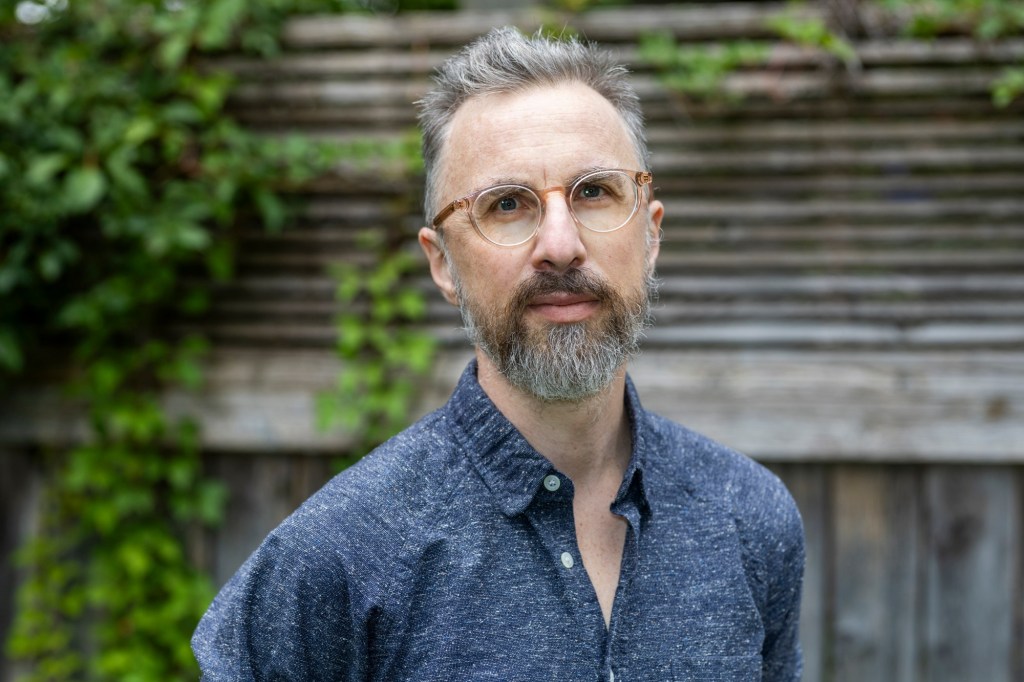
In his latest book, UC San Diego assistant professor Dan Werb isn’t looking to point fingers at his audience for the desecration of animal environments or the trickled down effects of climate change. Instead, he hopes to promote understanding.
“Our Wild Familiars: How Animals are Adapting to Cities and Reshaping the Natural World,” tells the story of humans and the undomesticated creatures that have learned to not just survive but, in some cases, thrive alongside them.
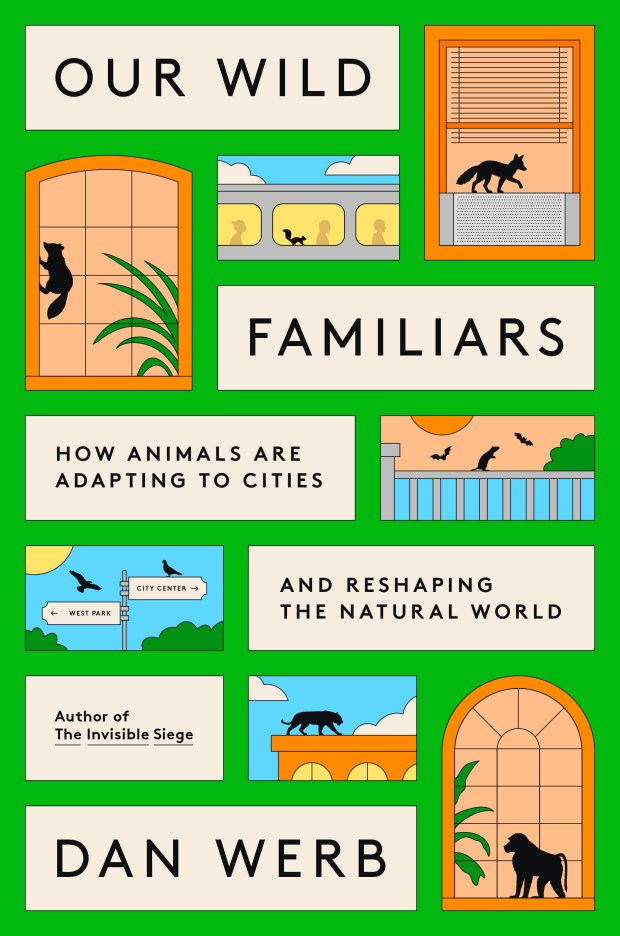 “Our Wild Familiars: How Animals are Adapting to Cities and Reshaping the Natural World” is available for purchase on Tuesday, July 14. (Provided by Crown Publishing)
Each chapter focuses on a different creature (or synanthrope, meaning a wild plant or animal that lives near human settlements and benefits from the human-modified environment) and city in the form of a standalone narrative. Some examples covered in the book include coyotes in Los Angeles, rats in New York City, octopi in Seattle and raccoons in Toronto. In La Jolla, examples include sea lions at The Cove or coyotes in residential areas.
Werb moved to San Diego in 2013 for a postdoctoral position at UC San Diego, focusing on HIV research at the border with sex workers and people who were injecting drugs. Since then, he has spent time in both San Diego and Canada, where he’s on the staff of the University of Toronto.
“Our Wild Familiars” is his third book release. His other two are “City of Omens: A Search for the Missing Women of the Borderlands” and “The Invisible Siege: The Rise of Coronaviruses and the Search for a Cure.” The latter won the 2022 Hilary Weston Writers’ Trust Prize for Nonfiction in Canada.
Both tackle weighty subject matter.
Thus, Werb told himself his third book would strike a lighter, more optimistic tone. In writing it, he also sought to push back against books where “the author is moralizing about how badly some humans act,” Werb said.
“I wanted to write a book about climate change that didn’t start and end with absolute despair,” Werb explained. “For me, I get amped on hope and wonder and connection. … That feels like a better starting place to think about the world and how we might change it for the better.”
Research on what would eventually become “Our Wild Familiars” began in 2023. The next spring, the narrative began to come together. In its final form, Werb describes his book as “a guide for the curious.”
He said, “I think the way that you motivate change is through connection and feeling like you understand the world better and how it works along with efforts to create behavior at the city and municipal level. … I tried to go into this book with zero nostalgia and not try to judge people for the way they live their lives. I think the challenge is that we’re not going to solve climate change by making everybody feel bad about themselves and feel ashamed. There needs to be structural shifts that happen.”
One of which is expected through what some scientists call “the great urban shift,” a process in which climate change propels a large species turnover in urban places.
“For me, that’s a crazy phenomenon,” said Werb. “It’s something that we should be aware of because it’s interesting and could potentially make our lives even richer. But I think it also centers cities and towns as sites of conservation. And that is super exciting.”
“Our Wild Familiars” is available for purchase as of Tuesday, July 14.
The author will appear at Warwick’s bookstore at 7812 Girard Ave. in La Jolla two days later for a discussion and signing of the book at 7:30 p.m. The conversation will be moderated by Tiffany Fox, who was recently named director of communications for UCSD’s Halıcıoğlu School of Data Science and Computing and the San Diego Supercomputer Center.
Learn more about the upcoming event at warwicks.com/event/werb-2026.