
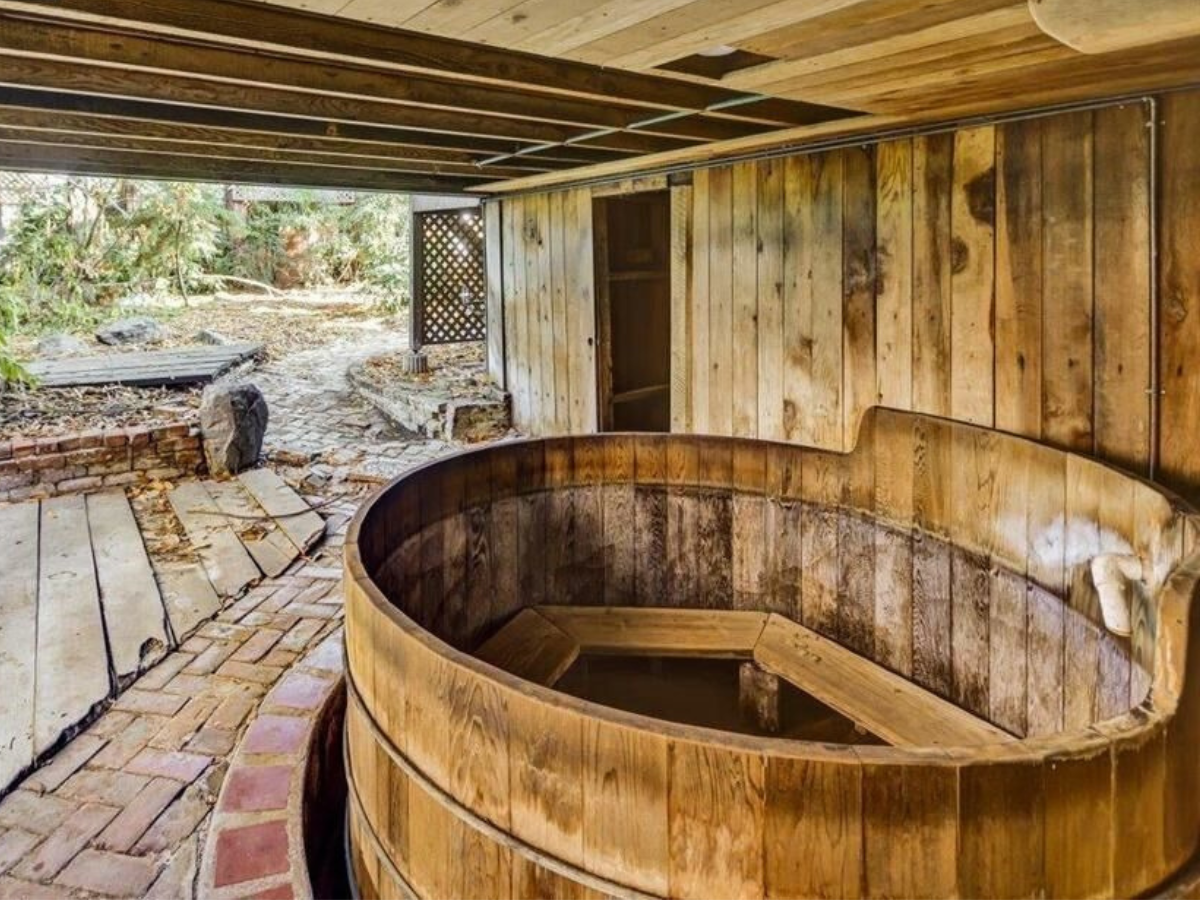
 A South Berkeley home once invited people to soak in its communal hot tub, a tradition that ended after its owner was found dead in the spa. Credit: Blue Sky Photography
Two years after a man battled his neighbor’s plans for a backyard hot tub all the way to the City Council, Berkeley officials are moving to reform the approval process for home spas.
The council last month advanced a proposal that asks planning staff to allow nearly all of the city’s homeowners to receive fast-tracked permits to install hot tubs, rather than the more exhaustive process they must go through now that includes opportunities for neighbors to challenge those projects.
Claremont District homeowner Richard Spohn used the appeal process to try to derail the hot tub his next-door neighbor wanted to include in a backyard renovation, spending $2,000 on a seven-month campaign to challenge the permit before Berkeley’s Zoning Adjustments Board and City Council. Spohn wrote in his often bombastic appeal that the proposed hot tub would destroy the serenity of his home, saying he feared the prospect of raucous parties with “several jolly hot tubbers whooping it up over a long soak” and noisy equipment running around the clock.
The council unanimously rejected Spohn’s appeal in February 2024. Spohn died later that year, at 81.
“I just remember thinking it was so unnecessary, and caused so much consternation,” said Councilmember Mark Humbert, whose district includes the two neighbors’ homes.
Humbert put forward the proposal to simplify hot tub approvals, which noted Berkeley already uses streamlined “over-the-counter” permitting for the housing known as accessory dwelling units — meaning the process to build a cottage in a backyard is simpler than the one for a hot tub. The only homeowners who couldn’t receive expedited approval would be those in the Panoramic Hill neighborhood, which the city designates as an environmentally sensitive area, though the proposal would allow them to receive a simpler administrative use permit.
Berkeley is the birthplace of the home spa — its inventor, Candido Jacuzzi, owned a machine shop on San Pablo Avenue — but Humbert said he isn’t aware of any other cities that require home hot tubs to go through a permitting process as extensive as the one here. He contends the city’s building and fire codes are already sufficient to ensure hot tub projects are safe and don’t disturb neighbors.
“It’s a waste of time for [the] council, it’s a waste of time for the Zoning Adjustments Board,” Humbert said of the current process. “This is not a major, major thing, but in this budget-constrained time we want to give as much relief as we can to staff in terms of the time they spend on unnecessary items.”
The proposal approved by the council at its June 9 meeting was a referral to city staff, who will have to develop the changes and bring them back to the council for final approval.
The hot tub project that inspired the changes, meanwhile, still hasn’t been built. City records show the homeowner who proposed the jacuzzi, UC Berkeley professor Homayoon Kazerooni, hasn’t sought the permits he would need to break ground; Humbert said he believes the contentious approval process “soured” Kazerooni on the project. Kazerooni did not respond to messages from Berkeleyside seeking comment.
“*” indicates required fields