
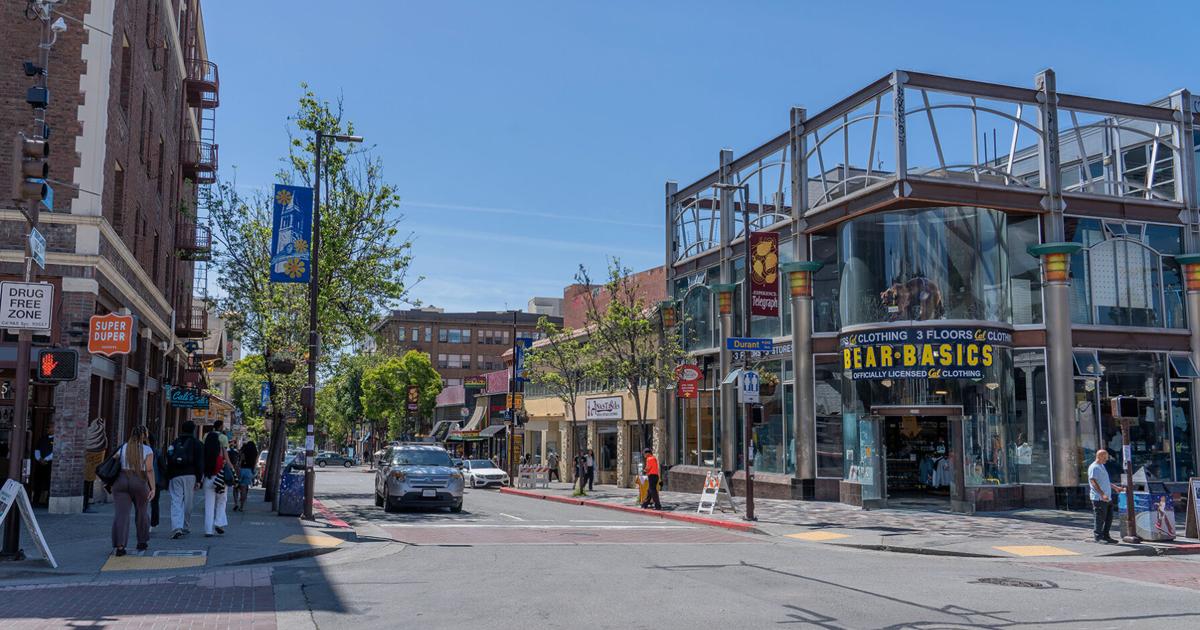
Like many of my UC Berkeley peers, I jaywalk often. I did, at least, until I watched a city bus tear through Durant Avenue just a few feet away from me while speedwalking to my 9:30 a.m. seminar. I was forced to consider: Why was I this pressed for time?
When I first learned about Berkeley Time after years of showing up late to nearly all of my first period classes, I was thrilled. A school that ran on my own sense of time — or lack thereof — a school in which it was acceptable, even normal, to show up after the hour to classes, club meetings and dinner dates.
Besides, the campus is built for jaywalking students looking to save a minute or two. Are we kidding? Surrounded by a constant crowd of fellow jaywalkers, finicky lights and an inconsistent stream of cars, I rarely find myself able to resist the temptation of jaywalking.
Following my year of jaywalking across just about every street near campus, of running on Berkeley Time or a little behind it, I have come to a new conclusion about time at our beloved University of California, Berkeley. Berkeley Time is not the innocuous addition to my life I once believed it to be, nor the convenient grace period of my baby-bear idealism. Rather, my overreliance on Berkeley Time and jaywalking may be exemplary of a very UC Berkeley brand of hubris: the belief that we can not only thwart the passage of time but take control of it.
Modern time originated as a solution to a practical problem: It coordinated life in an industrializing world. For millennia, towns kept their own local time, setting their clocks according to the position of the sun; well into the 1800s, there were more than 144 local times in North America. As the railroad system expanded, this timekeeping patchwork became impractical: Railway stations could no longer coordinate arrivals and departures using dozens of different local times.
In 1880, Great Britain legally standardized Greenwich Mean Time, setting a precedent for other industrializing nations. In 1883, American and Canadian railroads adopted four standard time zones across the continent. In 1884, the International Meridian Conference convened to create the 24 global time zones used today.
Yet as the industrial revolution transformed economies in the 19th century, standardized time became more than a way to coordinate trains: It became a means of controlling labor.
Factory whistles, time clocks and regimented shifts divided the workday into measurable units, and employers were able to maximize the productivity of an increasingly mechanized workforce. In his 1857 notebooks, compiled in the “Grundrisse,” Karl Marx argued that all economic activity is governed by the distribution and discipline of time, writing that “all economy ultimately reduces itself” to the “economy of time.”
The logic of the factory has increasingly extended beyond its walls; Every idle moment becomes raw material to be converted into “productivity.” Today, time is easier to track than ever before. Our watches count our steps and our phones kindly tell us just how long we stare at them. Gone are the days of hulking analog clocks and the luxury of losing track of time. In their place has arrived the ability to map, measure and optimize nearly every moment of our lives.
As the digital age has progressed, it feels easier than ever to escape the typical constraints of time. As AI developers race to delegate menial tasks to computers, we all have access to technology that allows us to literally cheat time.
The UC Berkeley community has not hesitated to utilize this technology. We use it liberally, skipping the time it takes to make flashcards and find quotes for the first draft of an essay. This suggests a more fundamental question: What is worth taking the time to do as humans? What tasks should we deign to complete ourselves, with our precious, finite, frail bodies and minds?
Some students have clearly decided that the answer is not schoolwork. In a trend attributed to increasing AI use, campus’s spring 2026 CS 10 class had a failure rate of 35% — an alarming jump from the failure rate of 7% in spring 2025 and 3% in fall 2025.
Of course, I understand the temptation. On a campus where everyone seems to be running toward something — whether that be to lead a club meeting, apply for an internship or spend the night in Main Stacks — can we limited humans blame ourselves when we want to make up time wherever we can? When we abuse Berkeley Time and jaywalk across Durant Avenue like our life depends on it? What else are we to do?
But this justification is shortsighted at best and self-defeating at worst. By believing that we can escape the demands of typical workloads, we offload our brain power and shortchange ourselves in the long term. My twin habits of abusing Berkeley Time and jaywalking allowed me — nay, encouraged me — to think of time as something to optimize rather than experience.
In adding a 10-minute grace period to the time stamped on my bCal, Berkeley Time allows me a respite from the stressors of campus’s oft-lamented hustle culture. The same spirit is endemic to jaywalking as well — provided it is not done out of necessity.
Jaywalking for leisure affords me the increasingly rare opportunity to be willfully ignorant. There’s a thrill in sacrificing my safety at the altar of Luddite defiance, taking a stroll for pleasure rather than efficiency. The traffic lights don’t run this city; I do.
In practice, though, I believe that jaywalking and Berkeley Time alike allow us to think of time as mutable to our desires and our lack of time management skills. They cheat what makes us human: our limited time and our inability to control what, exactly, we do with it. Yet it is within that exact tension that I find meaning. The fact of our limited time imparts an added significance onto our choices.
After my revelation, I made an honest effort to not jaywalk in the final months of school: I accepted my tardiness sometimes, and other times I made an effort to do something about it. This summer, too, I have kept the faith; I have not jaywalked as I walk to work or to meet my friends — a task admittedly made much easier by the lack of temptation I face on the mean streets of Marin County, California.
On these walks, I let myself look around; I let myself wait for the light to change. I feel, I’ll admit, a refreshing thrill of moral supremacy. But more importantly, I have become acquainted with that age-old tension between limitation and expectation, between faults and humanity.
As UC Berkeley students, we learn to be ruthlessly efficient, pragmatic and disciplined. We learn to be meticulous about the path of our lives and the day-to-day choices that shape them. Rarely, though, do we learn to be as careful with our time — to walk slowly and intentionally along the path less traveled.