
Yellow walls, flickering lights, an innate sense of something behind the corner watching you, stalking your every move while the sun creeps outside — these are the backrooms, endless mazes of eerie chambers with no obvious exits and no foretelling of what’s inside. With how the new “Backrooms” movie built up such fascinating spaces both in our minds and in our movie theaters, you may be left with a throbbing desire to explore your own liminal spaces. With hundreds-of-years-old buildings on UC Berkeley’s campus, the campus’s innate sense of nostalgia and dread may satisfy that desire.
Dwinelle Hall: the maze
It’s nighttime on campus, and you’re entering a common spot any UC Berkeley student recognizes — Dwinelle Hall. This is the heart of humanities classes and a daunting 300,000 square feet, built after World War II to fit offices and classrooms for a growing campus. Dwinelle’s location on a hill creates the maze, with ground entrances on varied floor levels. Although seasoned seniors may now feel comfortable navigating here, with one wrong turn, they too become as lost as freshmen. Walking inside, you’re met with endless hallways, seven stories of classrooms and elevators that supposedly go to level “C” but actually drag you to a dead basement filled with cardboard boxes violently torn open. You may even find Ishi Court, only appearing when you least expect it. As you explore with dread, a sense that you’re lost but also at home, your soul is swallowed by misplaced comfort.
Main Stacks: the underground
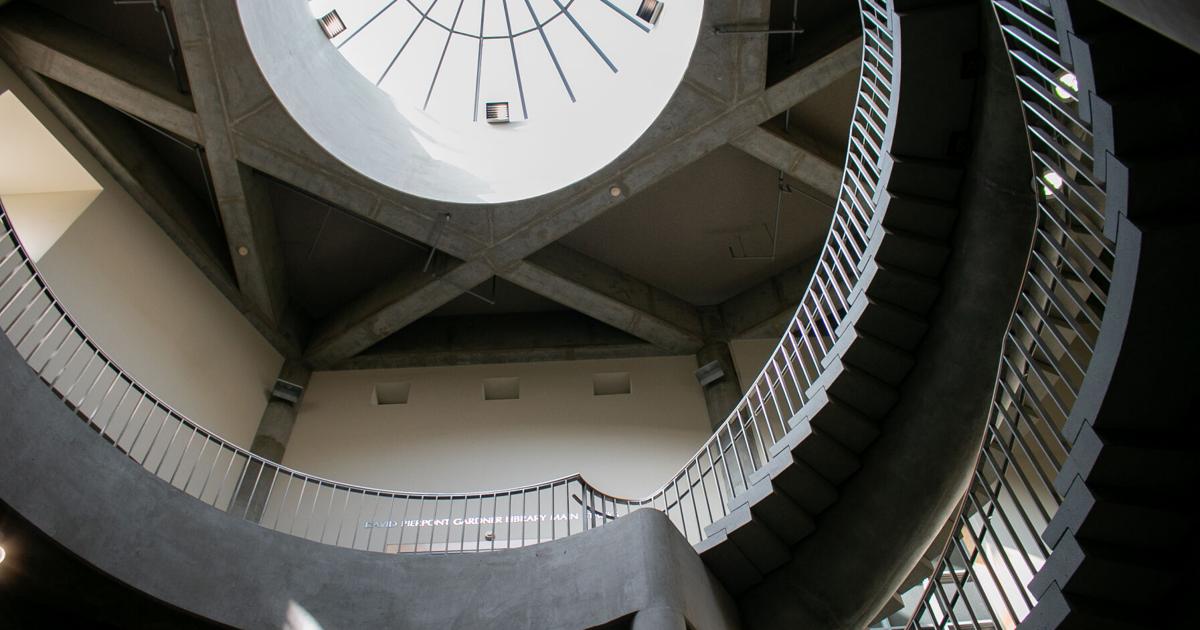
An elevator descends into the ground, and you’re met with bookshelf after bookshelf, with never-ending walls that close in and out. Another popular spot on campus is Main Stacks in Doe Library, which transforms during the early morning hours. Level B contains a West Building, unknown to some, overlooking thousands of books and empty chairs scattered about. Levels C and D further envelop you in the underground, with no windows and an echo that traces your footsteps. When barely any students are there, you’re left alone, wondering if anyone will hear you enter — or ever hear you leave, if you manage to.
Chemistry department: the unexplored
Not many march into Hildebrand, Gilman and Latimer halls with confidence. When you do, you’re lost — why does a dimly lit passageway from Hildebrand lead into the basement of Gilman … or wait, was it Latimer? What seems like thousands of laboratories and windowless, narrow halls, the lower levels of the chemistry department, seek to be explored, but warn you when you do. You smell chemicals with low ventilation, you find seemingly abandoned storage rooms with human-sized wood crates, and you view warning signs on every door. Gilman, the oldest building in the chemistry department, creaks with every footstep. This is a world to discover if this universe allows you into its gates — and there’s only one way to find out!
The Faculty Club: the outskirts
Behind and around The Faculty Club are strange hilly passageways and gardens that always contain no other souls. Among the wooden trees, you take an evening stroll, only to wonder where you are and why you’re left in an abandoned parking lot with deer eyes staring at you from the dark abyss nearby. Chilly winds hit your shoulder as leaves rustle, warning you that the outskirts do not always welcome newcomers.
Eucalyptus Grove and Observatory Hill: the unknown
You’re late to class. It’s lightly raining, and you don’t feel like getting any wetter. So, like many students, you take a shortcut through the Eucalyptus Grove. You’re met with a mossy bridge, deep tree canopies and shadows on the ground reminding you of dangerous excursions into darkness. You trek up a pathway and find Observatory Hill. There’s a special stump in the middle of a clearing by Haviland Hall, near vague coordinates that UC Berkeley’s official info page has specifically marked: 37°52’27.3” N 122°15’38.2” W. I wonder if these numbers mean anything, or if the hidden stump has some uncanny importance that beckons you forward. These places are comforting yet strange, cold hugs threatening to envelop you in the unknown. Stay awhile, enjoy the views, but don’t enjoy such comfort for long.
Clark Kerr Campus: the abandoned
Originally serving as a campus for the California School for the Deaf and Blind, Clark Kerr Campus stands old and decaying. Walking through its pathways, this seems to be a normal dormitory; however, when passing by abandoned buildings beside the tennis courts, you’re transported back in time. A locked skate park looms in the distance, and corridors lead to nowhere. Shrubs threateningly grow against your feet, and coyotes howl in the background — this is a place of history. You are the present, a threat to a ground so treaded on, so don’t wander too far into the past.
These liminal spaces beckon your presence, a strange respite in the familiarity we take for granted on UC Berkeley’s campus. And if your own liminal space is not listed here, you can easily explore just by checking out buildings you’ve never entered before or finding that old trail and seeing an abandoned building. Just remember to stay safe and respect the property. Otherwise, happy searching — the backrooms await, and hopefully you’ll be able to escape!