
LOS ANGELES — For close to 150 years, nitrous oxide has been used for anesthesia at healthcare facilities, but one local hospital has moved on.
What You Need To Know
Keck Hospital at USC has stopped using nitrous oxide for sedation
The National Institute of Health said the U.S. healthcare sector accounts for roughly 8.5% of the country’s greenhouse gas emissions
Keck Hospital said it’s the first healthcare facility to remove the use of nitrous oxide
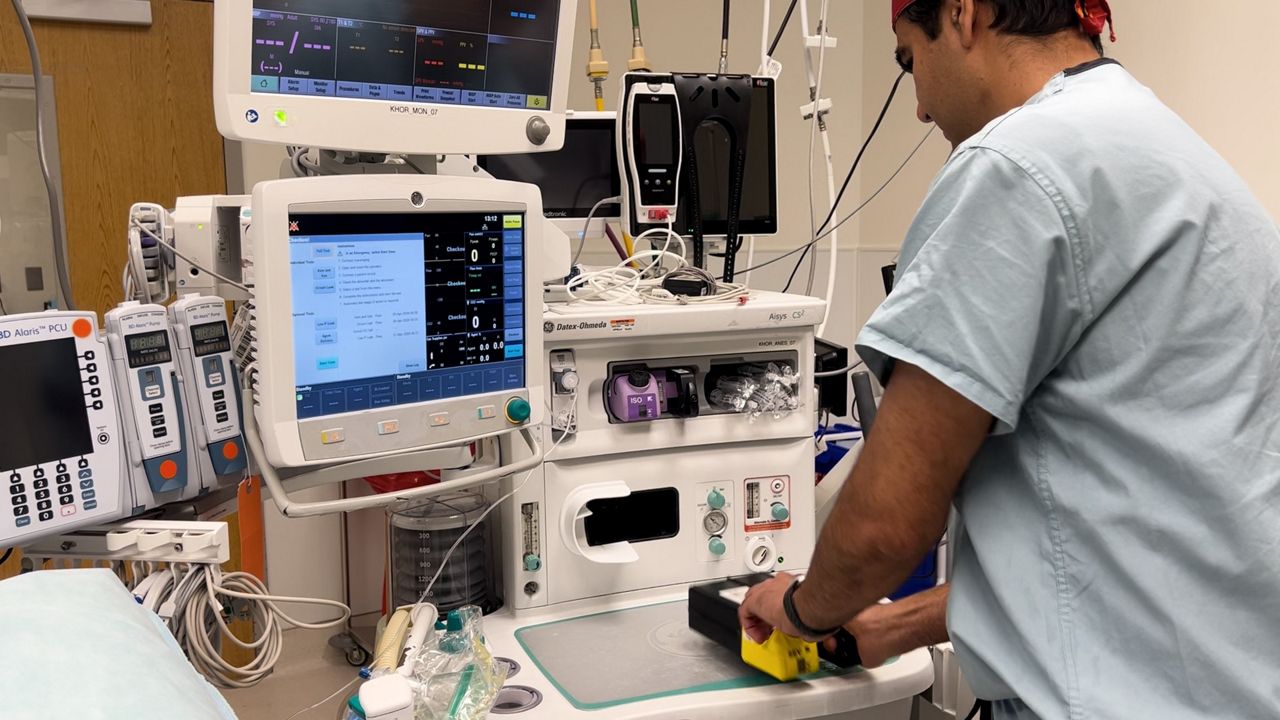
Keck Hospital of USC has moved away from using nitrous oxide, otherwise known as laughing gas, for sedating patients for surgeries. The decision came after anesthesiologists discovered the harmful effects of nitrous oxide on the environment.
“You’re really not thinking about the impact of that practice and its carbon footprint,” said Dr. Arash Motamed, who is the medical director of sustainability with Keck Hospital. “And as it turns out, anesthetic agents are major greenhouse gases.”
The National Institutes of Health said the U.S. healthcare sector accounts for roughly 8.5% of the country’s greenhouse gas emissions, and Motamed said nitrous oxide is one of the main contributors.
“A lot of it goes into the atmosphere,” he said. “What does that mean? First of all, it’s 300 times more potent of a greenhouse gas emission and carbon dioxide, and then second, it lasts in the environment for a very long time.”
Keck Hospital of USC said the emissions for every hour that nitrous oxide is used in the operating room are the equivalent of driving a gas-powered car for 120 miles. The hospital said it’s the first healthcare facility in the country to eliminate the use of nitrous oxide.
Motamed adds that other options are just as efficient for patients and are safer for the environment as climate change has continued to be a major talking point globally.
“The main one that’s called sevoflurane,” he said. “So is there anything we can do to even be better in reducing the waste? The patient still gets what they need to make sure they’re unconscious during the surgery, but is there anyway to avoid the excess?”
One of the main causes of damage to the environment is the large pipes full of nitrous oxide in the facilities and how much they leak out into the atmosphere. Those leaks could cause severe illnesses and issues for patients and healthcare providers.
“When it leaks, there’s been an increased risk of birth defects, also miscarriages in healthcare providers who have been exposed to nitrous oxide,” said Dr. Seema Gandhi, who is the chair for the committee of environmental health with the American Society of Anesthesiologists and a professor at UC San Francisco.
She added that as more medical providers are becoming aware of the harmful effects of nitrous oxide, the use of technology could help mitigate the impacts on climate change.
“So when we are looking at our electronic health records, we send thresholds for gases to be used, drugs to be used,” Gandhi said. “And AI would pop up with alerts and say, oh, you’re using too much. Do you really need to use it?”
Motamed adds that he’s learned that healthcare workers are learning how to provide better patient care while also looking for ways to help protect the environment.
“Being sustainable means giving a safer care and high-quality care,” he said. “That really aligns with that Hippocratic oath of do no harm and take care of patients.”