

It has been nearly nine months since thieves stole more than 1,000 artifacts, including Native American baskets and jewelry, from the Oakland Museum of California’s off-site storage facility. Since then, the museum, Oakland police, and the FBI have made little apparent progress in the investigation.
Although investigators released surveillance footage about a month after the burglary, no suspects have been arrested, and none of the artifacts have been recovered.
The Oaklandside made multiple attempts to contact OPD and the FBI’s San Francisco Field Office for updates on the investigation, but received no response.
Even so, one person who remains optimistic that the case will be solved is Robert Wittman, a retired FBI agent who founded the bureau’s Art Crime Team, which is assisting OPD in the investigation.
“I think there’s a good possibility that these guys are going to be identified and that some of the pieces will be recovered,” Wittman told The Oaklandside in a recent interview.
Wittman joined the FBI in 1988 as a special agent in Philadelphia. During his nearly two decades with the bureau, he recovered more than $225 million worth of stolen artifacts in 20 countries (and wrote a book about it). He retired in 2008 and now runs a security and art recovery consulting firm.
Early in his career, Wittman investigated thefts from the Rodin Museum in Philadelphia and the University of Pennsylvania Museum of Archaeology and Anthropology. The FBI later sent him to specialized training in art, gemology, and jewelry.
“I became the art specialist for the bureau for almost 20 years,” said Wittman.
After about 15 years of investigating art thefts, Wittman realized that, unlike many other countries, the U.S. lacked a dedicated art crime unit. At his recommendation, the FBI established the Art Crime Team in 2005 with eight agents assigned to major art markets, including New York, Los Angeles, Philadelphia, and San Francisco. Today, the unit has 20 agents.
Art Crime Team assignments are secondary duties, Wittman said, meaning agents primarily investigate other crimes, such as robberies or drug trafficking. When an art crime occurs in their jurisdiction, those agents either lead the investigation or work alongside local police and other FBI offices.
Wittman’s assessment of the Oakland museum heist
 Robert Wittman has traveled the world investigating high-profile cases for more than two decades as part of the FBI’s Art Crime Team. Credit: Kevin J. Parks/CR Staff
After reviewing surveillance footage from the burglary, Wittman said he agreed with investigators’ assessment that the crime appeared to be opportunistic rather than carefully planned.
“There was no rhyme or reason as to what they were taking,” he said of the footage from the museum’s off-site storage building. “They were just taking things in general, not a specific item.”
Shortly after the burglary, museum officials declined to estimate the monetary value of the stolen artifacts. Wittman said this is common practice.
“They don’t want anybody thinking they have something they can sell or monetize,” he said. “The museum would say that the cultural value is important, not the financial value.”
Although the museum has not publicly disclosed the collection’s value, it will have to assign values for insurance purposes. Those values could also become relevant if the case is prosecuted.
“Sentencing in federal cases is based on dollar amounts when it comes to theft,” Wittman said. “The judge has to know the value before sentencing.”
Because the thieves stole dozens of culturally significant items, Wittman said they may struggle to sell them through pawnshops or specialty dealers.
“Usually, what happens is we catch people, and we recover material when it’s being monetized,” he said.
Although he is not directly involved in the investigation, Wittman said police departments typically notify pawnshops and secondhand dealers about stolen property and provide descriptions of missing items. In California, licensed pawnbrokers must maintain records of items they acquire and make those records available to the California Department of Justice and law enforcement agencies. Investigators also monitor online marketplaces such as eBay.
Based on his experience, Wittman estimates that 90% of museum thefts are “an inside job,” making the Oakland burglary somewhat unique.
“This is a little bit unusual in that these guys were not employees of the museum,” he said. “They jumped a fence, walked around for 20 minutes, and stole boxes.”
As to the massive haul of items the thieves took, Wittman cautioned that reports of more than 1,000 stolen artifacts could be misleading. It all depends on how investigators count individual objects.
“If one box has 10 necklaces with 100 beads each, that’s 1,000 pieces,” he said.
Not every art theft becomes a federal case. According to Wittman, the FBI’s Art Crime Team generally becomes involved when a stolen object is over 100 years old and worth at least $5,000, or when it is valued at more than $100,000, regardless of age. Other art crimes, including many burglaries and forgeries, are typically investigated by local law enforcement.
Should there be a reward?
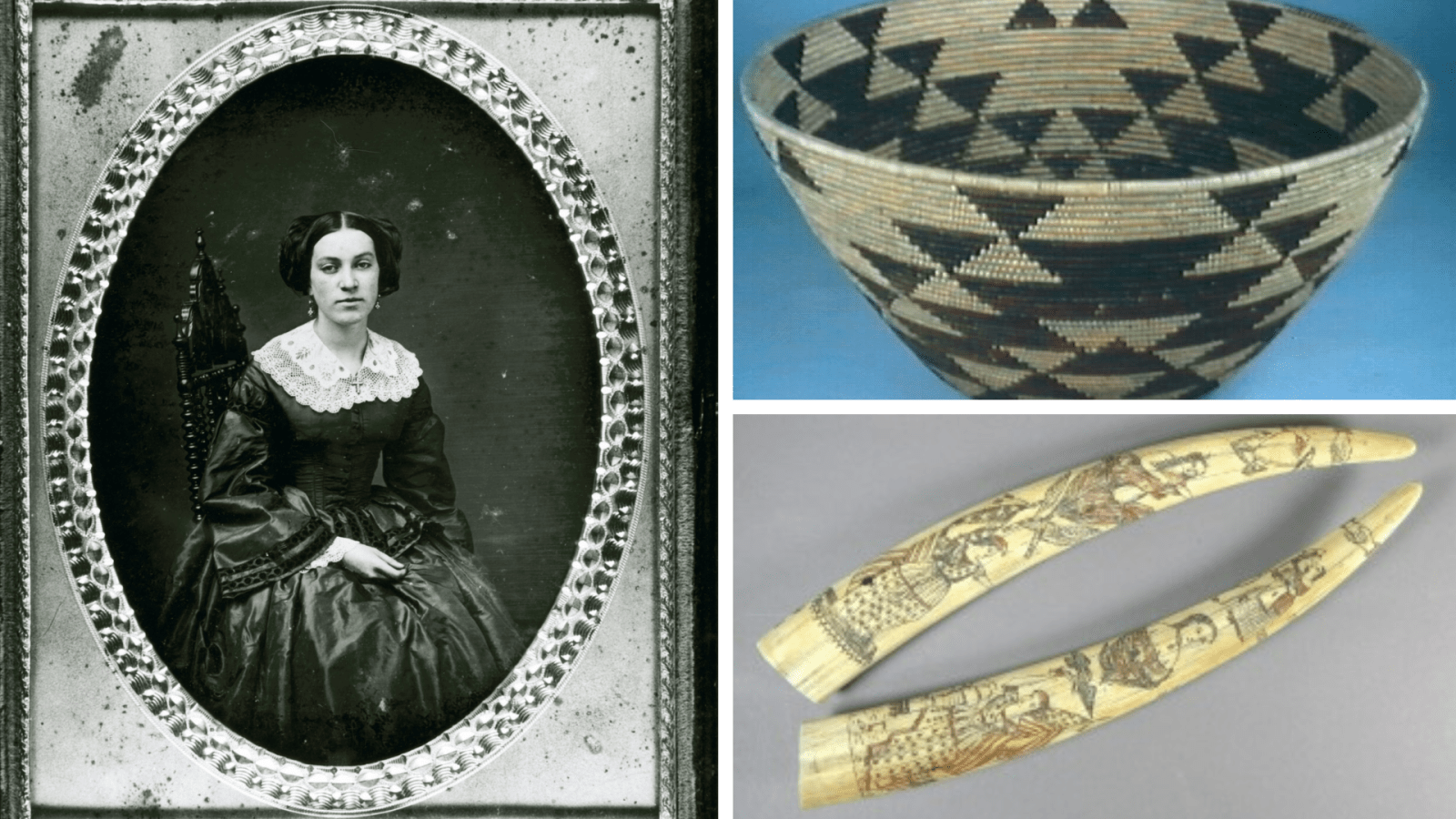 Some of the artifacts police say were stolen from the Oakland Museum of California’s off-site storage facility the morning of Oct. 15, 2025. Credit: Courtesy of the Oakland Museum of California
The museum and law enforcement have not put out a reward for the stolen artifacts, which Wittman thinks might be hindering investigators’ progress.
He said museum insurance policies often allow institutions to use up to 10% of the insured loss toward a reward. For example, if stolen artifacts were valued at $50,000, the museum could offer a $5,000 reward.
“It creates interest in the community, and then you might get calls,” he said. “I’m surprised they haven’t done that yet.”
Autumn King, a spokesperson for the museum, said law enforcement advised against offering a reward after the burglary.
“At the time of the burglary, we received guidance from the FBI and local law enforcement that a reward was unlikely to significantly aid in the recovery of the stolen items,” King wrote in a statement to The Oaklandside. “Our decision was based on that advice and the circumstances at the time.”
This wasn’t the first time OMCA was burglarized. After a Gold Rush-era quartz- and gold-encrusted jewelry box was stolen from the museum in 2013, the museum released images of the box and offered a $12,000 reward for information. Two months later, police identified the suspect through DNA analysis and charged him in federal court. Police said the suspect, a man from Hayward, tried to sell the box to a business owner after the burglary. (The box was also stolen from the museum in 1978, according to reports.) It’s unclear whether the reward led to the suspect’s arrest.
The FBI’s Art Crime Program also maintains the National Stolen Art File, a public database established in 1979 that catalogs stolen cultural property from the U.S. and abroad. More than 8,000 objects are listed. The file can be used by art dealers, pawn shop owners, collectors, and the public to look into suspected stolen artifacts.
The Oaklandside’s search of the database turned up 62 artifacts that appear to be among those stolen from OMCA. Several matched images released by OPD after the burglary. The artworks include daguerreotypes and other early images, Native American baskets, shell necklaces, brooches and pins, and scrimshaw tusks.
Kristin Koch, supervisory special agent and program manager for the FBI’s Art Crime Team, said only items valued at more than $5,000 are entered into the National Stolen Art File.
The Oaklandside asked the museum, OPD, and the FBI whether the listed artifacts represent the complete set of qualifying stolen objects and whether they could comment on the collection’s estimated value. None responded.
Breakthroughs in cases come in unexpected ways, and a new lead could present itself at any time, leading to the recovery of OMCA’s artifacts.
Wittman recalled a 1988 case in which a century-old bronze sculpture valued at $75,000 was stolen at gunpoint from Philadelphia’s Rodin Museum. After the museum announced a $15,000 reward, Wittman received an unexpected tip.
“It was from a psychologist who was working with the thief,” he said. “The thief came in and confessed to the crime in one of their sessions.”
The tip ultimately led investigators to identify the suspect and recover the sculpture. The psychologist claimed the reward.
“*” indicates required fields