
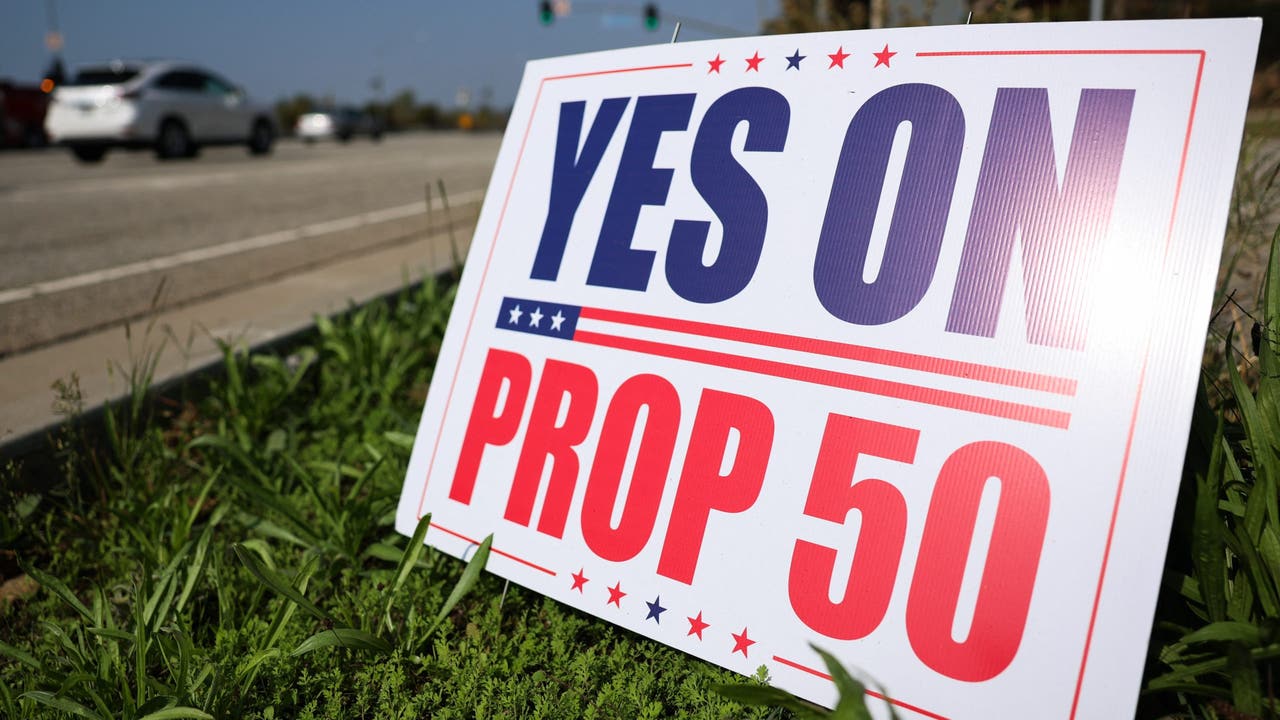
OAKLAND, Calif. – Proposition 50 has passed, paving the way for a dramatic, but temporary, redrawing of California’s congressional maps.
The Associated Press called the race in favor of Prop. 50 immediately as polls closed at 8 p.m. on Tuesday.
Promoted by Democratic leaders like California Gov. Gavin Newsom and Speaker Emerita Nancy Pelosi as a necessary countermeasure to Republican-led redistricting efforts in Texas, Prop. 50 – also known as the Election Rigging Response Act – will temporarily allow the state legislature to decide the state’s district maps from 2026 through 2030.
After that period, the power will return to the independent California Citizens Redistricting Commission.
The new map was submitted by the Democratic Congressional Campaign Committee, which argues that the temporary redrawing keeps districts more compact and splits only 57 California cities as opposed to the current map’s 60 split cities, with the DCCC noting that many of the new splits occur along neighborhood boundaries and city council district lines.
PREVIOUS COVERAGE: What is Prop. 50? Guide to California’s 2025 special election
The redraw of the state’s Congressional districts is expected to add as many as five Democratic-held seats in Congress in time for the 2026 midterms, while leaving as few as four Republican-held seats across California.
“We will not stand by as Republicans attempt to rig the election in their favor and choose their voters,” the DCCC said in its submission of the proposed map. “It’s increasingly clear that Republicans will do anything to protect their narrow majority because they know they can’t win on their disastrous legislative record which has raised costs and rips away health care for millions, all to give the ultra-wealthy a tax break.
Supporters say Prop. 50 is a direct response to President Donald Trump and is a way to check the president’s power while he’s in office.
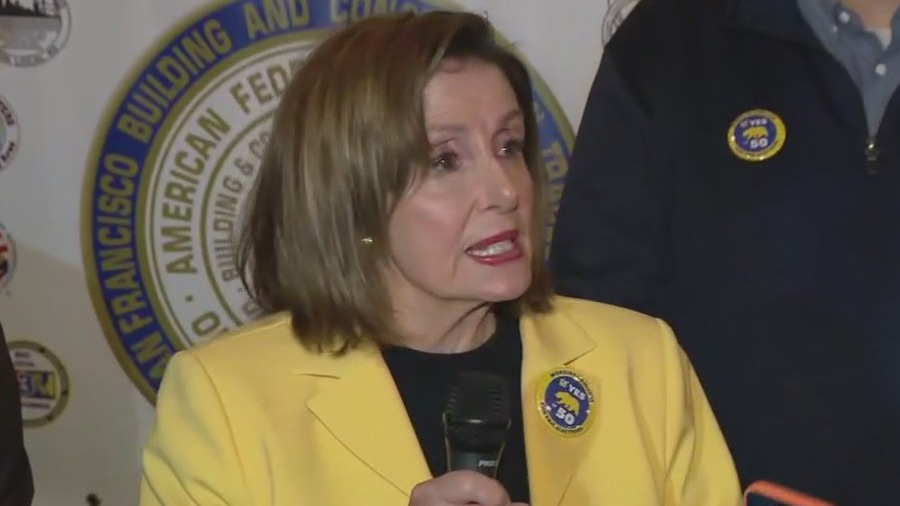 Prop. 50 supporters
Supporters include Gov. Newsom, former President Barack Obama and other national democratic leaders.
California Republicans argued Prop. 50 would reverse course on California’s gold standard, taking the power away from the independent commission and giving it back to politicians.
RELATED: California’s Prop. 50: What ‘yes’ and ‘no’ votes mean
Rural communities, particularly in Northern California, will be especially impacted by Prop. 50.
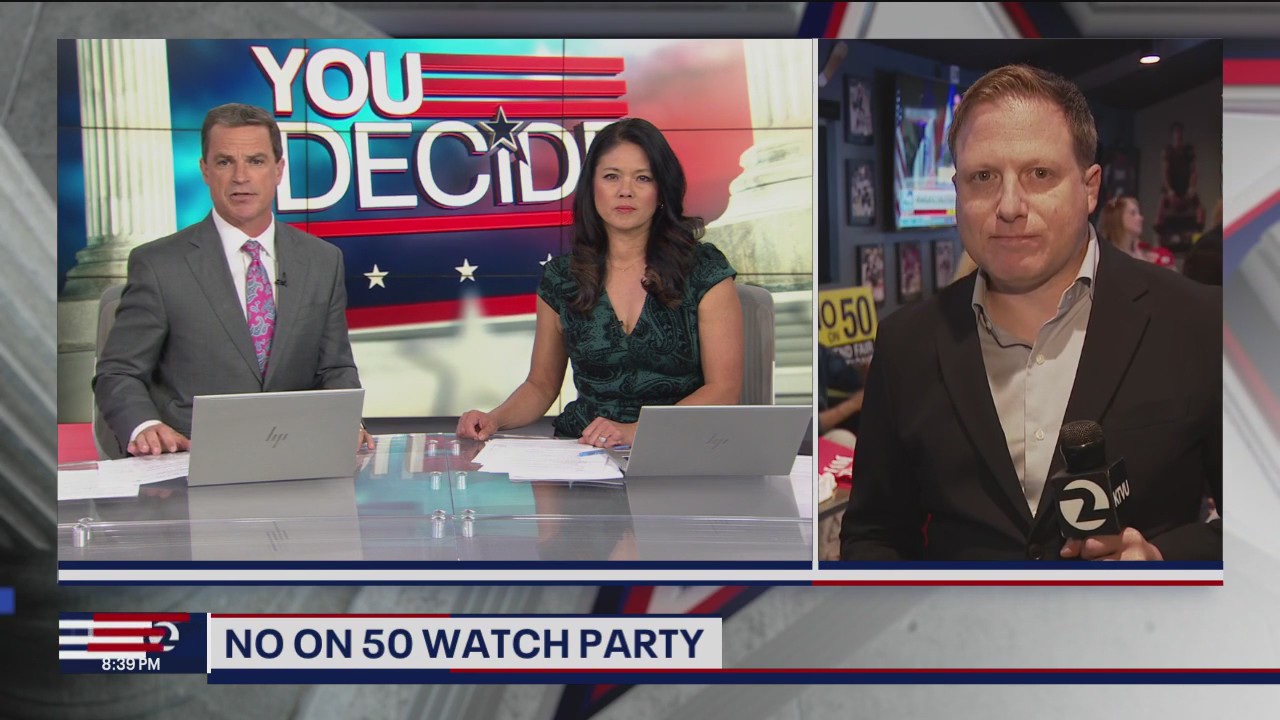
Prop. 50 opponents
Opponents of the measure include Pres. Donald Trump, former California Governor Arnold Schwarzenegger, former U.S. House Speaker Kevin McCarthy, billionaire Charles Munger Jr. and the California GOP.
Gov. Newsom spearheaded the effort to redistrict the Golden State. He endorsed the new maps in August,
California currently has 52 congressional districts, 43 of which went to Democrats in the last election.
 Congressional maps
The redrawn maps target five of the nine Republican districts. Those seats are held by Reps. Doug LaMalfa in District 1, Kevin Kiley in District 3, David Valadao in District 22, Ken Calvert in District 41 and Darrell Issa in District 48.
SEE ALSO: Prop. 50’s push to redistrict California: How rare is this ask from voters?
The Prop. 50 maps would redraw those districts to include areas with more registered Democrats, which would effectively flip them from Republican representation.
Multiple other states, both Democratic and Republican, have begun considering redrawing their congressional districts as well.