
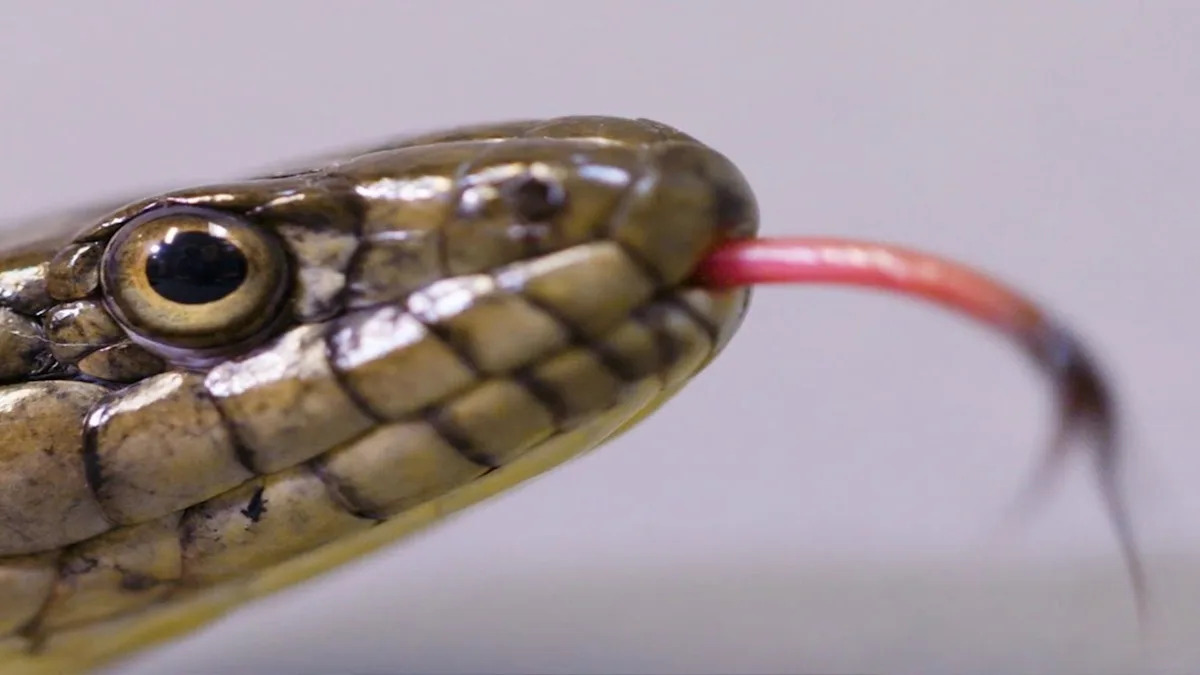
Hidden among the wetlands of California’s Central Valley lives one of North America’s most elusive reptiles. The giant garter snake is the largest member of the garter snake family and spends much of its life in marshes, ponds, and slow moving waterways. Although it once thrived across the region, this remarkable species has become increasingly difficult to find. Decades of wetland destruction have dramatically reduced its habitat, making conservation efforts more important than ever. Today, scientists and wildlife managers are working to ensure the species has a future in the landscapes it once called home.
The giant garter snake is found only in California’s Central Valley, making it an endemic species with a very limited natural range. It can grow to more than five feet in length and is easily recognized by its brown or olive colored body marked with bright yellow stripes running along its sides. Unlike many snakes, it is highly adapted to aquatic environments and spends much of its time swimming, hunting, or resting near water. Its diet consists mainly of fish, frogs, and other small aquatic animals. Although the species produces a mild venom to help subdue prey, it poses virtually no danger to humans and is generally shy, avoiding contact whenever possible.
Habitat loss remains the greatest threat to the giant garter snake. Over the past century, approximately 95 percent of California’s historic wetlands have been drained or converted for agriculture and urban development, leaving the snake absent from much of its former range. As wetlands disappeared, suitable breeding, feeding, and shelter areas became increasingly fragmented, making survival more difficult. The species is listed as threatened under the United States Endangered Species Act, highlighting the urgent need to protect its remaining habitat and restore lost ecosystems.
Because giant garter snakes are secretive by nature, they are rarely seen in the wild. When disturbed, they usually retreat quickly by diving into nearby water or hiding among dense vegetation. Their cautious behavior makes population monitoring challenging, requiring researchers to use specialized survey techniques to study their numbers and movements. Despite these difficulties, conservationists have made encouraging progress by creating and restoring wetlands that provide the shallow waterways and vegetation the snakes depend on throughout their lives.
The future of the giant garter snake depends largely on continued habitat restoration and responsible land management. Artificial wetlands and protected conservation areas are helping reconnect fragmented populations while benefiting many other native plants and animals that share the same ecosystem. Although the species still faces significant challenges, ongoing conservation efforts offer hope that this unique California reptile can recover. Protecting wetlands not only safeguards the giant garter snake but also preserves one of the state’s most valuable and diverse natural environments for generations to come.