
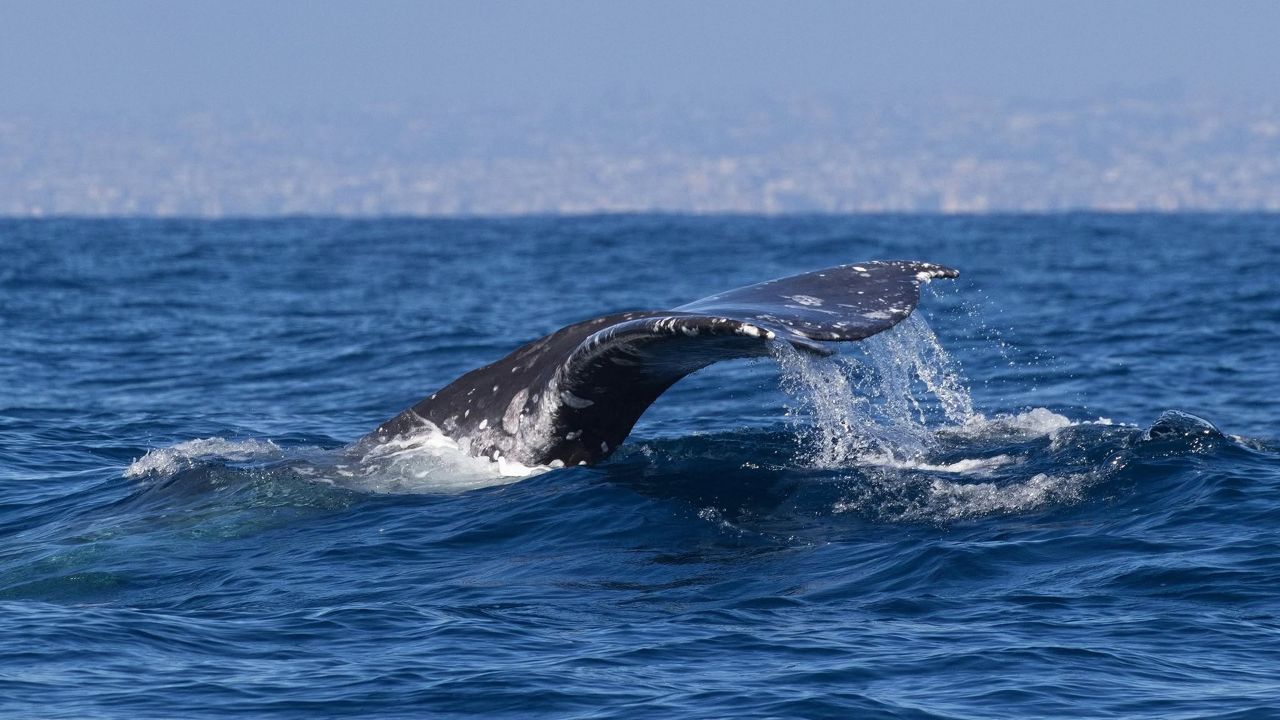
LOS ANGELES — On a sunny evening in Rancho Palos Verdes, Alisa Schulman-Janiger was on the lookout for whales.
“I’ve been running this gray whale census project since 1984. So, this is our 42nd season,” said Schulman-Janiger, director of the American Cetacean Society LA, or ACS-LA, Gray Whale and Census Behavior Project.
What You Need To Know
The National Oceanic and Atmospheric Administration, or NOAA, reported in 2025 the Eastern North Pacific gray whale population was the lowest since the 1970’s
Gray whales migrate through Southern California between December and May as they travel between the Arctic and Baja
Researchers say many gray whales they saw this past season were skinny or malnourished, suggesting there is a lack of food due to climate change.
Cascadia Research Collective in Washington says it is approaching an annual record of gray whale strandings, tracking at least 30 in the state as of June.
Schulman-Janiger and a team of volunteers spend every gray whale migration season from December through May at the Point Vicente Interpretive Center in Rancho Palos Verdes. They track gray whales as they travel between the Arctic and Baja.
“The last few years have been very bad. Bad in that, very low counts and skinny whales,” she said.
The National Oceanic and Atmospheric Administration, or NOAA, reported in 2025 that the Eastern North Pacific Gray Whale population was the lowest since the 1970s
“The biggest threat is lack of food, and the lack of food is due to climate change. The warmer water, persistent warmer water, which is literally killing off their prey,” Schulman-Janiger said.
When Spectrum News first spoke with Schulman-Janiger toward the start of the migration season, she was cautiously optimistic. And while her numbers of gray whale sightings slightly improved this season from last, she said they are still really low.
“When you think of the good old days, I could see 80, 90, 100 gray whales a day. 152 was our highest on one day. I think this year we had 30 on one day,” she said.
This comes as researchers have reported an alarming number of gray whale deaths along the Pacific Coast.
“There’s something very serious, and even I’d call it catastrophic, occurring with gray whales,” said John Calambokidis, senior research biologist and co-founder of the Cascadia Research Collective in Washington.
He noted that they are approaching an annual record of gray whale strandings, reaching at least 30 in Washington as of June.
“Our observation of the whales is, you know, all of them are thin. Some are extremely emaciated,” Calambokidis said.
In Ventura, Andrea Mills of Island Packers, the concessionaire for Channel Islands National Park, said their gray whale sightings this past season were also lower than usual.
“This last season, our gray whale sightings dropped by about 20%. We were seeing a lot fewer whales on our trips. We had some days that we saw no whales, unfortunately,” said Mills, an educator with Island Packers.
She explained that they also observed gray whales feeding along the Channel Islands, a sign they may have been searching for food outside their usual Arctic feeding grounds.
With an El Niño expected to bring warmer ocean temperatures to California this winter, Schulman-Janiger and other researchers worry food can become even harder to find.
“They’re going to be traveling all over the place looking for alternative sources of food, and that’s really scary,” she said.
While Schulman-Janiger remains hopeful the Eastern Pacific gray whale population can rebound like they have before, she said watching them struggle has been heartbreaking.