
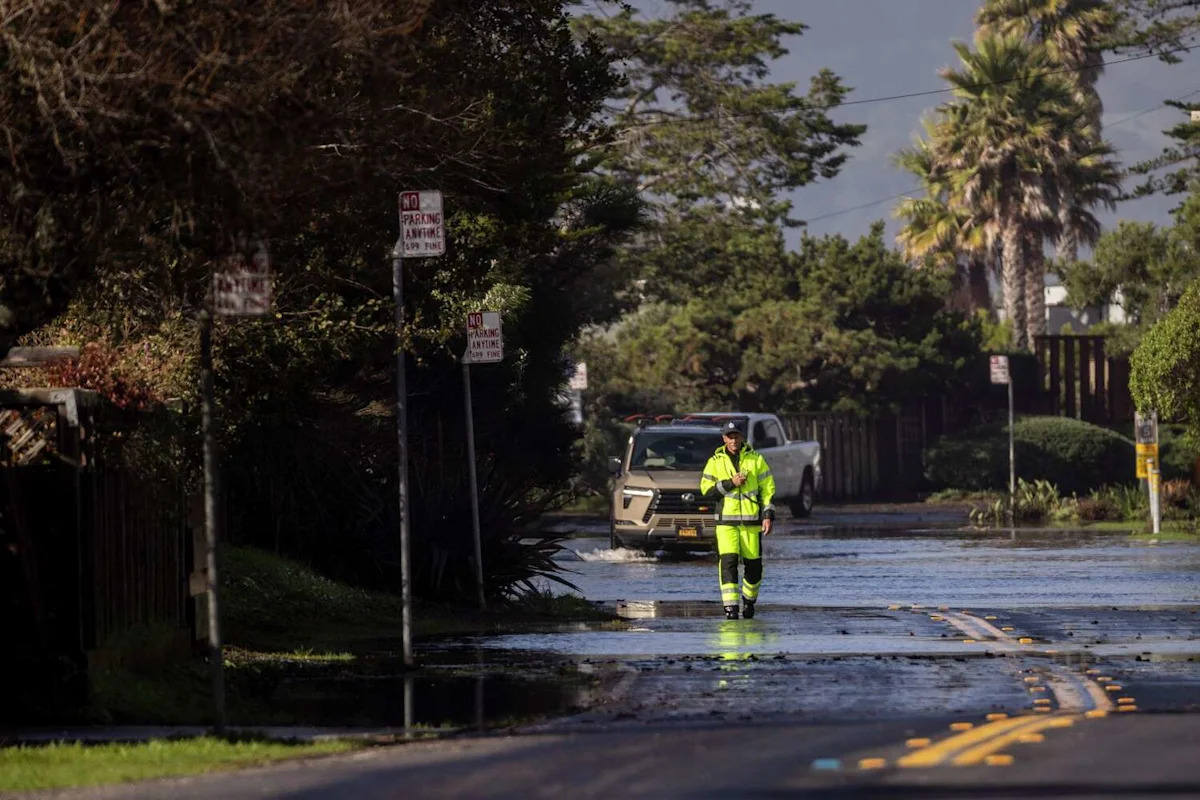
Seawater is expected to spill over San Francisco’s Embarcadero and other low-lying areas along the bay shoreline in the coming days as a result of a king tide.
The National Weather Service predicts the highest tide at 11 p.m. Monday, when water at the San Francisco gauge is forecast to be 1.7 feet above normal. It would be San Francisco’s highest July tide on record, and the second-highest in any month outside November to March, after last month’s tidal anomaly peaked at 2 feet.
More broadly, a coastal flood advisory is in effect for the shoreline of San Francisco and San Pablo bays from Thursday, July 9, to Thursday, July 16. The Pacific coast is included in the advisory from Saturday to Wednesday. Tides will be highest from late evening through the early morning hours.
Only minor flooding is expected, even during the highest tide. Widespread damage and disruption is not predicted, because tides are happening at night, and winds and waves won’t be strong enough to push seawater inland.
“These tides are expected to be lower than June’s … so areas not affected in June can expect the same over the next week,” the weather service said.

Tides are typically highest in winter and summer due to gravitational alignments of the moon, Earth and sun, but winter king tides can be the highest because they are often compounded by precipitation runoff and storm surge from high winds.
Base ocean water levels in the coming days are forecast to be up to a half-foot higher than they were at the beginning of the century, due to melting ice sheets and a phenomenon known as thermal expansion.

A woman attempts to walk through the overflowing water caused by the king tide at the Embarcadero in San Francisco on June 13. The high tide this coming Monday will not be quite as high as that event. (Manuel Orbegozo/For the S.F. Chronicle)
As the ocean warms, it also rises. The same phenomenon explains a balloon expanding when the air is hot and shrinking when it’s cold. A broad swath of the Pacific is warmer than normal, pushing sea heights inches higher. Warmer oceans are a direct consequence of human-caused climate change.
Seas will rise even higher this winter as El Niño strengthens, potentially a foot or more above normal along the California coast. Not only do seas rise during El Niño, but the natural climate pattern also makes powerful storms and destructive waves more likely along the U.S. West Coast.
Subscribe
There’s more to San Francisco with the Chronicle. Subscribe today for just 25¢.
This article originally published at San Francisco expected to get highest July tide on record.