
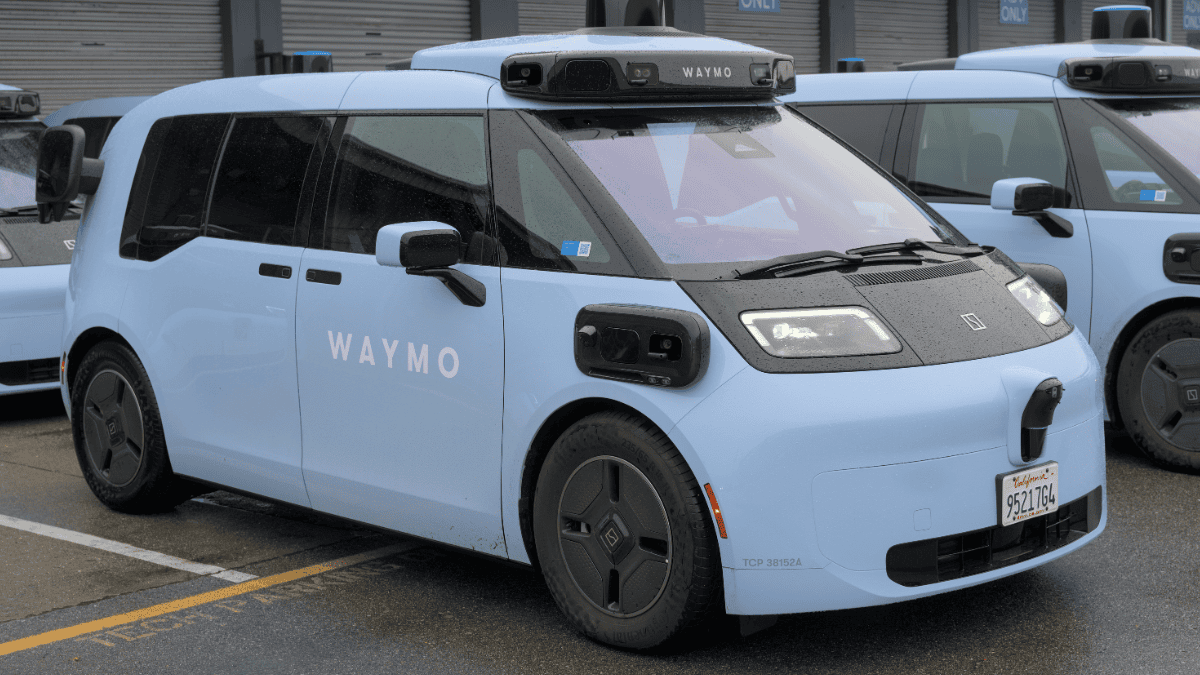
Waymo is bringing its self-driving taxis to San Diego as part of a larger four-city expansion this month.
The rideshare service is also introducing its cars to Las Vegas, Nevada; Denver, Colorado; and Tampa, Florida.
The robotaxis have been operating in San Diego before with human drivers, but this will be the first time they function autonomously in the city.
When the rollout first begins, rides will only be available to employees of Waymo and Alphabet, the company that owns the rideshare service, to make sure the vehicles are safe.
So far, Waymo’s technology that enables vehicles to drive without humans has been mostly installed in Jaguar I-PACE cars.
But the rideshare service is bringing the automation to Hyundai’s IONIQ 5, a compact SUV that is fully electric.
“This phase allows us to validate our technology for fully autonomous operations as we work to bring riders even more ways to enjoy Waymo in the future,” a Waymo blog reads.
The company announced it is also introducing its new Ojai vehicles to the public. The cars include more legroom, three LED screens, and an accessible low step and flat floor designed to make entry and exiting easier. San Diego will be among the first cities to experience the new Ojai vehicles.
Waymo vehicles employ several technologies to function autonomously, including cameras to capture a 360-degree view. They also have Lidar, or Light Detection and Ranging, which provides a detailed 3D map of the vehicle’s surroundings, along with a vision system that sees “everywhere at once” and external audio receivers.
Currently, Waymo is operating 3,500 taxis with this automation across 10 cities and has finished 20 million rides. The service’s goal is to complete 1 million rides weekly by the end of 2026.
Waymo boasts about the safety of its robotaxis. The rideshare service claims that its vehicles result in 94% fewer serious car accidents, 93% fewer injury-causing pedestrian crashes, and 84% fewer dangerous motorcycle accidents, among other statistics.
Despite this, many people still feel skeptical about the driverless vehicles. In recent years, Waymo cars have been caught in several peculiar situations.
According to TechCrunch, the company recalled almost 4,000 cars after at least 13 of them drove into active construction zones. Seven of these incidents were reported in San Francisco.
In Redwood City, another Waymo vehicle tried to cut through traffic that was stopped due to a fire. Local authorities had to be called, and a patrol officer relocated the car.
Additionally, on Wednesday, July 8, National Highway Traffic Safety Administration (NHTSA) Administrator Jonathan Morrison wrote a letter to “Driverless Automated Driving System Developers.”
This followed reports of robotaxis (many of which were Waymos) not recognizing or responding appropriately to flashing lights, emergency vehicles, and traffic cones, among similar warnings.
“Every second matters when law enforcement officers, firefighters, or paramedics are answering a call because lives are on the line,” Morrison’s letter reads. “The inability to detect and appropriately respond to such situations represents a functional insufficiency… NHTSA is today issuing a call to action for AV developers and operators to immediately focus their resources on fixing this issue.”