
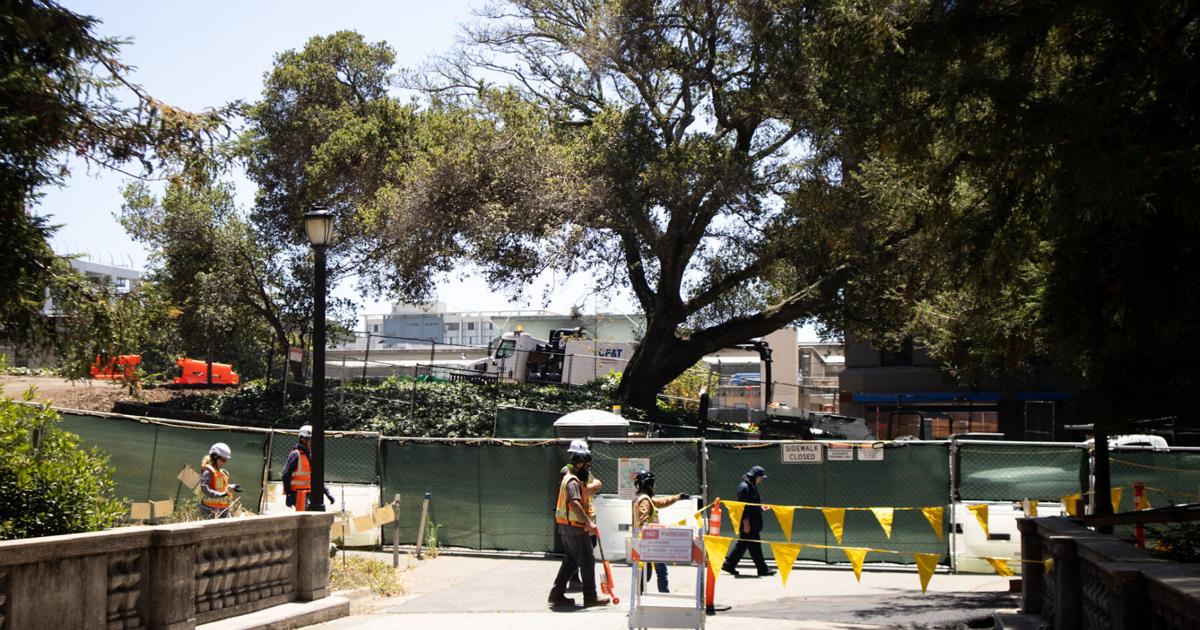
UC Berkeley began construction on the Clean Energy Campus Utility Improvement Project in May, aiming to cut total campus carbon emissions by 60% over the next four years. However, the project’s construction will disrupt campus roads and walkways.
Approved by the UC Board of Regents in July 2025, the new system plans to make campus heating, cooling and power more sustainable and reliable in the long term. The project faces a lack of funding for steps after the first phase of the plan, which is being funded by roughly $270 million, mostly from the state of California.
Currently, a cogeneration plant between Stu Gordon Stadium and the Eucalyptus Grove on the west side of campus supplies buildings with steam heating. It also supplies 90% of campus electricity. While this system was “state of the art” when it was designed in 1987, it has since deteriorated significantly, resulting in frequent steam leakages arising from vents on campus paths.
The project now under construction at North Field clears the way for the Electrified Heating and Cooling Plant, which will distribute heated and chilled water to buildings across campus to replace the steam network with the assistance of a 2-million-gallon thermal energy storage tank nearby. When construction is finished, campus plans to put a new recreational field on top of the EHCP structure.
While the cogeneration plant only provides heating, the EHCP’s chilled water supply will replace independent water chillers currently installed in various campus buildings.
Since the EHCP will not generate electricity like its predecessor, the UC system plans to purchase sustainably generated power from utility companies to fulfill power needs. Previous concepts for the Clean Energy Campus project included sustainable power generation methods such as solar panels, but these plans have not been approved or funded as of late.
For most people on campus, the most disruptive part of the process is scheduled to begin in summer 2027, when pathways will be obstructed to dig trenches and lay underground pipes. Disruptions will also occur when existing steam systems in many buildings are converted to water-based systems.
UC Berkeley said it is trying to minimize disruptions as much as possible.
“For example, loud work might happen early in the morning before classes start, while major road disruptions would try to be scheduled for weekends, summer break, or winter holidays,” said campus spokesperson Kyle Gibson in an email. “While the project cannot work exclusively during off-hours, the team attempts to do so when feasible.”
He added that campus is coordinating with the Office of Disability Access & Compliance to ensure the availability of alternative accessible routes, and with building managers to minimize disruptions to research and daily operations.
For Phase 1, construction and disruptions will only affect around 30 buildings and nearby walking paths on the east side of campus. A tentative list of affected buildings includes the College of Chemistry, UC Berkeley School of Law, Physics Building, Haas School of Business, Hearst Memorial Mining Building and Stern Hall. Construction on Phase 1 is scheduled to end in summer 2030, when the cogeneration plant is also planned to be shut down for nonemergency purposes.
Campus buildings west of the EHCP site will have to wait until campus secures funding for Phase 2.
“The issue is that we only have funding for Phase 1 (of the project),” said Maddie Chesebro, who serves as both ASUC eco senator-elect and as a UC Berkeley clean energy campus fellow. “So how do we one find funding for Phase 2 and ensure the actual other half of campus is entirely connected?”
According to Chesebro, students have been involved since 2020 with protests to shut down the cogeneration plant.
In her current role, she teaches a DeCal course aimed at educating students about the project and also plans to hire students to actively participate in the engineering and communications processes associated with the project. She hopes students can take an active role in trying to secure more grants to help the project go through.
“This is disruptive of campus, and this is something I understand will impact folks on a daily basis and it can be frustrating, but I really want people to put in perspective how state-of-the-art this project is,” Chesebro said. “It’s going to take a long time, but it’s going to be really, really beneficial to campus.”