
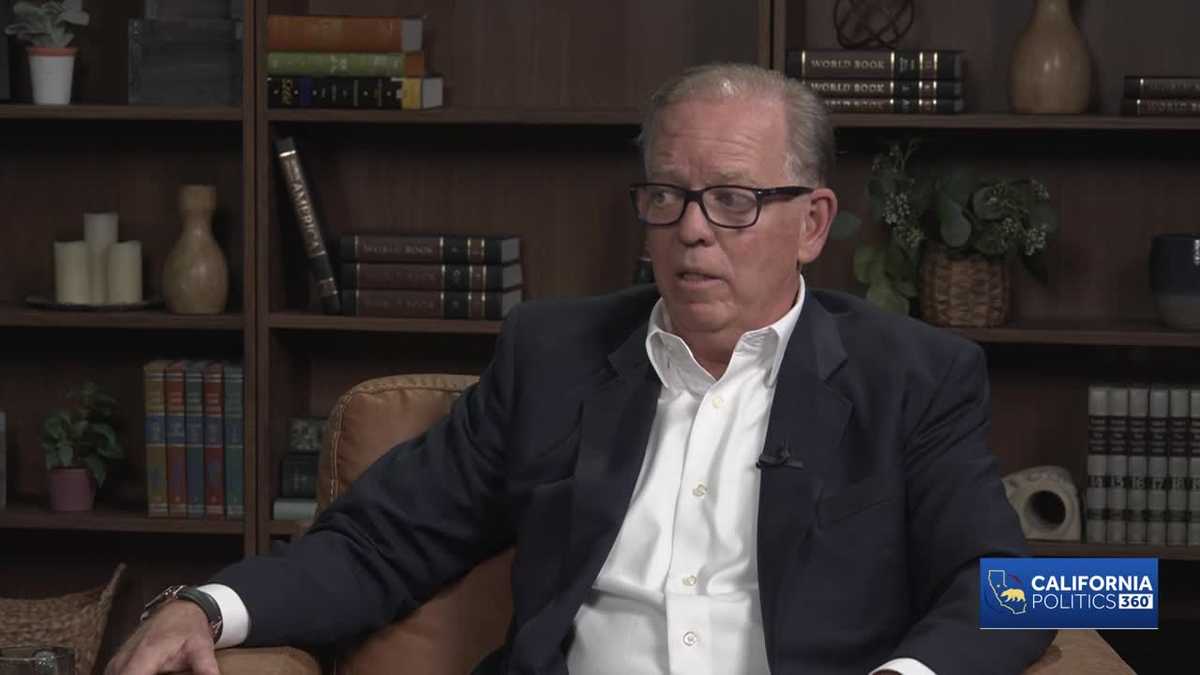
California controller candidate Herb Morgan wants to modernize the state’s finances | CA Politics 360
Herb Morgan, thank you so much for making time for us. Ashley, thanks for the invitation. So first, just given this role, I want to know what would you do differently than our current state comptroller Malia Cohen? Well, number one, I would conduct audits extensively. So the state controller is endowed by the Constitution with the ability to audit anything or anybody that touches state funds. The current state controller has not done very many audits. And she and her staff say it’s because of *** lack of resources or *** lack of funding. I have *** long history in business of getting more for less. I don’t think we need more funding. I don’t think we need more resources. We just need to embrace existing technology. We can perform more audits, which of course in the end. Will deliver efficiencies to the taxpayers. When you say embracing existing technology, I mean California, we’ve had *** governor and *** legislature who’s wanted to implement more technology into making government more efficient, but there’s procurement processes. There’s all kinds of hurdles that get in the way. How would you, what existing technologies would you use? Well, one of the most innovative existing technologies that exists at our disposal disposal now is artificial intelligence. In fact, I’ve already built *** working prototype of what I plan to do in the state comptroller’s office. That prototype is at *** website called California Radical Transparency.com. So what we did is we went out, we used artificial intelligence, we built *** model which scraped all of the financial data of the state of California that’s currently available. It’s not, it’s not enough. We should make more information available. But it’s everything from the state’s failed open fiscal system. It’s from the state auditor’s reports, and it’s from the governor’s budgets. We’ve created *** usable, searchable, workable database that any Californian can go to right now. I’m not even in office yet. Now, I built this for about $1500. The State of California built *** transparency portal called Open Fiscal. It took them 20 years and they spent *** billion dollars on it and it doesn’t work. I built for $1500 what they could not build for *** billion dollars. So this gives you *** little idea of the kind of efficiency and the kind of deliverables I want to bring to the citizens of our state. So with the data that you’ve put together with all of that information, I mean what is standing out to you just given this website that you have built already? I think the number one thing that stands out is the level, the opportunity for improvement, and the opportunity for improvement is across every one of our state agencies. MediCal has *** very high error rate and it’s *** very large program. And you know, error rate, uh, it could be improper billing. There’s there’s *** lot of different ways you can look at that. The Employment Development Department has admitted to 55 billion. Our NGOs that deliver very essential services in California are not set up with proper financial controls, with proper frequency of audits. Instead they’re asked to attest to different things. So if you have *** controller, I happen to have 40 years’ experience in the private sector and finance, if you have *** controller that understands how money moves, how it can move in the wrong direction at the wrong time to the wrong hands, we’ve seen that there’s been *** number of arrests in California. You realize very quickly that there’s probably $80 to $100 billion *** year in state spend. Now I’m not advocating *** spending level. That’s not my job, that’s the legislature. But my job as the state controller will be to get the most for what they’ve allocated, and when you get more for less, that’s called delivering efficiency. That’s what every company tries to do every year in their budgeting process. I want to bring that mentality in *** tech-forward manner to the state of California, with ultimately being the manager of the state’s. Finances, the state’s checkbook. You touched on this *** bit ago, but what about your background specifically makes you qualified to do this job? Well, the job I want to do is be second baseman for the Dodgers, but I’m not qualified, and it really it’s illustrative of your point. You need qualifications to do these jobs. This is not *** partisan role, right? It’s not *** policy role. The state controller should be. Run the state comptroller’s office should be run by somebody who has *** background in finance. Are you saying Malia Cohen is not? I am saying that, yes, she does not have *** background in finance, although I’m sure she’s *** very nice person. OK. But I have 40 years of experience in the private sector, specifically in finance. I sit on company boards of directors. I sit in audit committees. I was part of the team that reformed the San Diego City pension system. I was elected twice to be the chairman of that system, and we turned that system around. This is when trustees had been indicted for crying out loud. This is the only thing I’m good at. I can’t hit *** golf ball. I can’t run fast. Uh, I can’t barely see out of my left eye, but I, I know finance. It’s easy for me. I wake up every day, I see numbers, and I really, really, truly understand this stuff. And so I’d elected to retire from the private sector. In March, I want to serve the state of California almost in *** volunteer capacity. I understand the job pays something, but I’m not really sure what it pays. I think *** little less than 200,000. I think, yeah, yeah, probably *** lot less than you were making in finance. Yes, yes, but that’s not the point, you know, if you think of the history of our country. We were set up originally like legislatures were part-time and people had their other professions and they served. Now we have *** lot of people who this is *** career and that’s fine. There’s nothing wrong with that, but they’re always worried about that next job. What I’m worried about is, can I bring the experience I’ve accumulated in 40 years as *** finance executive, as *** finance professional, as *** chief executive officer, can I bring that to the bear to bear for the benefit of the citizens of our state regardless of political party or persuasion or whatever. And the answer is yes, I can. So I’m hoping the voters will trust me and give me *** chance to do that. Was there one particular issue or moment in our state in the last 4 years that prompted you to want to get into public service to run for this office? There is, yes, I’m always perplexed by numbers and metrics. So numbers and metrics have always been my life. When I was *** kid and baseball statistics as an example, and efficiency and data. And when I look at the state of California, we’re so rich. We’re the richest state in the richest country in the world, $4.3 trillion economy, very high level of tax revenue, very high level of taxation rate, highest per capita tax revenue in the country and spend, and that’s perfectly fine. There’s nothing wrong with that if that’s. What the citizens elect their legislature to do, but I do think it’s reasonable for every citizen of California to expect the very best in service and output from our state government. We should have the best public school system. We should be ranked in the top 5. We’re in the bottom 5 in, in homeless services, in immigrant outreach services, in road quality, in cost of living, and in every metric. There’s *** disconnect. There’s *** disconnect between our wealth and our revenue and our intent. We are compassionate people in California. There’s *** disconnect between our intent and our results. So I look at that purely from *** mathematical perspective, and that’s how I came up with this idea, radical transparency, California radicaltransparency.com, to explain to the citizens where their money is being spent and why and provide unlimited open source access to everybody with *** tablet or *** laptop or *** phone to view the data and ask the hard questions and I mean using AI. Is that *** slippery slope though just in this moment of why not workers or why not have *** team of people? No, it’s definitely not *** slippery slope. It’s *** new technology that we need to embrace for good. Can any new technology be used for bad? Of course it can, but If you think about we have 50, the state controller oversees or has financial dominion over not only every state agency, all 58 counties, all 483 cities, all of their subsidiaries, so the opportunity and the amount of data of transactions that take place every single day within our state, it’s not physically possible. I think I’m smart, but I’m not smart enough to be able to read every one of those data, even if I just focused on. The highway patrol’s budget or UCLA’s budget or Cal’s budget, there’s no way there’s enough time in the day. I couldn’t even answer an email or or you know, go to lunch. And even with the staff they have, it’s not possible. We have our wealth has grown and our government has grown, but we haven’t modernized the financial controls that are necessary. And so we don’t need more money to do that. We need to be more efficient. The way we do that is we embrace artificial intelligence. One inexpensive artificial intelligence bot can be trained to analyze an infinite amount of data more than 1000 employees of mine could do in *** year, could do that in an hour. And then what AI can do is compile that information for me to then review and find out if there is an inefficiency or *** waste or God forbid *** fraud or anything like that. AI is the key to modernizing California’s finances. You said you would do more audits as well compared to this current state controller. What would be your first state audit if you are elected controller? There’ll be *** number that happen. So there’s there’s two areas. Number one, you have what’s the biggest dollar amount and then what’s the biggest percentage amount that you suspect may be in jeopardy. So the biggest of our programs obviously is MediCal. So that is front and center day one, and there’s *** lot of different departments and divisions. But then on *** percentage where we suspect there’s the most leakage, that is our programs of compassion that are served through NGOs, non-governmental organizations. So non-governmental organizations, many are good, good people, they fundraise, there’s boards of directors, but we have not, when we give money, we don’t say, OK, there’s there’s measurements that we expect from you. And we’re going to release the money in time, not in block grants, and then we’re going to do what are called show cause hearings. So every time if you run an NGO and I gave you $80 million I say, Ashley, OK, now you have to show cause to get $80 million next time. You have to show me what you achieved. I need measurements. I need metrics. And as the controller, I can audit these organizations. What our current controller is doing is she’s not auditing them. She instead sends an attestation, an email. Please attest that you used the money we gave you properly, and of course if you’re *** bad actor, you’re going to attest that you did. There’s been *** number, *** very significant number of arrests. US First Assistant US Attorney Bill Asali has made these arrests. Our own Attorney General has not. That’s *** problem. We need an attorney general who will make arrests when criminality takes place, so I will be very aggressively auditing those entities so that we can protect the assets, the resources for the good ones, and make sure they do deliver services to. People like our homeless population. OK, for people who look at their ballot, they see that you have *** Republican next to your name. The state has not elected *** Republican to statewide office in nearly two decades. What would be your message to people who might be hesitant to elect you with an R? Well, number one, I don’t set policy. I’m really just the math guy. That’s important. But number 2, I mean, people do ask me this, why are you *** Republican? And I always tell them that I have *** very long term historical view on my political party, and I remember the foundations of our party. I use the term radical transparency, and that is my nod to the radical Republicans who advocated for the 14th Amendment. President Eisenhower, who sent the troops to Little Rock, Susan B. Anthony, who gained the women’s right to vote, those are the reasons I’m *** Republican. I think Ronald Reagan, you know, saved. Tens of millions of lives by defeating communism. So I take the long term view as an investor, my 40 years as an investor, I always look at the long term, and sometimes you invest in something. When it’s down, and I know that our brand in California is down. We’re not the most popular political party, but we certainly can be. Turnarounds do happen. I want to be part of that uh along with my friend Steve Hilton, who has *** great vision for the Republican Party and for the state of California. I’m happy to be part of that. Is there anything that you think Democrats have done well when it comes to the state’s budget? That’s *** really good, really, really, really, really good question. I think Democrats, uh, the legislature and the governor have tried to allocate and advocate for problems that matter, for programs of compassion that matter. I think they’re specifically, well, just education would be *** good one, right? I’m *** public school kid. I went K through 12 back when California schools were number one. We had gifted programs and then, uh, I think our university system as well. I think where they fail is, is you have this large political class that maybe doesn’t have the private sector experience that I have to understand that. We’ve gotten like our budget’s doubled in 10 years, $185 billion to $354 billion. It’s almost *** double. I get it. We have failed to keep up technologically from *** financial control perspective with our wealth. And that and the consequences of doing that are you leave *** lot of people behind. Right, so we’ve got this economic plan, we can talk about that if you want, but um, look, there’s nothing wrong with having compassion in the budget process and to the extent that they do that, I’m, I’m for them. All right, Irv Morgan, we really appreciate your time. Thank you so much. It’s my pleasure. Thank you.
California controller candidate Herb Morgan wants to modernize the state’s finances | CA Politics 360

Updated: 8:25 AM PDT Jul 12, 2026
Herb Morgan says he wakes up everyday and sees numbers. The Republican candidate for California state controller sat down for a wide-ranging interview on California Politics 360. He faces the Democratic incumbent, Malia Cohen, in the November election.Morgan spent decades in finance working for major Wall Street Firms. He says if elected, he plans to modernize the state’s financial operations through regular audits and the use of artificial intelligence to improve efficiency. Auditing power When asked how he would govern differently than Cohen, Morgan said he would do more audits.”The current state controller has not done very many audits. And she and her staff say it’s because of a lack of resources or a lack of funding. I have a long history in business of getting more for less,” Morgan said. “We just need to embrace existing technology. We can perform more audits, which of course, in the end will deliver efficiencies to the taxpayers.”When asked what programs he would audit first, Morgan pointed to the state’s MediCal system and state spending on non-governmental organizations. “Medi-Cal has a very high error rate, and it’s a very large program. And you know, the error rate, it could be improper billing. There’s a lot of different ways you can look at that,” he said.”Our NGOs that deliver very essential services in California are not set up with proper financial controls, with proper frequency of audits. Instead, they’re asked to attest to different things,” Morgan said.Morgan criticized the current approach to auditing NGOs, saying, “What our current comptroller is doing is she’s not auditing them. She instead sends an attestation, an email. Please attest that you used the money we gave you properly. And of course, if you’re a bad actor, you’re going to attest that you did.” Why Morgan decided to go from private business to public officeMorgan, who has 40 years of private-sector experience in finance, believes his background makes him uniquely qualified for the role. “This is the only thing I’m good at. I can’t hit a golf ball. I can’t run fast. I can’t barely see out of my left eye. But I know finance. It’s easy for me. I wake up every day, I see numbers, and I really, really, truly understand this stuff,” he said. He added that he retired from the private sector in March to pursue public service. “I want to serve the state of California almost in a volunteer capacity. I understand the job pays something, but I’m not really sure what it pays,” Morgan said. When asked about his motivation to run, Morgan cited California’s wealth and the disconnect between its resources and results. “We are compassionate people in California. There’s a disconnect between our intent and our results. So, I look at that purely from a mathematical perspective,” he said. Artificial Intelligence Morgan highlighted artificial intelligence as a key tool for improving transparency and efficiency. Morgan said using AI, he has already built a working prototype of what he plans to do in the state controller’s office. The website is CaliforniaRadicalTransparency.com. He explained that the prototype uses artificial intelligence to compile financial data from various state sources, including the state auditor’s reports and the governor’s budgets.”We’ve created a usable, searchable, workable database that any Californian can go to right now. I’m not even in office yet. Now, I built this for about $1,500. The state of California built a transparency portal called Open Fiscal. It took them 20 years, and they spent $1 billion on it. And it doesn’t work. I built for $1,500 what they could not build for $1 billion,” Morgan said. Morgan also addressed concerns about using artificial intelligence in government operations. “It’s definitely not a slippery slope. It’s a new technology that we need to embrace for good. Can any new technology be used for bad? Of course it can. But if you think about, we have 50—the state comptroller oversees or has financial dominion over not only every state agency, all 58 counties, all 483 cities, all of their subsidiaries. So the opportunity and the amount of data of transactions that take place every single day within our state, it’s not physically possible,” he said. The challenge of running as a RepublicanMorgan acknowledged the challenges of running as a Republican in California, a state that has not elected a Republican to statewide office in nearly two decades. “I don’t set policy. I’m really just the math guy,” he said. He also emphasized his long-term view of the Republican Party, citing historical figures like President Eisenhower and Susan B. Anthony as inspirations. “I use the term radical transparency, and that is my nod to the Radical Republicans who advocated for the 14th amendment,” he said. When asked if Democrats have done anything well regarding the state’s budget, Morgan said, “I think the Democrats, the legislature and the governor have tried to allocate and advocate for problems that matter, for programs of compassion that matter.” Morgan concluded by expressing his hope that voters would trust him to bring his financial expertise to the role. “I’m hoping voters will trust me and give me a chance to do that,” he said. KCRA 3 Political Director Ashley Zavala reports in-depth coverage of top California politics and policy issues. She is also the host of “California Politics 360.” Get informed each Sunday at 8:30 a.m. on KCRA 3.
Herb Morgan says he wakes up everyday and sees numbers.
The Republican candidate for California state controller sat down for a wide-ranging interview on California Politics 360. He faces the Democratic incumbent, Malia Cohen, in the November election.
Morgan spent decades in finance working for major Wall Street Firms. He says if elected, he plans to modernize the state’s financial operations through regular audits and the use of artificial intelligence to improve efficiency.
Auditing power
When asked how he would govern differently than Cohen, Morgan said he would do more audits.
“The current state controller has not done very many audits. And she and her staff say it’s because of a lack of resources or a lack of funding. I have a long history in business of getting more for less,” Morgan said. “We just need to embrace existing technology. We can perform more audits, which of course, in the end will deliver efficiencies to the taxpayers.”
When asked what programs he would audit first, Morgan pointed to the state’s MediCal system and state spending on non-governmental organizations.
“Medi-Cal has a very high error rate, and it’s a very large program. And you know, the error rate, it could be improper billing. There’s a lot of different ways you can look at that,” he said.
“Our NGOs that deliver very essential services in California are not set up with proper financial controls, with proper frequency of audits. Instead, they’re asked to attest to different things,” Morgan said.
Morgan criticized the current approach to auditing NGOs, saying, “What our current comptroller is doing is she’s not auditing them. She instead sends an attestation, an email. Please attest that you used the money we gave you properly. And of course, if you’re a bad actor, you’re going to attest that you did.”
Why Morgan decided to go from private business to public office
Morgan, who has 40 years of private-sector experience in finance, believes his background makes him uniquely qualified for the role.
“This is the only thing I’m good at. I can’t hit a golf ball. I can’t run fast. I can’t barely see out of my left eye. But I know finance. It’s easy for me. I wake up every day, I see numbers, and I really, really, truly understand this stuff,” he said.
He added that he retired from the private sector in March to pursue public service.
“I want to serve the state of California almost in a volunteer capacity. I understand the job pays something, but I’m not really sure what it pays,” Morgan said.
When asked about his motivation to run, Morgan cited California’s wealth and the disconnect between its resources and results.
“We are compassionate people in California. There’s a disconnect between our intent and our results. So, I look at that purely from a mathematical perspective,” he said.
Artificial Intelligence
Morgan highlighted artificial intelligence as a key tool for improving transparency and efficiency. Morgan said using AI, he has already built a working prototype of what he plans to do in the state controller’s office. The website is CaliforniaRadicalTransparency.com.
He explained that the prototype uses artificial intelligence to compile financial data from various state sources, including the state auditor’s reports and the governor’s budgets.
“We’ve created a usable, searchable, workable database that any Californian can go to right now. I’m not even in office yet. Now, I built this for about $1,500. The state of California built a transparency portal called Open Fiscal. It took them 20 years, and they spent $1 billion on it. And it doesn’t work. I built for $1,500 what they could not build for $1 billion,” Morgan said.
Morgan also addressed concerns about using artificial intelligence in government operations.
“It’s definitely not a slippery slope. It’s a new technology that we need to embrace for good. Can any new technology be used for bad? Of course it can. But if you think about, we have 50—the state comptroller oversees or has financial dominion over not only every state agency, all 58 counties, all 483 cities, all of their subsidiaries. So the opportunity and the amount of data of transactions that take place every single day within our state, it’s not physically possible,” he said.
The challenge of running as a Republican
Morgan acknowledged the challenges of running as a Republican in California, a state that has not elected a Republican to statewide office in nearly two decades.
“I don’t set policy. I’m really just the math guy,” he said.
He also emphasized his long-term view of the Republican Party, citing historical figures like President Eisenhower and Susan B. Anthony as inspirations.
“I use the term radical transparency, and that is my nod to the Radical Republicans who advocated for the 14th amendment,” he said.
When asked if Democrats have done anything well regarding the state’s budget, Morgan said, “I think the Democrats, the legislature and the governor have tried to allocate and advocate for problems that matter, for programs of compassion that matter.”
Morgan concluded by expressing his hope that voters would trust him to bring his financial expertise to the role. “I’m hoping voters will trust me and give me a chance to do that,” he said.
KCRA 3 Political Director Ashley Zavala reports in-depth coverage of top California politics and policy issues. She is also the host of “California Politics 360.” Get informed each Sunday at 8:30 a.m. on KCRA 3.