
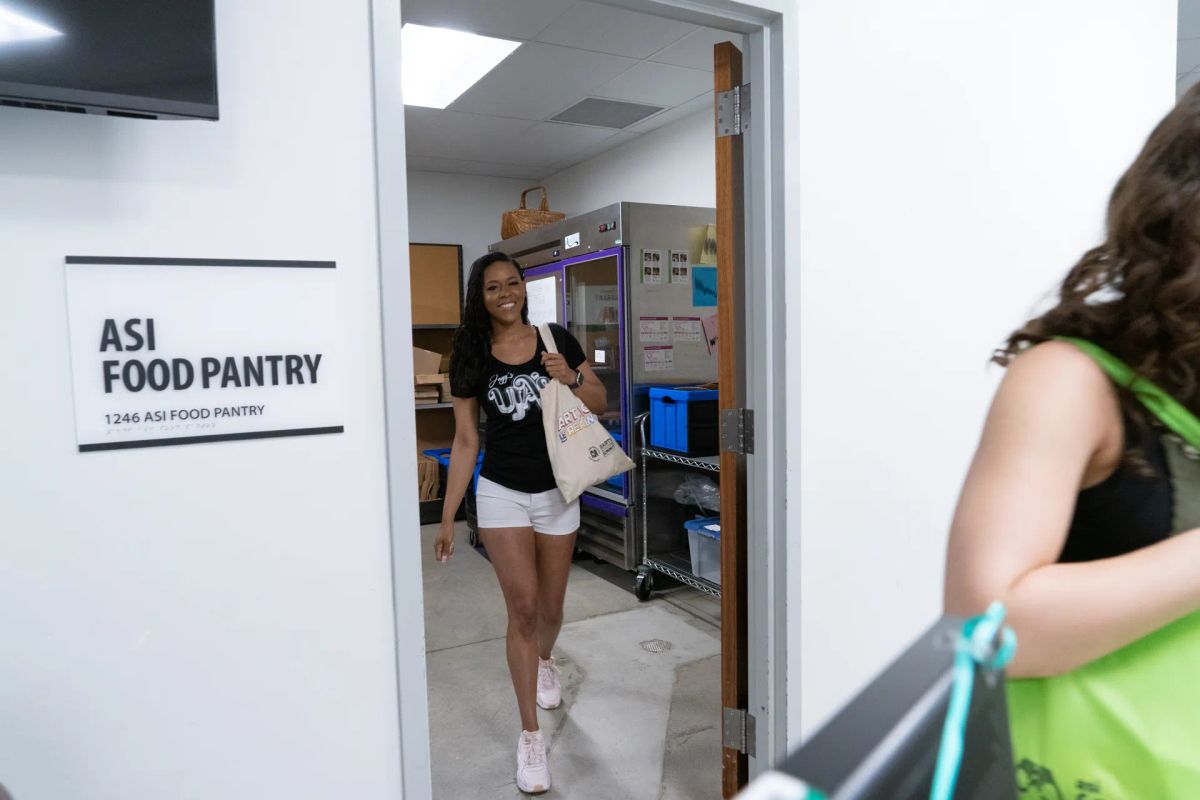
“CalFresh and the BNRC serve different and complementary roles,” Pye said. “CalFresh helps students build longer-term food security by providing monthly grocery benefits, while the BNRC provides immediate support and helps fill gaps when students need assistance right away. We expect the eligibility changes will increase awareness of available food resources overall and create more opportunities to connect students with both CalFresh and BNRC services.”
According to Sacramento State’s 2026 National College Health Assessment, about 54% of students reported experiencing food insecurity.
National research also shows Black college students experience basic needs insecurity at disproportionately high rates.
Pye cited a 2024 report from The Hope Center, which found that 51% of Black and Indigenous college students experienced food insecurity, compared with 36% of their white peers.
“Often this results in poor academic performance and may eventually lead students to drop out,” Pye said. “That’s why it’s important that support services are accessible, visible, culturally responsive and designed to reduce barriers to seeking help. Every student deserves the opportunity to focus on their education rather than worrying about when they’ll be able to eat next.”
Kyle Nelms, a fourth-year political science major and student lead for media and marketing at Sacramento State’s Basic Needs Resource Center, said food insecurity is a nationwide crisis.
“I know how widespread the food insecurity issue is in America,” he said. “I can imagine how, at universities located in food deserts, college students are relying on the local 7-Eleven for snacks or driving down the street to Wendy’s, Burger King or McDonald’s.”
Given what campuses know about student needs, Nelms said food pantries and basic needs centers should be standard services at colleges and universities.
“It’s something that’s not only easily doable but appropriate when you see how many students are food insecure,” he said. “Of course colleges want to see the best graduation and retention rates, so it’s kind of a no-brainer.”
While the Basic Needs Resource Center relies on partnerships with local farms, grocery stores and major corporations, Nelms said community members who want to support Sacramento State students can also make donations.
“Local communities play a major role in strengthening the impact of CalFresh for food-insecure college students,” Harris said. “By combining outreach, enrollment support, food access programs and broader social services, local communities can help ensure that eligible college students not only receive CalFresh benefits but are also able to consistently access healthy food.”