
Long Beach again seeking tsunami tower funds after court orders BRIC restoration
Published 1:55 pm Sunday, July 12, 2026
LONG BEACH — The hopes of constructing the first tsunami evacuation tower on the Long Beach Peninsula are alive once again after reinstatement of a key federal program.
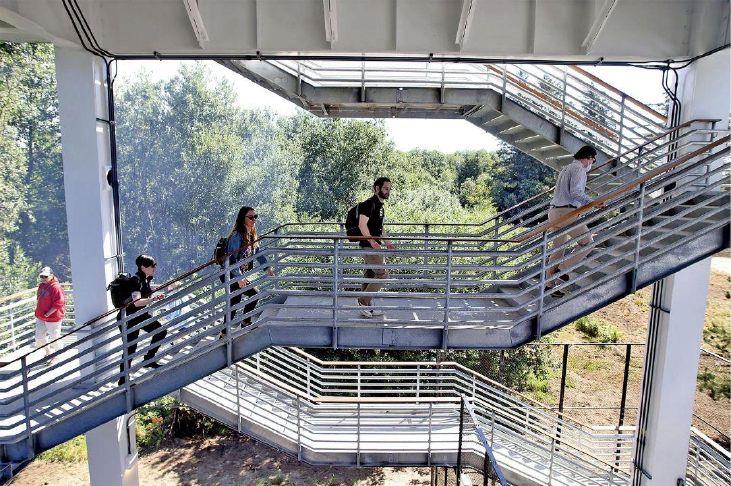
Long Beach officials recently confirmed that the city is again pursuing significant funding through a Federal Emergency Management Agency (FEMA) grant program to build a vertical evacuation tower behind Long Beach Elementary. The push for funding had been on pause for nearly a year, after the Trump administration sought to do away with the program in question.
Earlier this spring, FEMA reopened applications for its Building Resilient Infrastructure and Communities (BRIC) program, which helps states, local governments and tribes fund projects to prepare for fires, floods, earthquakes, tsunamis and other hazards.
FEMA had sought to end the program in 2025 as part of an Elon Musk-led effort to root out what it deemed “waste, fraud and abuse” throughout the federal government. The program was started during President Donald Trump’s first term in office, and received a funding boost via the Bipartisan Infrastructure Law that was passed in 2021. Examples of projects that BRIC dollars have supported include wildfire prevention, stormwater management upgrades and flood control systems.
But last December, a federal judge ruled that FEMA could not eliminate BRIC and ordered the agency to reverse course after a coalition of 22 states and the District of Columbia sued the federal government over the cancellation.
In March, FEMA was again ordered by a judge to take further steps toward restoring the program. The program began accepting applications on March 25, with applicants having 120 days to apply for the new funding opportunity that covers both the 2024 and 2025 fiscal years.
Long Beach Deputy City Administrator Ariel Smith confirmed in late June that the city was again pursuing funding through the BRIC program and was in the midst of submitting another application. That application was due to be submitted to the Washington State Emergency Management Division (EMD) by the end of last month for review before moving on to FEMA for submission.
The city was first invited by the EMD in 2024 to complete a full application for funding through BRIC that the state agency was set to receive and distribute to approved projects from local governments and tribes. Long Beach had previously completed an initial application for BRIC funding.
Before the year-long delay, Long Beach officials were optimistic about their renewed effort to build an evacuation tower that could be a safe haven for at least 800 people in the event of a tsunami triggered by an earthquake along the Cascadia Subduction Zone. BRIC provides funding for all phases of a project, including design and other pre-construction work as well as the construction of the tower itself.
One crucial element for the optimism was Long Beach qualifying as an Economically Disadvantaged Rural Community, meaning if funded the city would be left to cover just 5% of the project’s total cost — rather than the more standard 12.5% rate — with FEMA footing the bill for 90% and the state covering the other 5%.
Following the failed attempt to dismantle the program, Smith noted that the maximum amount of funding that a project can now receive through BRIC was capped at $20 million, “so we are having to adjust some of the specifications of the project.”