
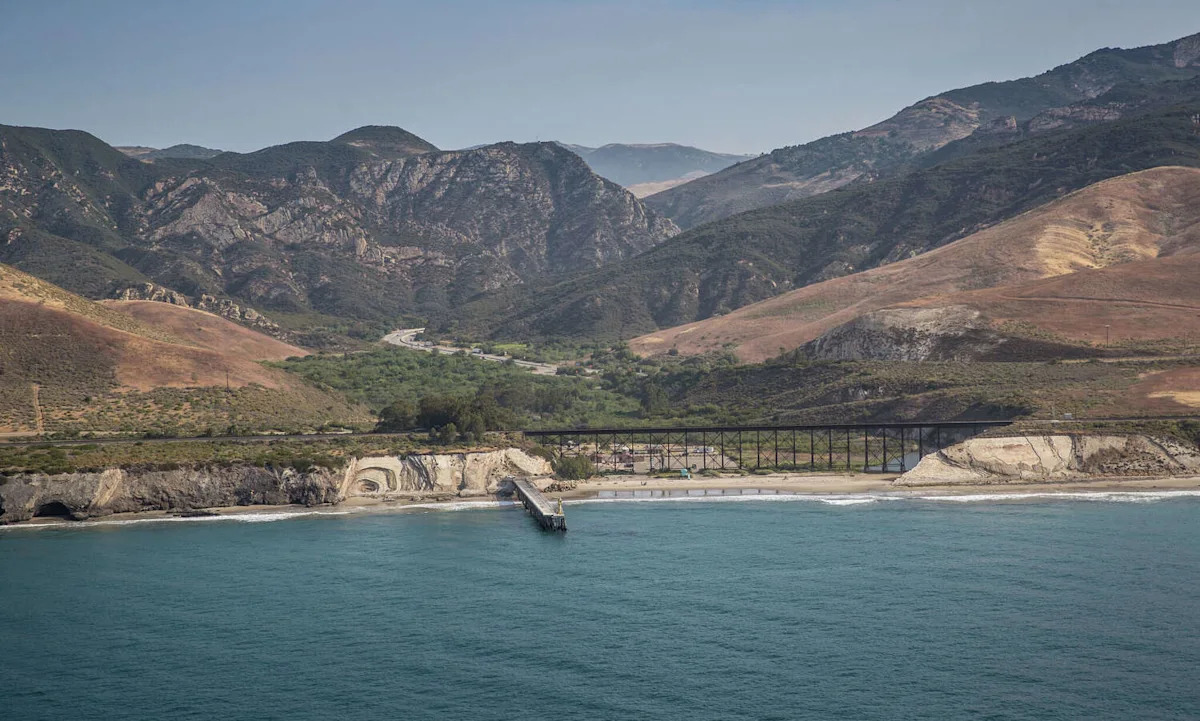
One of the only rest areas on the Central Coast is closed to travelers for the second summer in a row as Caltrans grapples with providing water to the facilities.
The northbound and southbound rest stops, located within the popular Gaviota State Park in Santa Barbara County, are in a region that’s prone to flooding. So while the area has plenty of water, the agency can’t draw from the watershed, in part because of concerns that diverting water comes at the cost of a threatened species of fish, the steelhead trout.
Now, Caltrans officials say they have no choice but to explore other options, such as gauging a neighboring school district to tap into its water supply.
Located off Highway 101 about a mile from the beach, the two Gaviota rest stops on either side of the road have a complicated history. Since the start of the decade, they have repeatedly shuttered due to water woes. In 2023, after Caltrans completed a $5.5 million project to install new waterlines and upgraded the wastewater treatment, the rest stops closed down only 45 minutes after reopening to the public.

The northbound Highway 101 Gaviota Rest Area in 2023, near Santa Barbara, Calif. (Courtesy of Caltrans)
To supply the rest stops, Caltrans sources fresh water from the state park, which has been drawing from the Gaviota Creek Watershed since 1998. Fearing endangerment of wildlife and wetlands, the Coastal Ranches Conservancy sued the California State Parks department in 2022, claiming it had abused access to the water spring. Coastal Ranches Conservancy settled the lawsuit last year, and an agreement limits the amount of water State Parks can pull, especially during the summer.
Now, for the second year in a row, State Parks cannot provide water to Caltrans, forcing the agency to close the Gaviota rest stops from July through Oct. 1.
Caltrans is actively pursuing other sources of water, including asking the Vista Del Mar Union School District if it can tap into its system, according to Doug Campbell, treasurer of the Coastal Ranches Conservancy.
“The exploration of a dependable water supply for this location is in its early stages,” Caltrans spokesperson Ashton Harris said in an email July 6. “We are considering all reasonable possibilities.”

Mud and debris block the entrance to Gaviota State Park in February 2017 following heavy storms, near Santa Barbara, Calif. (George Rose/Getty Images)
It’s not just the water, but habitat, that concerns some residents here when it comes to the rest stop’s usage. Campbell said restoring water flows on Gaviota Creek is important to the survival of steelhead trout. He added that Caltrans had ample time to improve its water system before summer and criticized its lack of planning.
“They had more than a year to come up with a solution for this problem,” Campbell told SFGATE by phone. “For them to say the rest areas are shut down for lack of water – it’s shut down for a lack of effort from Caltrans.”
In response, Caltrans’ Harris wrote that to keep the Gaviota rest areas open, Caltrans will need to continue studying options. “The fact is that there aren’t any easy or inexpensive solutions to provide dependable water to the Gaviota rest areas,” she wrote.
More Travel
– This California harbor town’s lobster roll crushes its East Coast competitors
– A Lake Tahoe meadow comes back to life under the stewardship of the Washoe Tribe
– Bigger than San Francisco Bay, Shasta Lake has an image problem
– Disneyland launches inexpensive new park ticket
– Remote workers tried to flock to this Calif. beach. The city shut it down.
For more travel news and features, sign up for our TravelSkills newsletter here.
This article originally published at Oceanfront California rest stop runs out of water for second year in a row.