
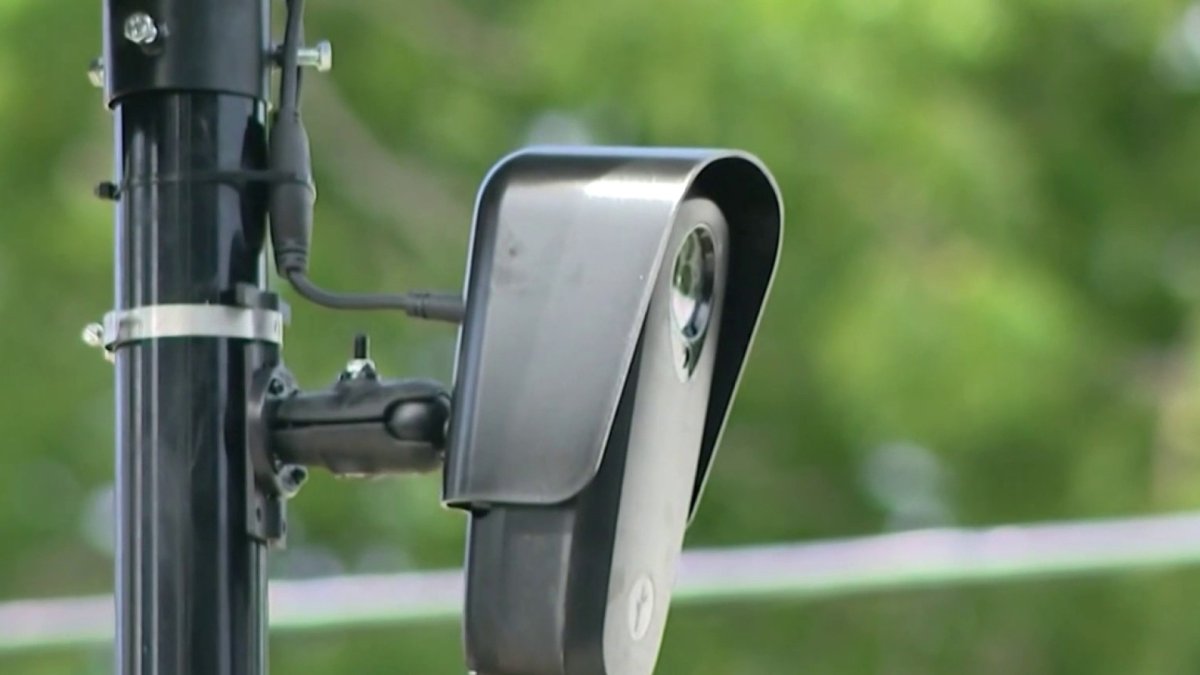
The Los Angeles Police Department has been urged by its official watchdog to reconsider the terms of its agreements with a trio of vendors, which operate or support about 2,000 automatic license plate readers or ALPRs that constantly surveil residents and visitors by capturing hundreds of millions of images every year and logging each time and place their vehicles are observed.
Over a two-month period last year, the LA Board of Police Commissioners’ Office of Inspector general (OIG) said these systems aided in the recovery of at least 337 stolen cars and led to dozens of felony arrests, but it also reported there are significant data privacy and data sharing concerns that should be addressed.
The OIG suggests the LAPD “suspend deployment of new ALPR cameras and execution of new ALPR-related contracts pending public input and a broader reassessment of vendors and data practices.”
The commissioners were set to discuss the findings and the future of these programs in its meeting Tuesday.
The LAPD said late last week, its agreement for access to cameras operated by Flock Safety wasn’t renewed after it expired in consideration of the need to rewrite its agreement and some of the issues raised by the OIG report and citing “serious concerns” regarding privacy and civil liberties.
“The absence of formal agreements is particularly concerning given the growing national concern over third-party access to ALPR data and the limited understanding within law enforcement of how such data is accessed, shared, and used,” the Inspector General wrote.
The report references instances — none detected in the LAPD data pool — in which federal or out-of-state law enforcement agencies accessed ALPR data captured by California-based systems, something that the OIG said is prohibited by state law and local rules.
Flock is just 1 of 3 vendors that supply ALPR equipment or technology to the police department and maintains 138 pole cameras in some neighborhoods. The installation of the cameras was funded by privacy associations or discretionary city council money. The cameras were not purchased by the LAPD.
Flock said it was surprised by the LAPD’s decision and expected to resolve the LAPD concerns.
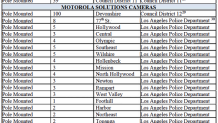
The Office of Inspector General provided this list of automatic license plate readers used by the LAPD.
Axon’s contract expires at the end of July. It manufactures body-worn video cameras, TASER stun devices and the in-car video systems installed in 1,500 LAPD patrol cars.
The LAPD buys the devices from Axon and also uses its data storage system Evidence.com to manage the recordings. Axon provides ALPR software for its in-car cameras.
The LAPD has ALPR data-sharing agreements with 15 other law enforcement agencies in Southern California.
The OIG report said a search of the LAPD’s ALPR queries did not show the system had been accessed improperly for searches at the request of “ICE” or that immigration enforcement was noted as a reason for a search.
But it also found the department had not conducted a thorough audit of ALPR usage since 2022. When NBCLA made a request in 2025 under the California Public Records Act for copies or audits or data about how many reviews had been conducted, the LAPD told us it had no such records.