
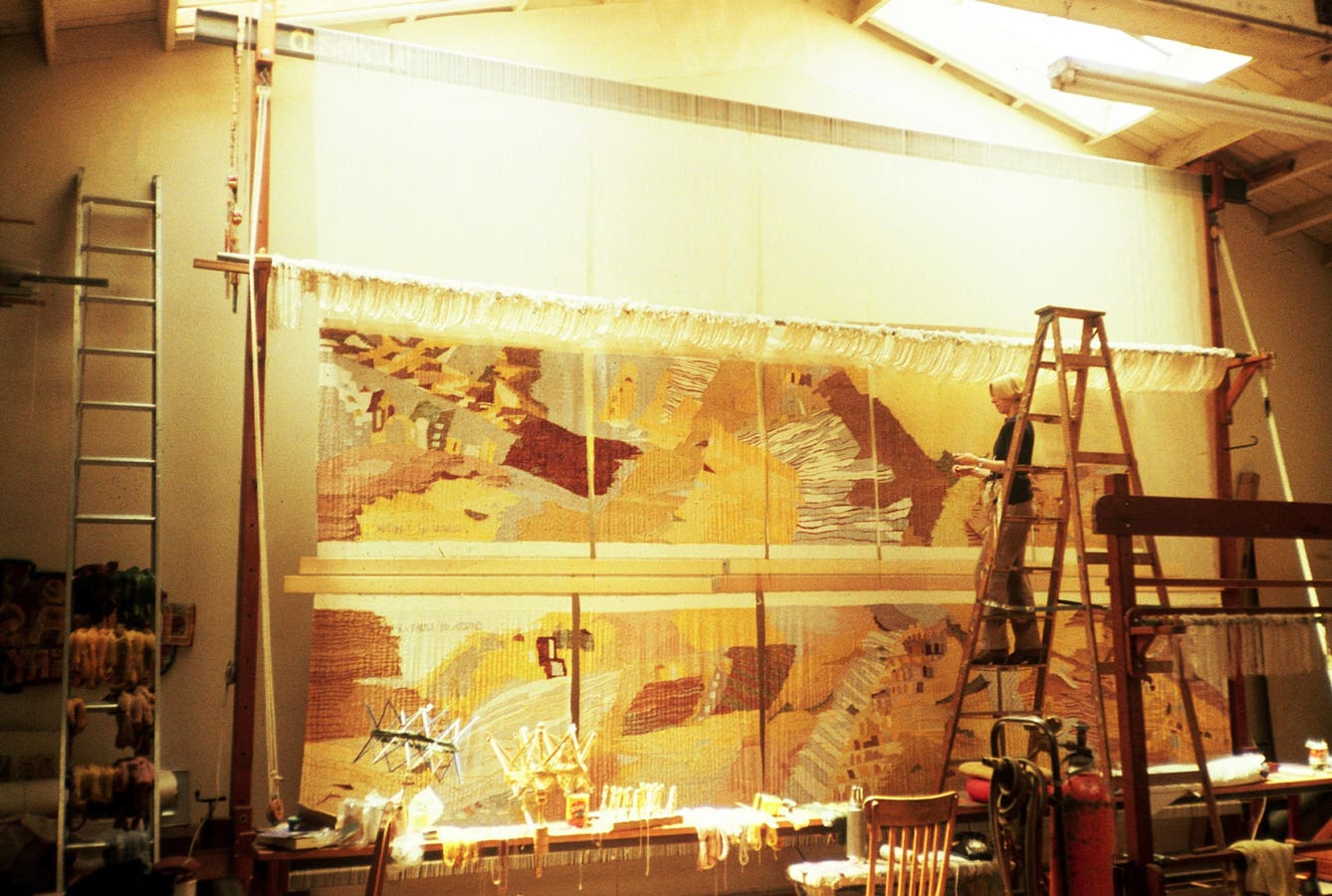
Photos from personal archive of Marilyn Levine of the Dome Space.
Marilyn Levine, Courtesy of Clay Jensen
A rooftop hot tub and communal pet albino alligator.
Receiving commissions for larger and larger works and wanting to branch out into other mediums like bronze, Voulkos left UC Berkely in search of studio space for his practice. A dome-shaped former food processing factory would do the trick. While Voulkos was out front, he didn’t go this alone. Several artist partners early on were able to secure a block of real estate, connecting a handful of separate warehouse buildings over time.
The Dome provided artists with more than a space to expand their practice and find community, it offered a vital refuge when navigating the pressures of gentrification and the rising cost of creative practice in the Bay Area. Real estate was cheap(er) then. Zoning laws were lax.
In curating “The Dome Show,” Ruby often wondered if such a place would be possible today?
“No, because of more restrictive zoning and planning laws; the control exerted by city officials as well as the role of real estate developers,” she concluded. “Real estate developers came into the artist live-work scene and became involved in constructing artist communities in the ‘90s and 2000s and the real estate developers in the Bay Area received zoning and tax breaks to be involved in the construction of artist live-work communities. I think that has resulted in a different kind of barrier for entry.”