
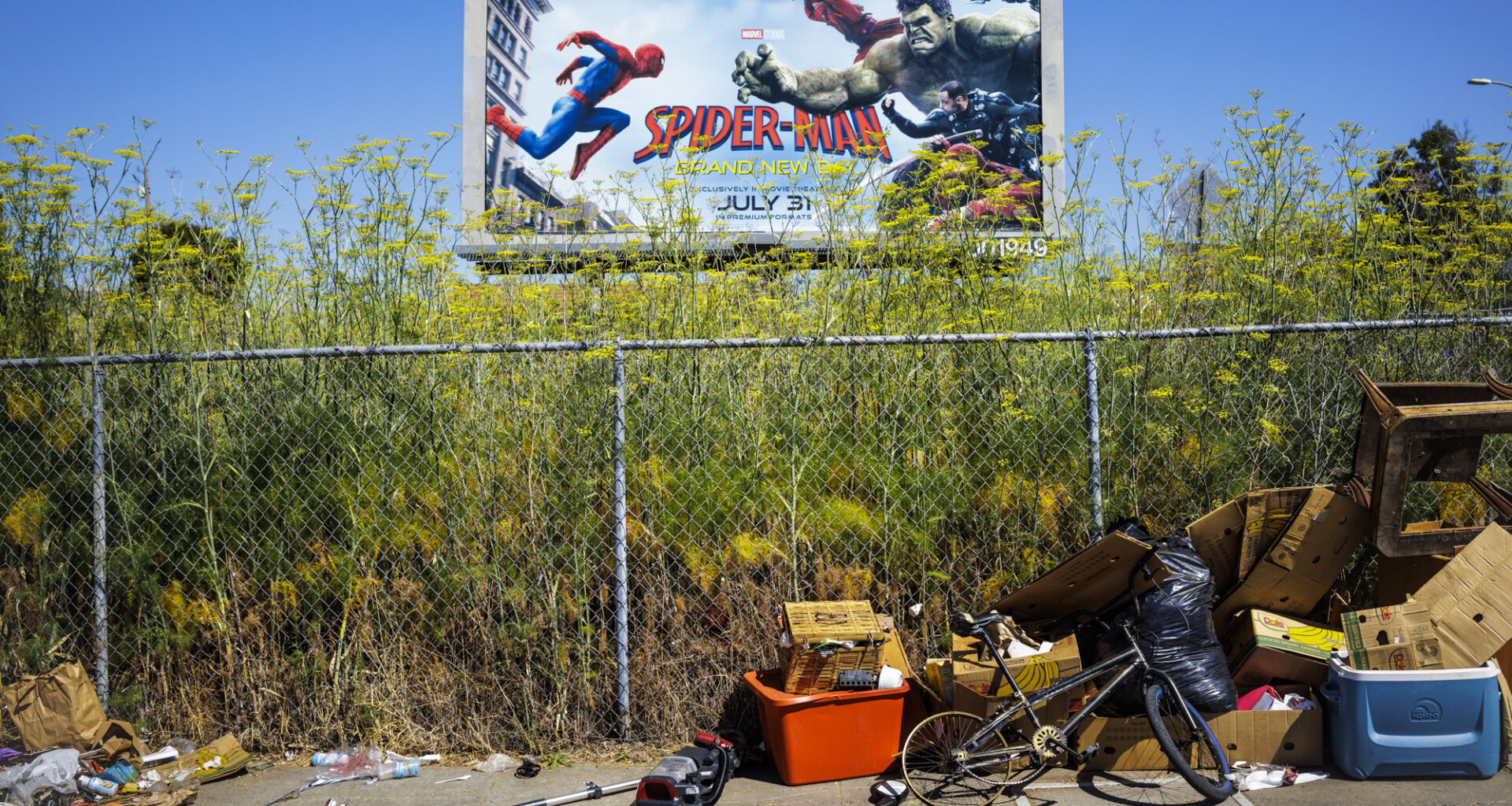
An East Bay parcel sat vacant for 30 years, buried under $1.7 million in back taxes. It’s been transferred to a local group — and the county says more could follow.
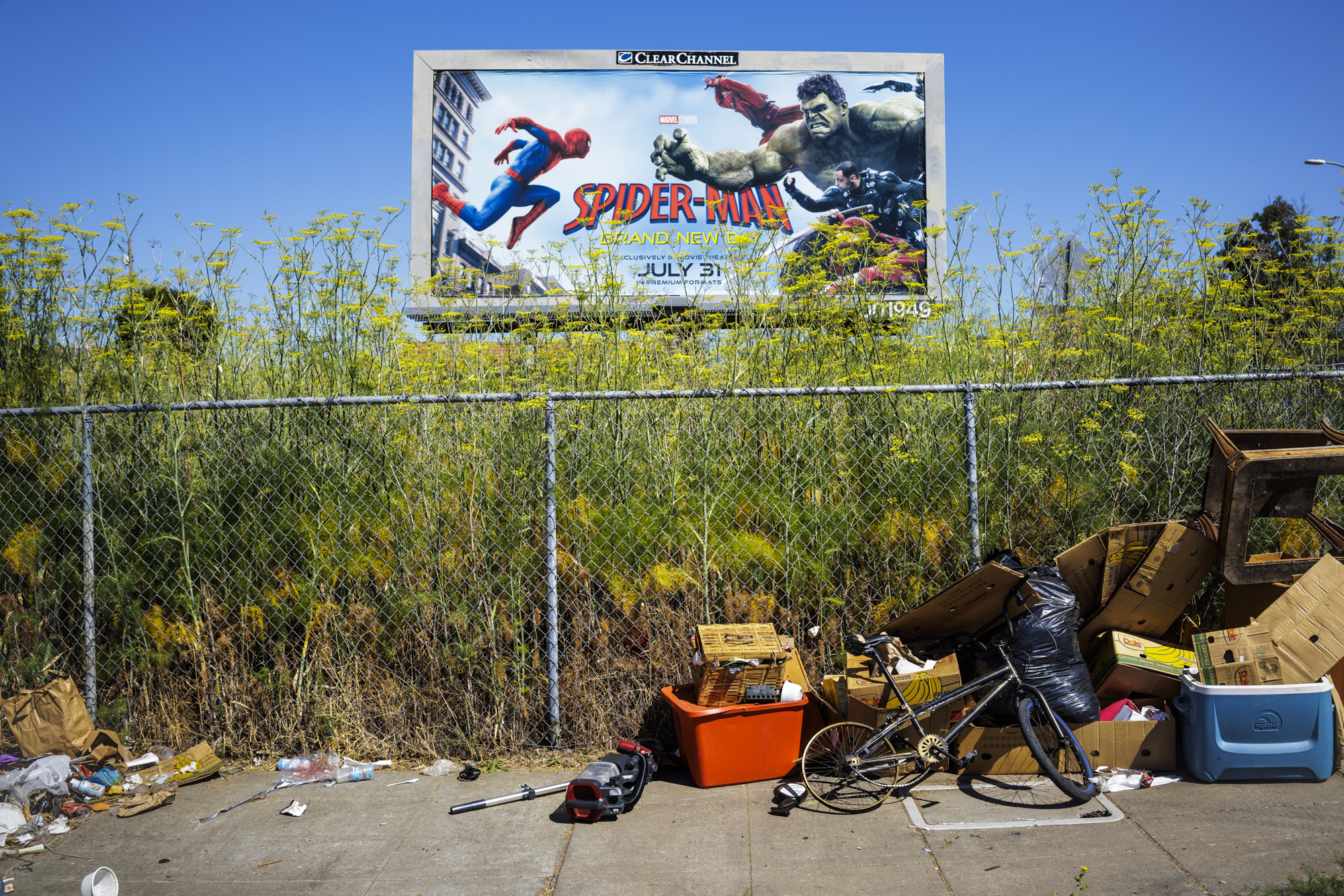
Garbage sits pilled up along the fencing surrounding the lot at 8215 MacArthur Blvd., in East Oakland, on July 14, 2026. (Martin do Nascimento/KQED)
For 30 years, an empty, blighted lot in East Oakland has been home to weeds, dumped trash, a billboard and a debt so large no buyer would come near it.
On Tuesday, Alameda County leaders voted to hand the tax-defaulted property at 8215 MacArthur Blvd. to a Black community initiative and nonprofit housing developer for only $10.
The county hopes the sale of the 15,000-square-foot parcel — a quarter of a football field — can become a model by which blighted city-owned properties can be transformed into affordable housing and serve as part of a broader effort to keep Black residents in East Oakland.
“Today is historic,” Treasurer-Tax Collector Henry Levy told the Board of Supervisors, noting it was the county’s first transfer of its kind in about a decade.
The parcel had been “stuck,” county officials said.
After going into tax default in 1995, the county sold it a decade later to a nonprofit that was supposed to build affordable housing on it, but which dissolved in 2013 without ever doing so. Because the taxes are owed by an entity that no longer exists, the debt kept compounding into nothing: as of June 30 of this year, back taxes, penalties and city liens totaled roughly $1.7 million.
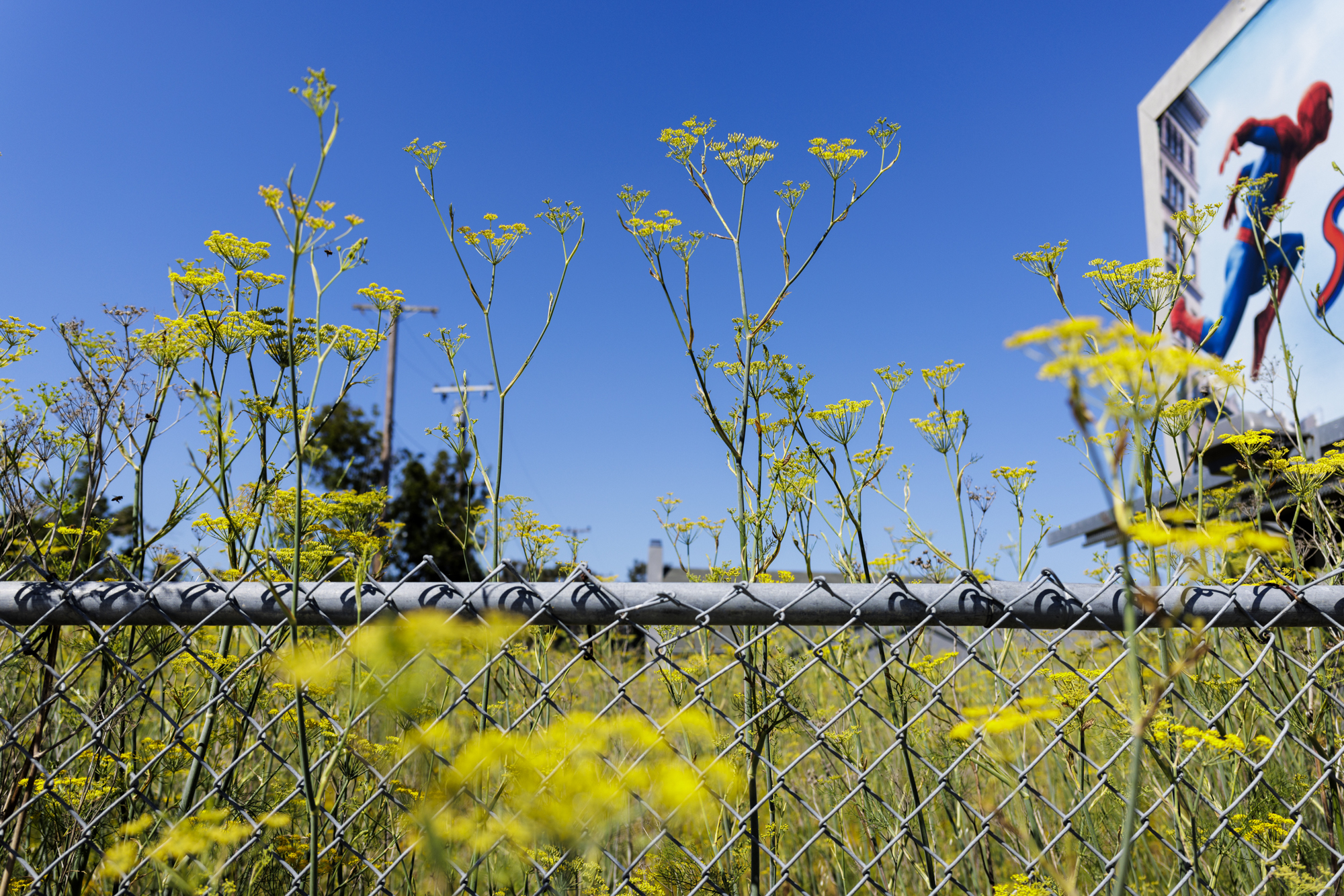 Sweet fennel grows above the fencing at the lot at 8215 MacArthur Blvd., in East Oakland, on July 14, 2026.
In April, an appraiser valued the land at $900,000, meaning the debt now exceeds what the dirt is worth. That is the legal hinge of the deal. Because a sale could not cover the debt, the county is free, under Chapter 8 of the state tax code, to set whatever price it sees fit.
“It’s hard to describe it as giving up,” said Casey Farmer, the county’s Chapter 8 program manager. “The only way to get that property really back to paying taxes or back to good public use is to find a new owner to take on that property.”
Nobody, she said, would take it. The county tried to auction it off in 2013, starting at $634,255, and it did not sell, nor did it sell again in 2023. Several lots within half a mile also sit empty.
“It’s just not a very attractive property,” she said.
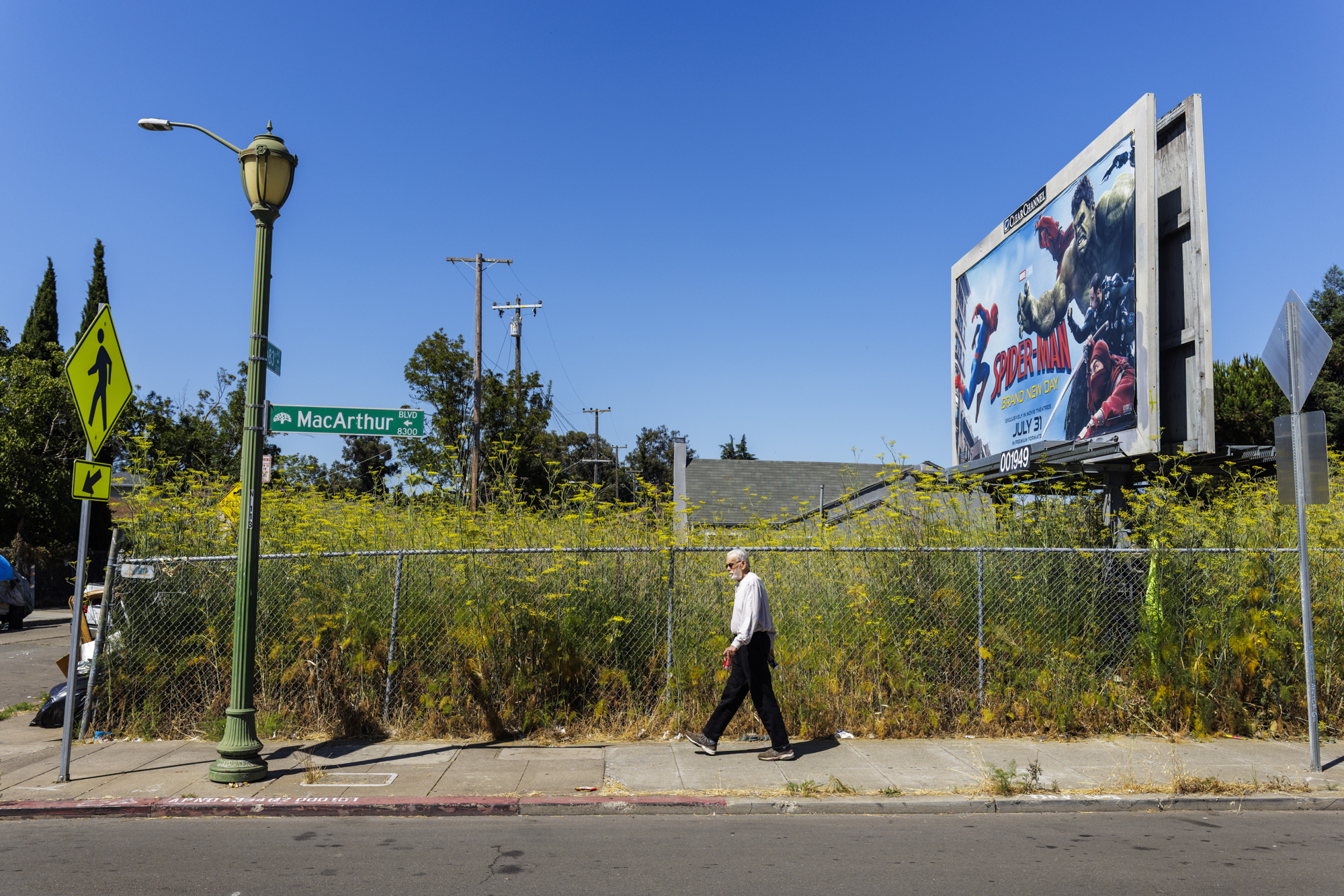 A pedestrian walks past the lot at 8215 MacArthur Blvd., in East Oakland, on July 14, 2026.
A $10 price tag, she said, is not the same as a cheap project.
“If you think, ‘You’re getting the property for $10’ — yeah, but still we have to raise $40 million in order to build it,” Davis said. “That’s a process. That’s the other long part of putting together the financial stack, so that it’s also affordable.”
To compete for the tax credits that finance affordable housing, she said, a project generally needs to be around 100 units. The housing plan for the site has not been determined, and the first step will not be a rendering, she said.
In the meantime, BCZ will clear and activate the lot, as it did at Liberation Park, a “so-called hub for community empowerment” the nonprofit turned into an outdoor market, community roller rink and future affordable housing site. Davis said BCZ hosted roughly a hundred events a year there before a single building went up.
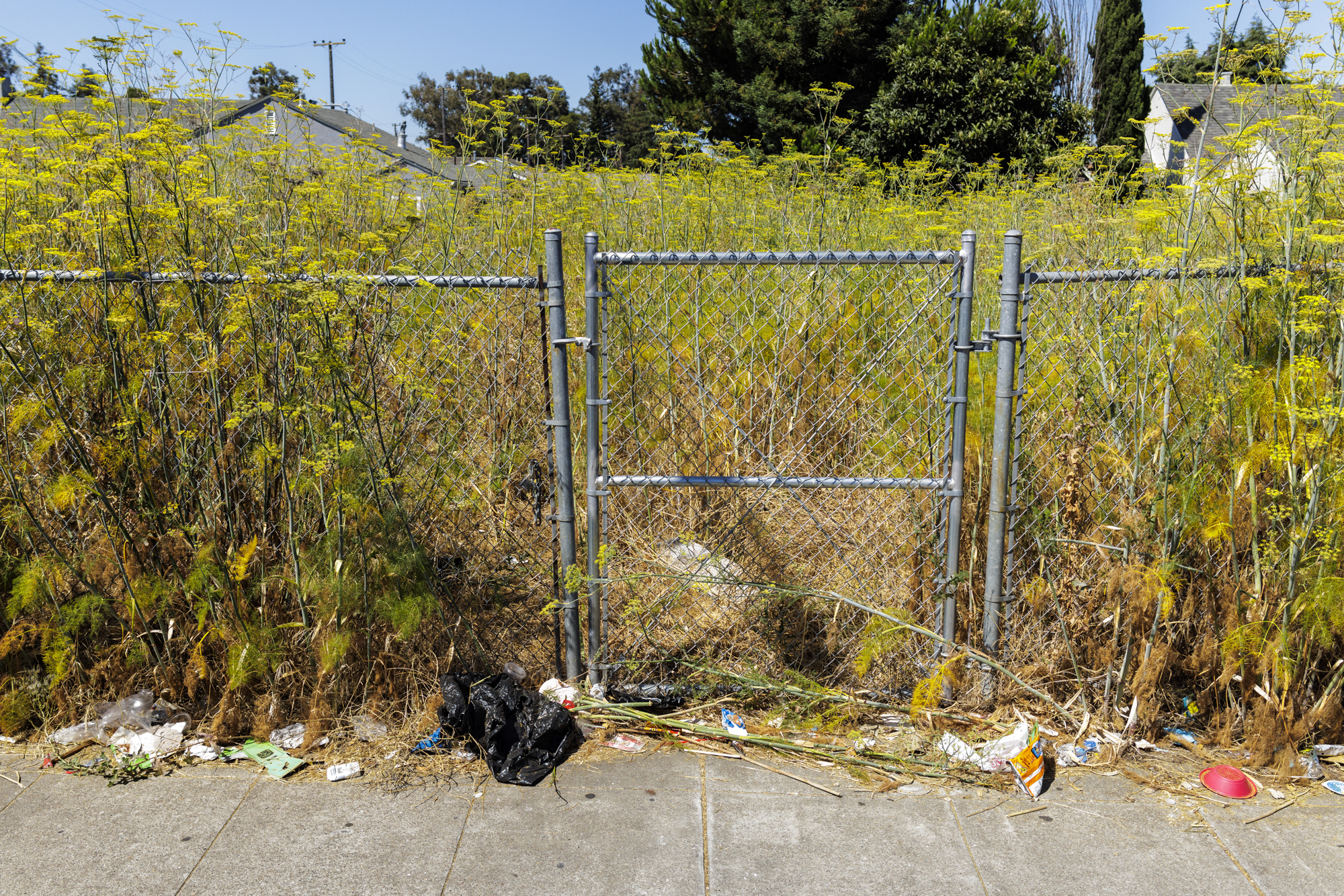 Sweet fennel grows above the fencing surrounding the lot at 8215 MacArthur Blvd., in East Oakland, on July 14, 2026.
The sale still needs sign-off from the California State Controller, a review the county expects to take a month or more.
The county is eyeing about 10 more abandoned, tax-defaulted parcels — mostly vacant land — for the same treatment. Some are small enough for infill housing; state law also permits transfers for open space, such as a park or community garden. Farmer said the office hopes to move them over the next year.
Supervisor Nate Miley, whose district includes the lot, said he hopes it becomes a template for turning the county’s stuck, tax-defaulted lots into affordable housing.
He said at the hearing that “these things take time, but anything worth having is worth pursuing.”