
At the Budget Session meeting on July 14, 2026, Grant Thornton, a licensed independent CPA firm, presented a sobering five-year financial forecast for the City of Fullerton. The firm, which had recently completed audits for two city accounts, highlighted that while the General Fund had appeared to have a strong operating position before transfers, the outlook for reserves was concerning.
The assessment pointed to significant financial pressures from required transfers, including $4.0 million annually to the Infrastructure Fund and additional allocations for residential street improvements and IT. Under the firm’s Scenario A, Fullerton projected an operating surplus of $1.4 million in FY 2027-28 before accounting for these transfers. However, the situation turned grim after transfers were considered, projecting a $2.9 million deficit.
“The reality was that Fullerton could maintain its current operations, but it could not meet the urgent need for street repairs,” noted the report. Grant Thornton also emphasized that the existing infrastructure funding levels fell short of the city’s identified needs, indicating that even the transfers contributing to the deficit were insufficient.
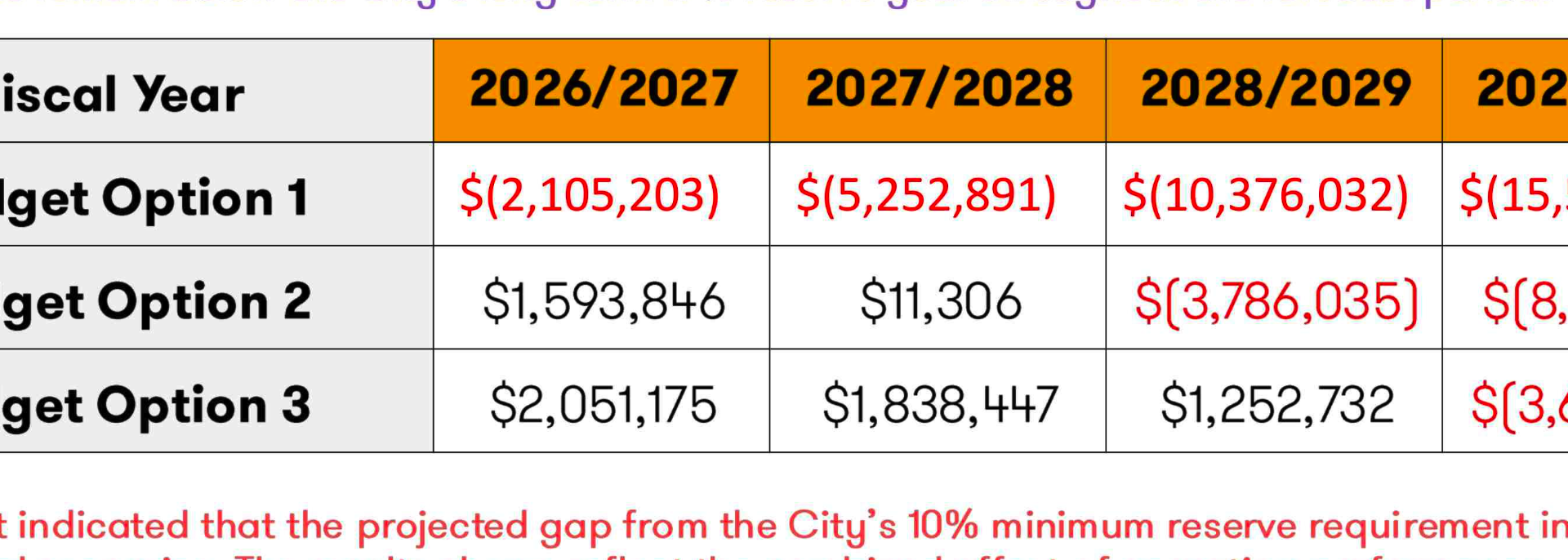
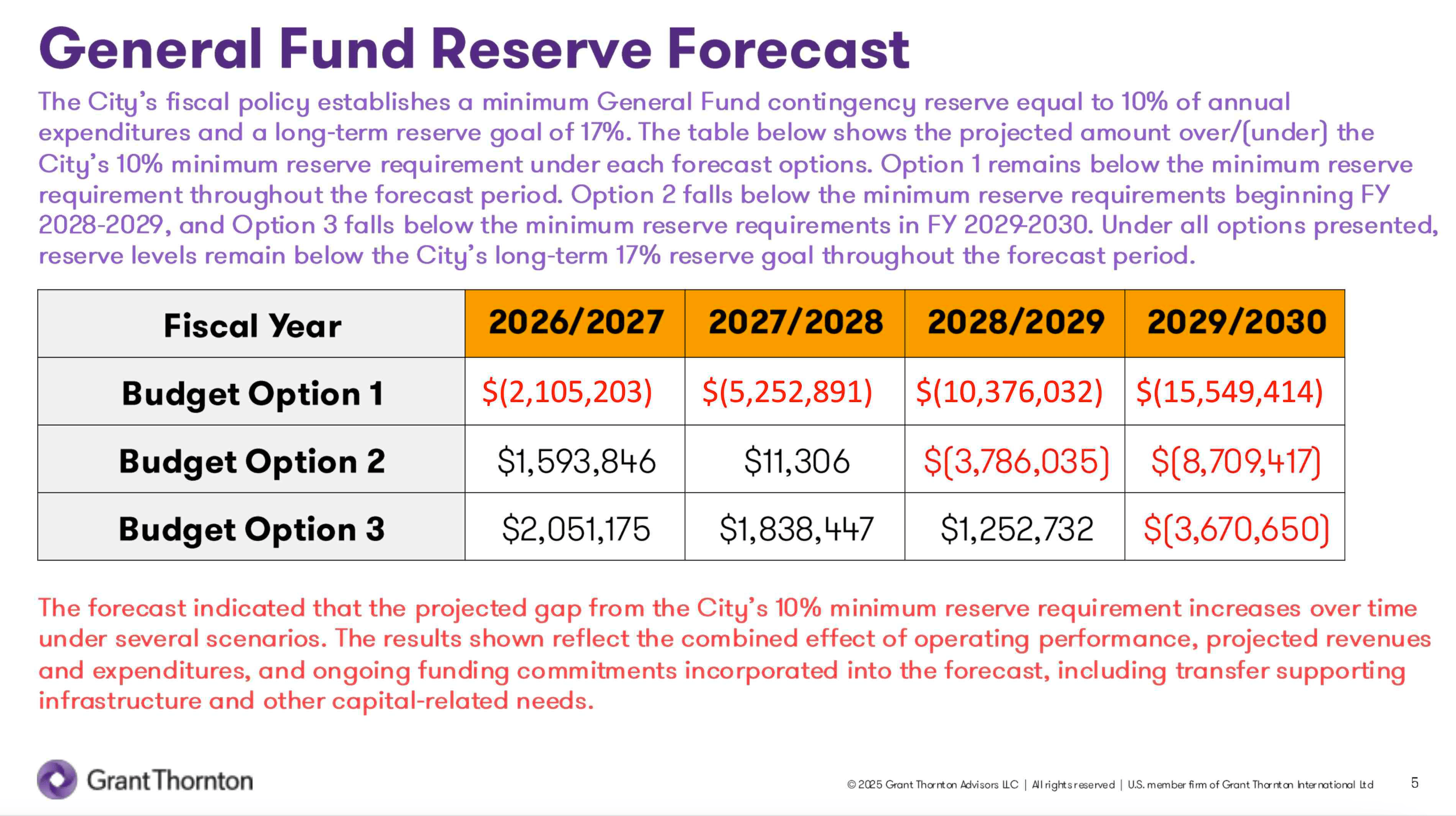
The forecast painted a bleak picture for the city’s reserves. According to city policy, a minimum contingency reserve of 10% was required, with a long-term goal of 17%. However, under all three financial scenarios presented, reserves were expected to remain below 17% for the entire five-year period. Option 1 failed to meet the 10% threshold throughout, while Option 2 dipped below this minimum starting in FY 2028-29. Even the most aggressive cuts outlined in Option 3 resulted in reserves falling below the minimum by FY 2029-30.
Additionally, the report flagged a critical issue regarding police overtime costs, which had historically averaged about $2.45 million annually, significantly higher than the roughly $1.8 million allocated in the current budget. This $650,000 gap posed a risk that could undermine any of the proposed financial scenarios.
As Fullerton addressed its budgetary challenges, the implications of Grant Thornton’s analysis indicate a need for increased tax revenue. This might come from either a half-cent sales tax increase for road funding or an overall sales tax hike. In Orange County, California, the highest sales tax rate is 9.25%, while the lowest is 7.75%. The base sales tax consists of a 6.0% California state tax, a 1.25% statewide local tax, and a 0.5% Orange County district tax.
Related
Discover more from Fullerton Observer
Subscribe to get the latest posts sent to your email.