
CDC says cyclospora is spreading but California cases stay within expected range

Updated: 1:15 PM PDT Jul 15, 2026
A parasite that can cause “explosive diarrhea,” cyclospora, is spreading this summer, with nearly 2,000 cases and more than 100 hospitalizations reported to the U.S. Centers for Disease Control and Prevention.California has reported between one and 10 cases, and 34 states have reported at least one case. However, the California Department of Public Health said the state is not among those currently seeing an increase in cyclosporiasis cases.“There are no known local outbreaks in the state, and no California cases are currently known to be linked to outbreaks affecting other states, which are under investigation by their respective state health departments, the Centers for Diseases Control and Prevention (CDC) and the US Food and Drug Administration,” CDPH said.The department said California has actually recorded fewer cases of cyclosporiasis than in 2025.From January through June 2026, California reported 41 provisional cases of cyclosporiasis, compared with 80 cases during the same period in 2025. From 2015 through 2025, the state averaged 106 cases annually, with totals ranging from 15 to 240. Current 2026 counts remain within the expected range.“It’s important to understand that California experiences cases of cyclosporiasis every year, with a majority of cases acquired internationally. Cases for 2026 are well within expected ranges for California, and we are not currently one of the states experiencing increased cases or an outbreak,” said Dr. Erica Pan, California Department of Public Health (CDPH) Director and State Public Health Officer. “We are aware of the outbreaks affecting other states, however, and are closely monitoring for any signs of local acquired infection. We encourage Californians to protect themselves and their families by practicing safe food handling and thoroughly washing produce.”While case numbers in California remain stable and within the expected range, the California Department of Public Health urges residents to take these steps to reduce the risk of infection:Wash your hands with soap and water before and after handling or preparing raw fruits and vegetables.Rinse all fruits and vegetables thoroughly under running water before eating, cutting or cooking them. Scrub firm produce, such as melons and cucumbers, with a clean produce brush.Remove and throw away the outer leaves of lettuce and other leafy greens.Older adults, young children, pregnant people and those with weakened immune systems should cook vegetables and herbs when practical.Avoid cross-contamination by using clean cutting boards, utensils and food-preparation surfaces. Keep ready-to-eat foods separate from raw produce.Refrigerate cut, peeled or cooked fruits and vegetables as soon as possible, and within two hours.Avoid food or water that may be contaminated with human feces, especially when traveling to countries where tap water or food may be unsafe.Most U.S. foodborne outbreaks tied to Cyclospora have been linked to imported fresh produce, including raspberries, cilantro, basil, snow peas and mixed salad greens.Health officials say washing produce is important, but it may not fully remove the parasite, so cooking is recommended when possible.
SALINAS, Calif. —
A parasite that can cause “explosive diarrhea,” cyclospora, is spreading this summer, with nearly 2,000 cases and more than 100 hospitalizations reported to the U.S. Centers for Disease Control and Prevention.
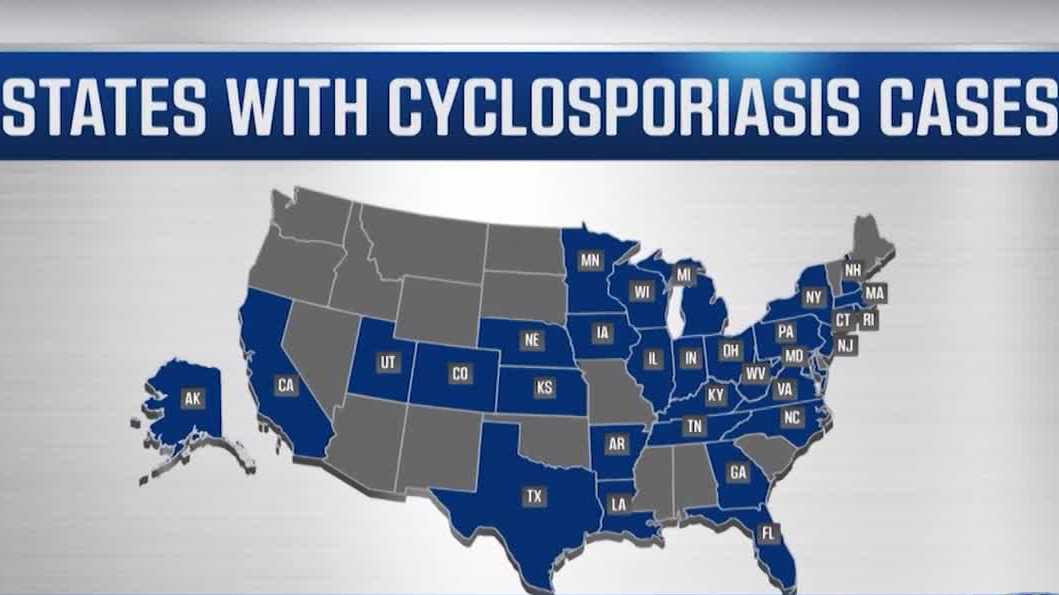
California has reported between one and 10 cases, and 34 states have reported at least one case. However, the California Department of Public Health said the state is not among those currently seeing an increase in cyclosporiasis cases.
“There are no known local outbreaks in the state, and no California cases are currently known to be linked to outbreaks affecting other states, which are under investigation by their respective state health departments, the Centers for Diseases Control and Prevention (CDC) and the US Food and Drug Administration,” CDPH said.
The department said California has actually recorded fewer cases of cyclosporiasis than in 2025.
From January through June 2026, California reported 41 provisional cases of cyclosporiasis, compared with 80 cases during the same period in 2025. From 2015 through 2025, the state averaged 106 cases annually, with totals ranging from 15 to 240. Current 2026 counts remain within the expected range.
“It’s important to understand that California experiences cases of cyclosporiasis every year, with a majority of cases acquired internationally. Cases for 2026 are well within expected ranges for California, and we are not currently one of the states experiencing increased cases or an outbreak,” said Dr. Erica Pan, California Department of Public Health (CDPH) Director and State Public Health Officer. “We are aware of the outbreaks affecting other states, however, and are closely monitoring for any signs of local acquired infection. We encourage Californians to protect themselves and their families by practicing safe food handling and thoroughly washing produce.”
While case numbers in California remain stable and within the expected range, the California Department of Public Health urges residents to take these steps to reduce the risk of infection:
Wash your hands with soap and water before and after handling or preparing raw fruits and vegetables.Rinse all fruits and vegetables thoroughly under running water before eating, cutting or cooking them. Scrub firm produce, such as melons and cucumbers, with a clean produce brush.Remove and throw away the outer leaves of lettuce and other leafy greens.Older adults, young children, pregnant people and those with weakened immune systems should cook vegetables and herbs when practical.Avoid cross-contamination by using clean cutting boards, utensils and food-preparation surfaces. Keep ready-to-eat foods separate from raw produce.Refrigerate cut, peeled or cooked fruits and vegetables as soon as possible, and within two hours.Avoid food or water that may be contaminated with human feces, especially when traveling to countries where tap water or food may be unsafe.
Most U.S. foodborne outbreaks tied to Cyclospora have been linked to imported fresh produce, including raspberries, cilantro, basil, snow peas and mixed salad greens.
Health officials say washing produce is important, but it may not fully remove the parasite, so cooking is recommended when possible.