
Residents caught using drugs could face eviction or relocation to other housing units and homeless shelters under the city’s controversial new housing policy.
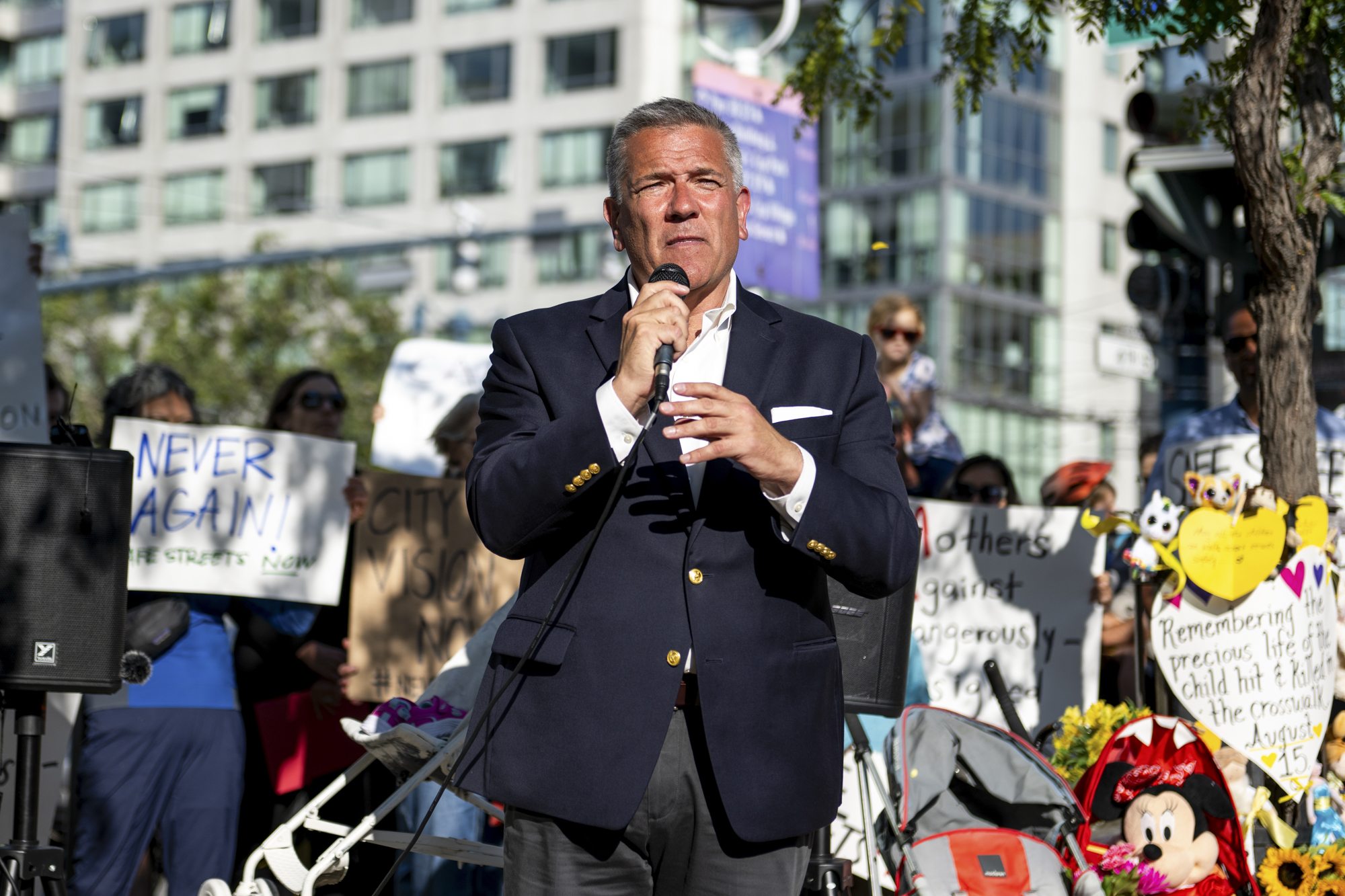
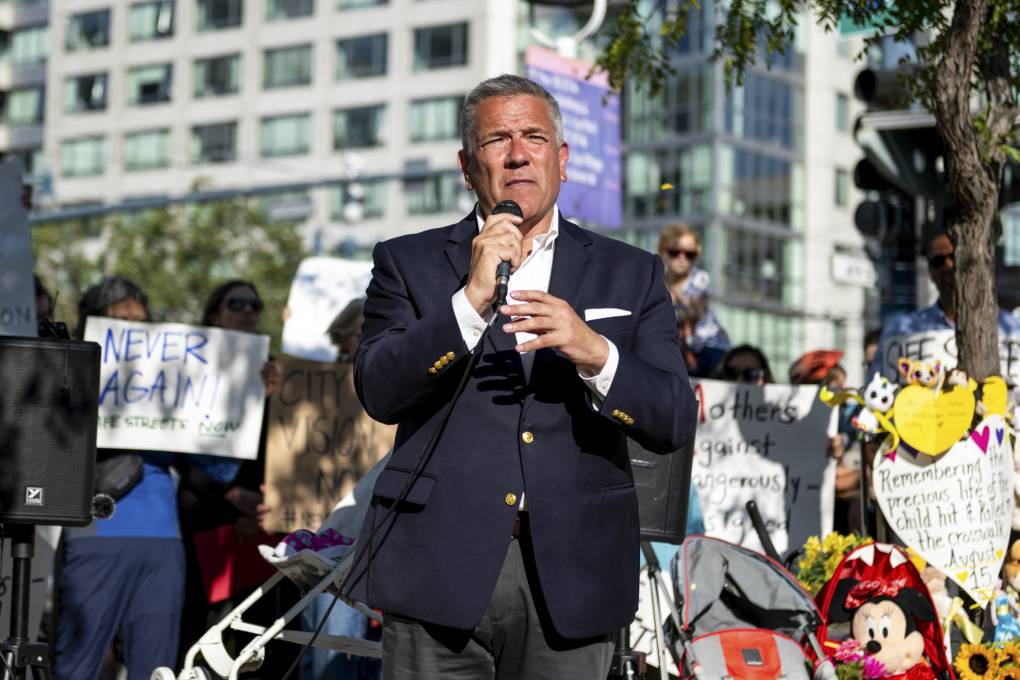
San Francisco Supervisor Matt Dorsey speaks during a rally to demand safe streets on 4th and King streets in San Francisco on Aug. 22, 2023. (Beth LaBerge/KQED)
New permanent supportive housing in San Francisco must prohibit on-site drug use in order to receive full city funding, after a controversial vote this week at the Board of Supervisors.
The board voted 7-4 to approve the ordinance, authored by Supervisor Matt Dorsey, that enables evictions on the basis of drug use in city-funded housing projects. The plan has drawn criticism from public health and homelessness advocates who say it could send more drug users to the street if they relapse, a common experience for people recovering from substance-use disorder.
But proponents say it will create environments where more people in recovery can succeed.
“This responds to real needs of [permanent supportive housing] residents themselves, people who may or may not be in recovery, but who simply want to live in a drug-free residential community,” Dorsey, who identifies as a former drug addict himself, said at Tuesday’s Board of Supervisors meeting.
San Francisco has around 9,600 site-based permanent supportive housing units, most of which follow the state’s Housing First approach, which attempts to keep people housed regardless of drug use.
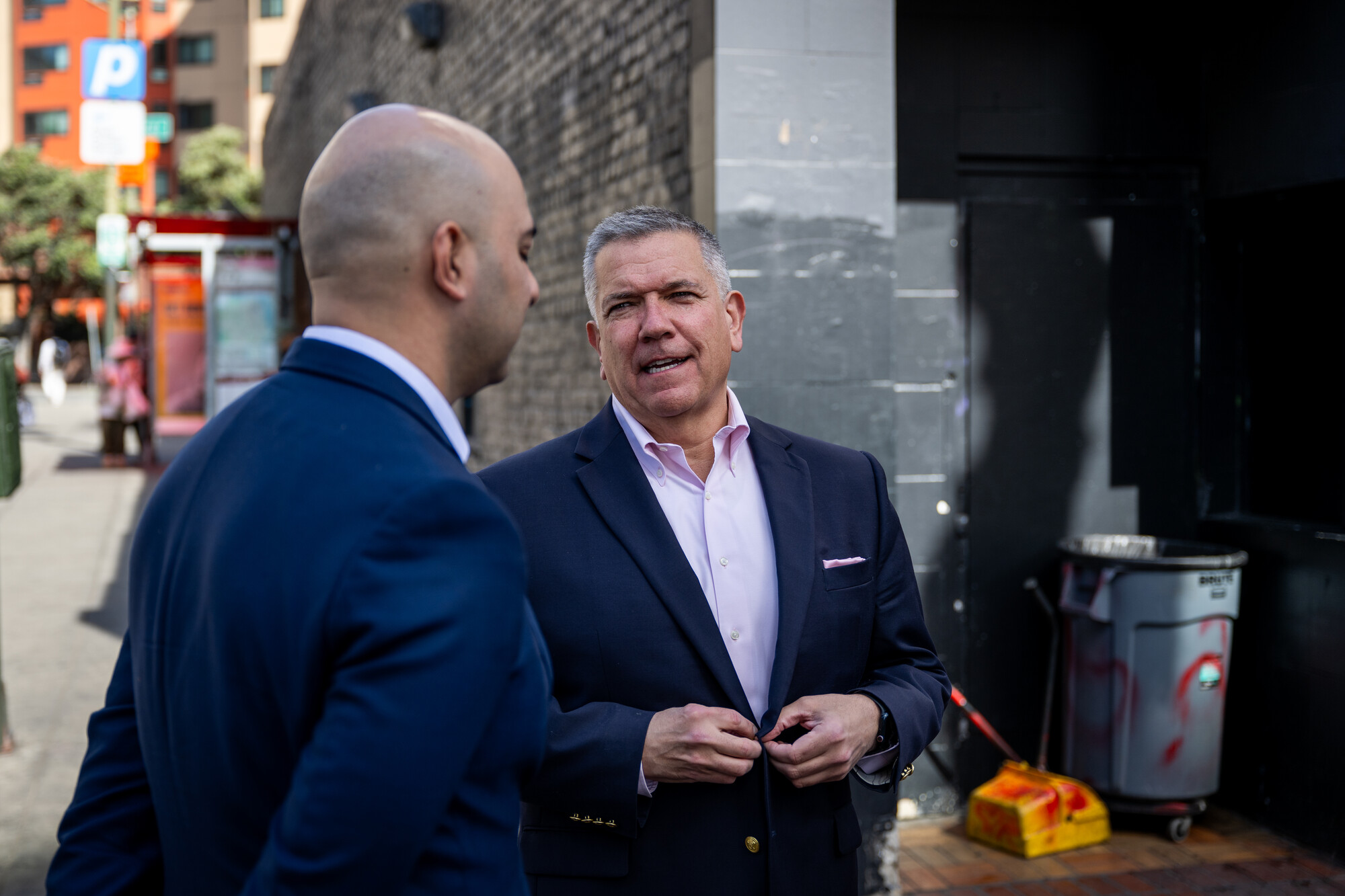 District 5 Supervisor Bilal Mahmood speaks with District 6 Supervisor Matt Dorsey before a press conference about strategies to end open-air drug markets in San Francisco, California, on April 10, 2024.
The city’s new policy applies specifically to new city-funded permanent supportive housing projects and not those that are fully state-funded.
If someone living in a drug-free building were to get caught using drugs, Dorsey said eviction would be uncommon. But those who do violate the policy could be evicted or relocated to a new building or homeless shelter.
“We should expect evictions under this ordinance to be exceedingly rare,” he said. “The self-selection of residents who voluntarily opt into drug- free residential communities largely solves in advance for scenarios that involve persistent drug relapses or habitual returns to use.”
Supporters of the plan said it builds on the work the city is doing to prop up more sober-living options, such as Hope House and James Baldwin Place.
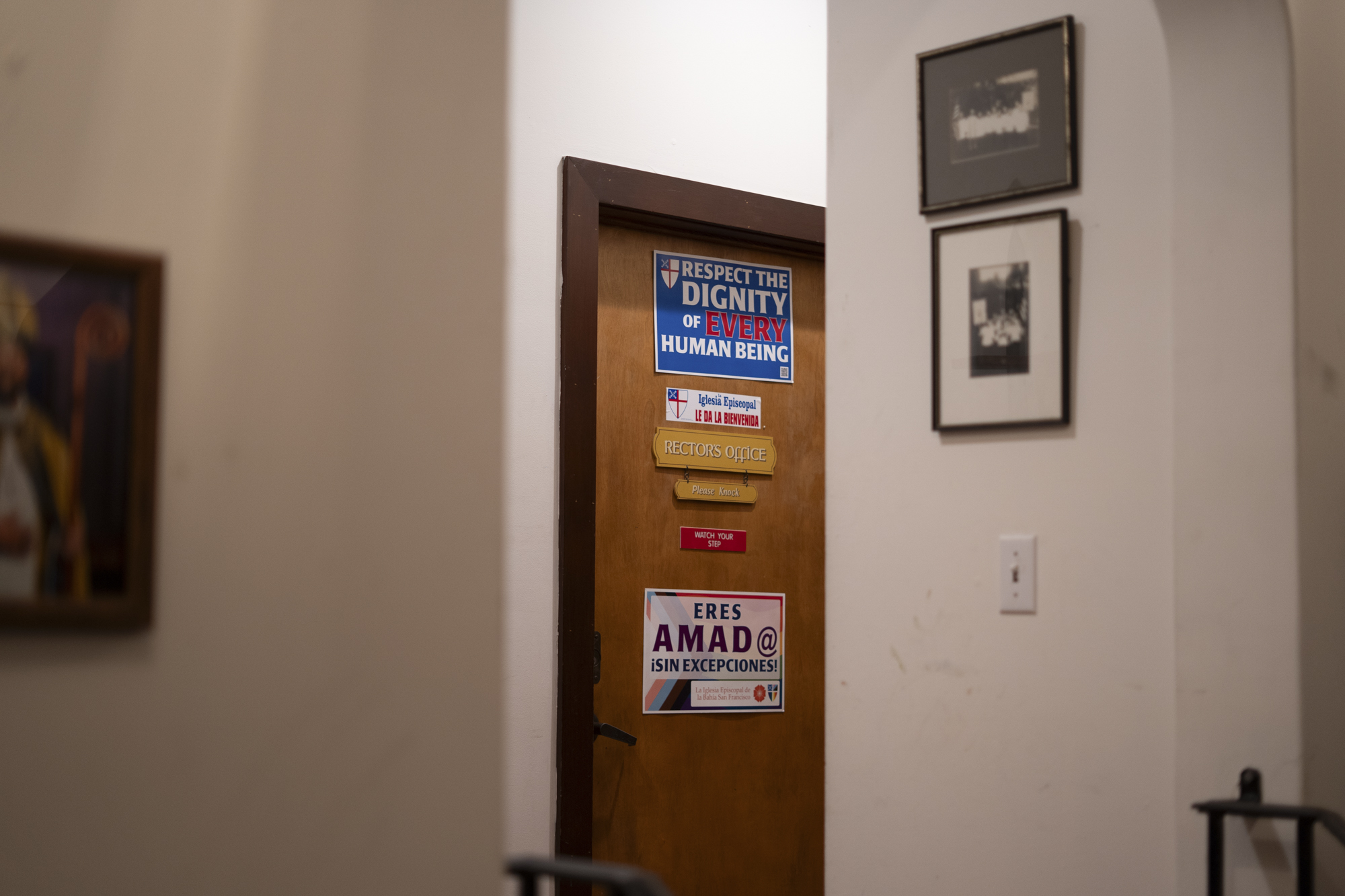 Signs promoting dignity and welcome hang on a door inside St. John’s the Evangelist Episcopal Church, home to the Gubbio Project, on Feb. 2, 2026, in San Francisco. The program allows unhoused guests to rest inside the church without intake requirements.
The policy does not prohibit alcohol or marijuana or medication-assisted recovery treatment like methadone or buprenorphine, which assist in opioid-use disorder.
Other homelessness advocates said the plan creates new barriers to building housing that is affordable to extremely low-income residents, at a time when rents in the city are skyrocketing, evictions are increasing and the city is on the hook to build thousands of affordable housing units to meet state requirements.
“This unnecessarily creates obstacles for backfilling Trump HUD cuts, and for projects in the pipeline,” Jennifer Friedenbach, executive director for the Coalition on Homelessness, said in a letter to the Board of Supervisors. “We can and should do sober housing, have done sober housing and simply need to recognize that by doing so we don’t want to drive up evictions.”
Now that the ordinance has passed, Dorsey said city leaders can still work together to finalize details around implementation.
“We should be sensitive to not being overly prescriptive in how we legislate to avoid setting our departments up for failure,” said Dorsey. “I am confident that the specifics on housing offers, evictions and broader program components can be addressed in the rulemaking process.”