
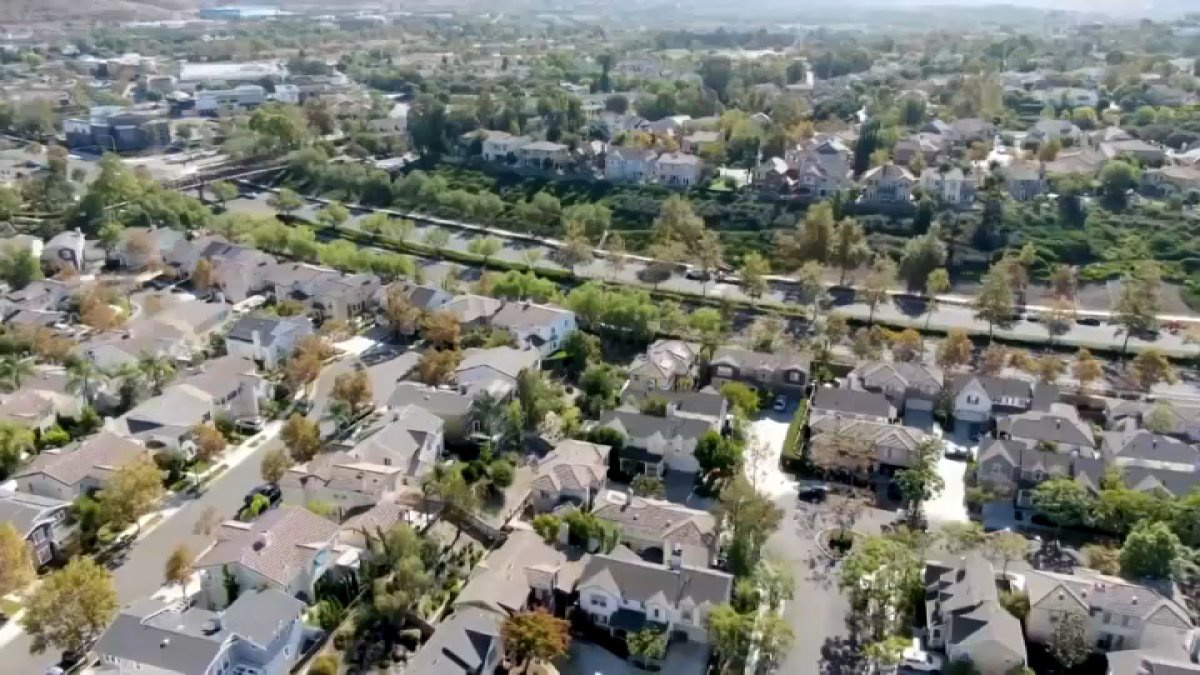
Following NBC Los Angeles’ reporting this month, First Assistant U.S. Attorney for the Central District of California Bill Essayli announced Thursday that he is requesting the Environmental Protection Agency to investigate the rare cancer cases affecting children in Ladera Ranch.
NBCLA first reported that six children were diagnosed with Ewing sarcoma — a rare bone and soft-tissue cancer — but later learned of about a dozen rare cancer cases in children in Ladera Ranch and other Orange County cities. About 200 to 240 children and teens are diagnosed with Ewing sarcoma every year in the nation, according to the American Cancer Society.
Essayli said he wants the federal agency to look into possible environmental causes and whether federal environmental laws are implicated.
His letter to EPA Administrator Lee Zeldin cites NBCLA’s July 8 reporting on families and residents voicing concerns about the number of cases in the Ladera Ranch community.
There has been an unusual cluster of pediatric cancers in the Ladera Ranch community. I am requesting that @EPA conduct an appropriate investigation into whether there are any environmental causes, and whether any federal environmental laws are implicated. pic.twitter.com/DkRKlZUQ6L
— F.A. United States Attorney Bill Essayli (@USAttyEssayli) July 17, 2026
In the master-planned community of Ladera Ranch, parents like Jessica Keetch believe something is causing children to get cancer.
“I think people need to listen and wake up and realize something is happening to our children,” Keetch said. “This is not random.”
She says her 18-year-old daughter, Haven, had her right foot amputated after getting diagnosed with a rare cancer called synovial sarcoma, which health experts say affects about 1,000 people a year in the country.
“I’ll always remember the day,” Keetch said. “I’ll cry thinking about it because it’s the worst day for a parent you can ever have.”
Megan Matteson, who also lives in Ladera Ranch, lost her son, Brody, in March to a rare cancer called Ewing sarcoma.
“To have three families that just contacted me right away after Brody was diagnosed was helpful but scary at the same time,” Matteson said.
The families don’t know what is causing the cancer, but they’d like to know more about the type and amount of pesticides being used in their community. Hetty Chang reports for the NBC4 News at 6 p.m. on Wednesday, July 8, 2026.
While there is no official cause-and-effect data linking pesticides and these types of cancers, families in Ladera Ranch are fighting for their community to use non-toxic pesticides.
Dr. Bruce Blumberg, a professor of developmental and cell biology at the University of California, Irvine, believes there is a link between these cancers and pesticides. He says there is data that shows a correlation between cancers and pesticide use.
“Unless there’s a compelling reason to continue to use toxic chemicals, it makes a lot of sense to not use them,” Blumberg said.
In 2016, he joined activists in fighting for Irvine to ban non-toxic pesticides and won. Irvine has since made exceptions to the rule for open spaces and trails.
“It’s not as if we are talking about malaria. We are talking about weeds, for the most part, and I don’t know why we should be so willing to use toxic chemicals to eliminate weeds when they can be pulled up or gotten rid of in a non-toxic way,” Blumberg said.
Keetch and others in Ladera Ranch are urging their homeowners’ association to find a safer alternative to toxic chemicals.
“These are our children. These are our babies,” Keetch said. “I raised my children in Ladera, thinking it’s safe. Maybe there’s no safe community, but if we can do better, we need to do better.”
The Ladera Ranch Maintenance Corporation met last week and says it is now forming a committee to review its landscaping practices.