
SeaWorld’s first update of its long-range development plan in more than 20 years largely passed muster Thursday with San Diego’s planning commissioners, with one key exception: The marine park needs to phase out its fireworks shows within the next five years, the panel told the park.
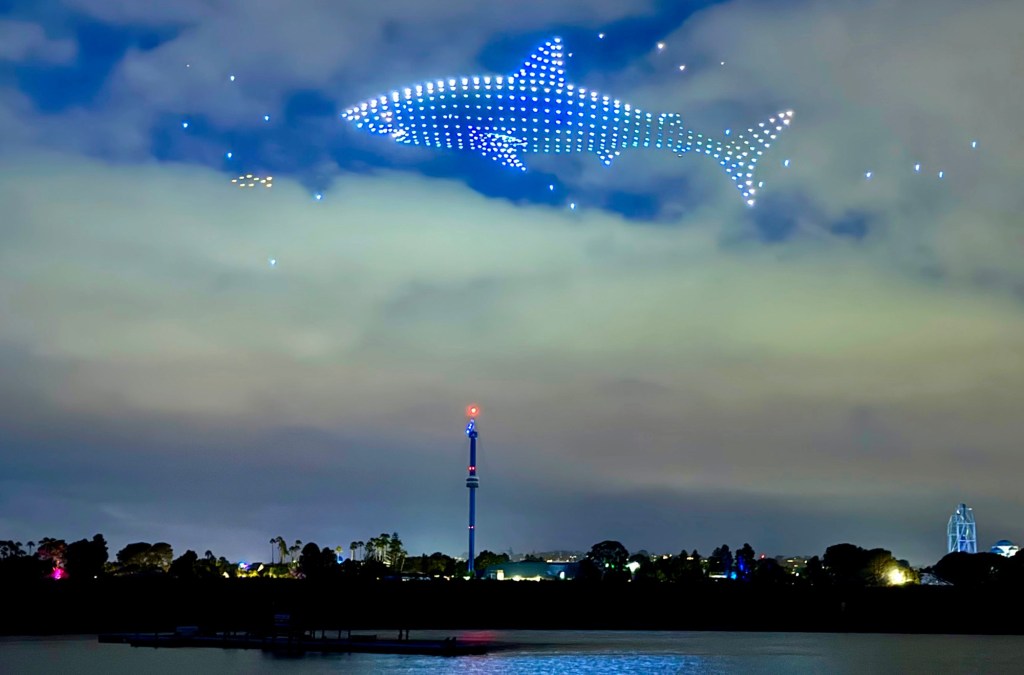
While the commission’s unanimous vote is not binding, as it’s only a recommendation to the City Council, the added condition to move away from fireworks sets the stage for a much larger debate over continued use of nighttime pyrotechnics during SeaWorld’s critical summer season. The ulimate arbiter will be the California Coastal Commission, which just approved a few months ago a coastal development permit for a one-year pilot program — the first of its kind in the state — that allows the San Diego theme park to conduct up to 110 15-minute drone shows.
Because SeaWorld is currently in the middle of the pilot program, park President Tyler Carter told planning commissioners he wasn’t prepared at this time to commit to a definite phaseout of fireworks. The park this summer has been conducting 12-minute immersive aerial displays in lieu of fireworks. The only exception was on July 4, when the park had a fireworks show.
“This drone study is a total of 12 months ending in April of next year, and we’re not even halfway through the pilot study period of shows,” he said. “Where we sit today, we are exploring this because we understand the greater need and conversation, but we can’t commit further today based on the information in front of us.”
Commissioners, though, said it was time for a more permanent change, given the potential impacts to the air, water and wildlife. The update of SeaWorld’s existing master plan, which dates to 2002, allows for up to 60 fireworks shows a year. Recognizing that the new blueprint is intended to guide the park’s redevelopment over the next 20 to 25 years, that number of fireworks shows is too much, planning commissioners said.
The 2002 master plan, which remains in effect until the update is approved, allows up to 150 fireworks shows per year.
“When staff and the applicant both talk about the need to adopt new technologies and … to move forward to be sustainable as an environmental organization, I just have a really hard time recommending approval of a master plan that keeps using millennium-old technology that we know is really bad when there are other viable options,” said Planning Commission Vice Chairman Matthew Boomhower.
Commissioner Daniel Reeves echoed Boomhower’s concerns, acknowledging that while SeaWorld has made strides in making the Mission Bay marine park more environmentally friendly, it has not gone far enough.
“I’m in agreement that firework shows are outdated and dangerous,” Reeves said, “and for the city and a partner to the city that are so focused on environmental stewardship, there’s a disconnect for me that there’s such a commitment to a technology that is harmful when there is such a push to evolve along with the world to eliminate harms to the environment.”
The bottom line for the San Diego park, Carter stressed, is ensuring that its nighttime entertainment is engaging enough to continue drawing more guests to SeaWorld. He noted that the theme park company’s Orlando parks are already in year two of staging drone displays, but it remains to be seen, he said, whether drone technology remains viable and safe for the long term.
“So as long as our guests enjoy it and it drives attendance to the park, that’s obviously our biggest focus,” he said. “So if drones can do that, that makes us happy. We are the first entity to do a nightly drone show in California and one of the few across the U.S. If every single theme park starts doing drones at the exact same time, I think there’s a lot of saturation. But I think where we sit in our position today, we are very unique, being the only one in California doing a nightly drone show.”
While the commission’s discussion Thursday focused almost exclusively on fireworks, SeaWorld’s updated master plan covers a broad range of issues, from the redevelopment of the theme park and design guidelines to a brand new component: sustainability, which calls for improved energy efficiency, water conservation, waste reduction, climate resiliency and marine life protection in keeping with the city’s own sustainability goals.
SeaWorld began working on the update in 2018, but processing of the 106-page blueprint for the future was delayed for several reasons, beginning with the onset of the pandemic in 2020 when theme parks in California were shut down for many months. Following that was a protracted dispute between SeaWorld and the city of San Diego over millions of dollars in back rent that culminated in a lawsuit that was eventually settled. The park also spent months working with the Coastal Commission on its permit to undertake nighttime drone shows this year.
Although there are clearly differences between the existing master plan and the 2020 update, the latest version doesn’t contemplate specific new projects. It carries over several key developments that were called out in the 2002 plan but never moved forward. Among them are a special events center, parking garage, transit station, marina expansion and a 300-room hotel.
The new master plan is intended to guide renovation of the entire 189-acre leasehold on Mission Bay for the next 20 to 25 years. The park has been leasing the city-owned waterfront site since the early 1960s. Carter explained that the main difference between the 2002 master plan and the proposed update is that the newer version shifts from site-specific projects and attractions to five broader planning areas within the leasehold.
That’s because most of the theme park proper, comprising 97 acres, has since been built out with attractions. In 2002, SeaWorld didn’t yet have roller coasters, the Journey to Atlantis water ride or the Rescue Jr. kids area, which is why that plan’s focus was on individual attractions, Carter said.
In the past several years, SeaWorld began adding one coaster after another as it sought to broaden its appeal to more guests, most notably thrill-seeking coaster enthusiasts. There are now five coasters at the park.
“We’ve done initial development on almost all of the acreage within the theme park, so this plan sets us up for a longer-term strategy,” Carter said in an interview.
The 2020 blueprint retains the same five planning areas first identified in the 2002 master plan, which include the theme park itself, guest parking, the marina, administration and the Perez Cove shoreline. The latter is an 11-acre area that currently contains parking and the Hubbs-SeaWorld Research Institute. It is also where a new hotel would be built, should such a project move forward.
Plans were in the works for a SeaWorld-branded hotel more than a decade ago when the park formed a partnership with San Diego-based Evans Hotels to develop the project. The park’s parent company canceled the deal three years later, offering no explanation for its change of heart. However, a lawsuit filed in late 2018 by Evans Hotels claimed that escalating demands by organized labor to unionize Evans’ Bahia resort on Mission Bay played a key role in killing a deal.
Also covered in the plan update are proposals for several alternative ways to get to and from the park, such as new pedestrian and bicycle improvements along SeaWorld Drive that will make walking and biking safer and easier, city staff explained. There are also plans to expand bicycle parking and plug-in stations for e-bikes and electric vehicles, improvements to bus shelter areas and support for alternative transportation for employees.
It’s unknown when the City Council will take up SeaWorld’s master plan, although there’s typically a lag time of two to three months once the Planning Commission takes action, a city spokesperson said.