
President Trump also referenced California’s recent primary election, implying that it took too long to count the votes, but experts tell us there are some good reasons for our state’s timeline. KCRE 3’s Anahita Jafari spoke with *** professor at the University of Pacific McGeorge School of Law to get the facts on California’s election process. That’s right. Good evening, Curtis Edie. After speaking with an expert, the biggest takeaway is that California’s election process is designed to encourage. As many people as possible to vote, and that means getting results takes more time than many other states. In his speech to the nation, President Donald Trump specifically mentioned California’s June 2nd primary, questioning the length of time between the election and the certification of the results. Take *** listen. As one example of the insanity, California’s recent election for mayor of LA and governor was held on June 2nd, *** long time ago. But it was just completed *** few days ago on July 10th. Think of that much more than one month. And *** professor at McGeorge School of Law tells us California’s election timeline makes sense given the number of voters and the fact they are all mailed *** ballot. Professor Moylan says California counties are counting ballots that come in before, on, or after election day as long as they’re postmarked on or by election day, and vote by mail ballots all have to. Be checked for signatures and other issues because of all those steps, Professor Moylan says California law allows election officials *** canvas period of 30 days. Then they send the results to the Secretary of State, who has 8 days to certify the election, and this all happened by the 38th day of the election, which in this case was July 10th. *** lot of what happens during that 30 day period is running it through machines, counting, sometimes doing *** hand count, sometimes, um, you have people from each party watching the count, and they wanna challenge ballots. That can happen during that time period. So, it, it does take *** little while, but it’s because we’re doing it the right way. And again, Professor Moylan says the length of time it takes to certify an election here in California stems from an effort to encourage all eligible voters to participate in elections and because they verify every ballot and that it’s not *** sign of fraud.
Trump questions California election timeline, law professor explains process
President Donald Trump criticized the time it took to certify California’s June primary election, while a law professor explained the steps behind the timeline.

Updated: 11:33 PM PDT Jul 16, 2026
President Donald Trump recently questioned why it took more than a month to certify California’s June 2 primary election results, which were finalized on July 10. “As one example of the insanity, California’s recent election for mayor of L.A. and governor was held on June 2nd, long time ago, but it was just completed a few days ago on July 10th. Think of that, much more than one month,” Trump said during a speech to the nation. Mary-Beth Moylan, a professor at the University of the Pacific McGeorge School of Law, explained that California’s election timeline is due to the state’s large number of voters and its vote-by-mail system. California counties count ballots received before, on, or after Election Day, as long as they are postmarked by Election Day. Vote-by-mail ballots must also be checked for signatures and other issues. “A lot of what happens during that 30-day period is running it through machines, counting, sometimes doing a hand count, sometimes, you have people from each party watching the count and they want to challenge ballots, that can happen during that time period. So it does take a little while, but it’s because we’re doing it the right way,” Moylan said. California law allows election officials a 30-day canvas period to complete these steps. Afterward, the results are sent to the secretary of state, who has eight days to certify the election. In this case, the process was completed by the 38th day, July 10. Moylan emphasized that the timeline reflects efforts to encourage all eligible voters to participate and to verify every ballot, adding that it is not a sign of fraud. See more coverage of top California stories here | Download our app | Subscribe to our morning newsletter | Find us on YouTube here and subscribe to our channel.
SACRAMENTO, Calif. —
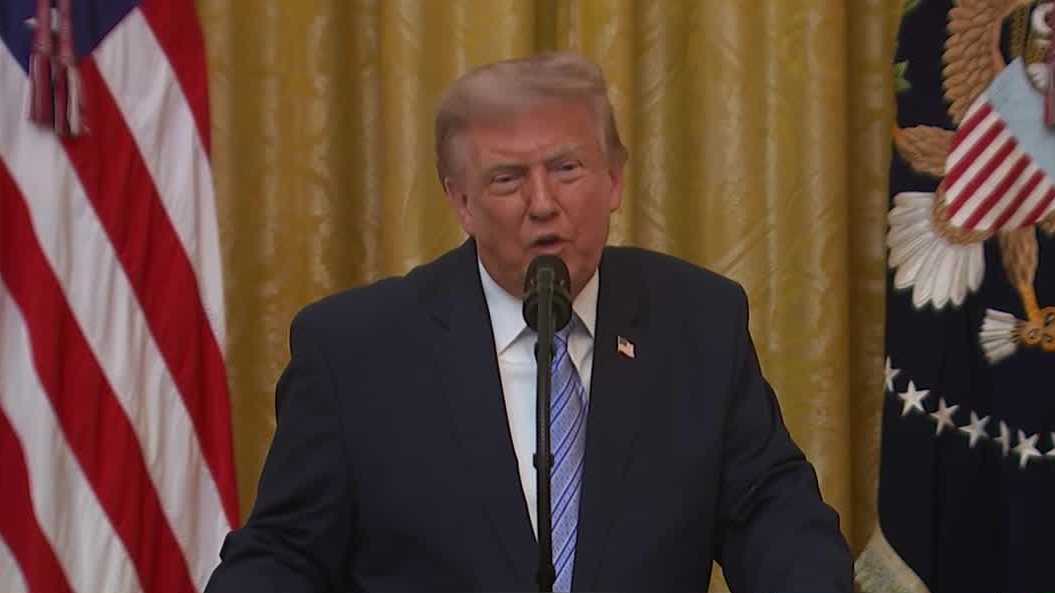
President Donald Trump recently questioned why it took more than a month to certify California’s June 2 primary election results, which were finalized on July 10.
“As one example of the insanity, California’s recent election for mayor of L.A. and governor was held on June 2nd, long time ago, but it was just completed a few days ago on July 10th. Think of that, much more than one month,” Trump said during a speech to the nation.
Mary-Beth Moylan, a professor at the University of the Pacific McGeorge School of Law, explained that California’s election timeline is due to the state’s large number of voters and its vote-by-mail system.
California counties count ballots received before, on, or after Election Day, as long as they are postmarked by Election Day. Vote-by-mail ballots must also be checked for signatures and other issues.
“A lot of what happens during that 30-day period is running it through machines, counting, sometimes doing a hand count, sometimes, you have people from each party watching the count and they want to challenge ballots, that can happen during that time period. So it does take a little while, but it’s because we’re doing it the right way,” Moylan said.
California law allows election officials a 30-day canvas period to complete these steps. Afterward, the results are sent to the secretary of state, who has eight days to certify the election. In this case, the process was completed by the 38th day, July 10.
Moylan emphasized that the timeline reflects efforts to encourage all eligible voters to participate and to verify every ballot, adding that it is not a sign of fraud.
See more coverage of top California stories here | Download our app | Subscribe to our morning newsletter | Find us on YouTube here and subscribe to our channel.