
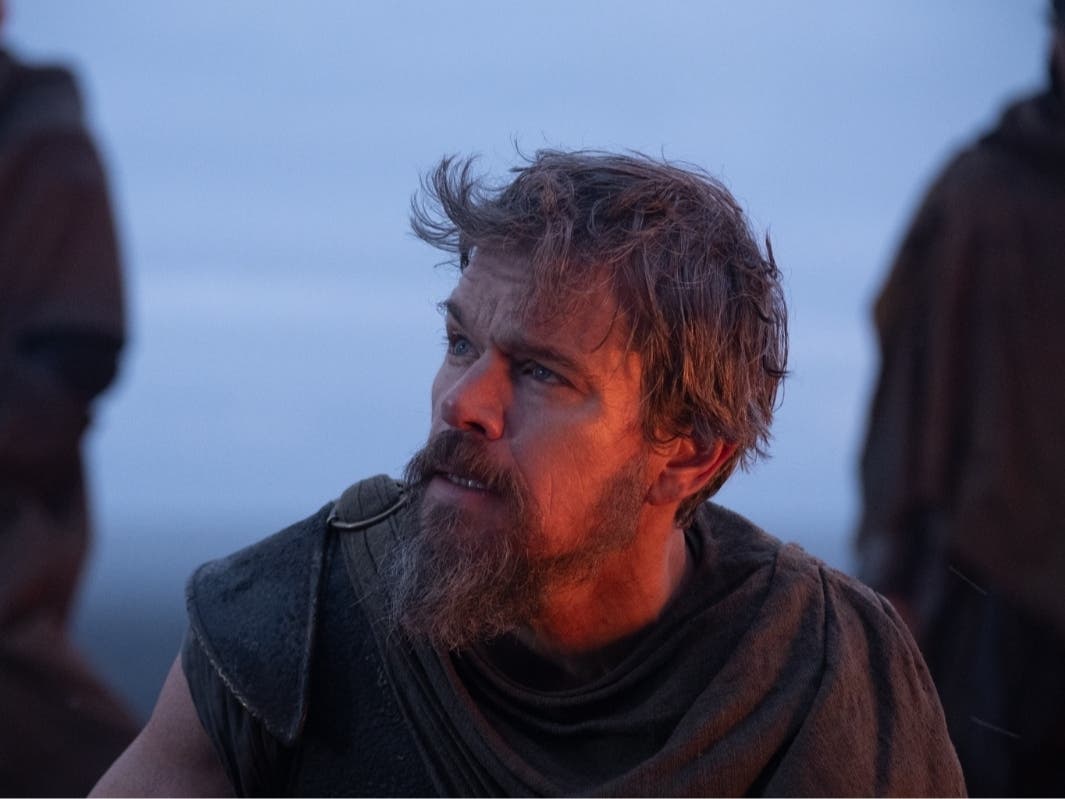
The supporting cast enriches the film’s mythic fabric: Morton’s Circe carries a sly, unsettling allure; John Leguizamo’s Eumaeus offers steady warmth; Jon Bernthal’s Menelaus brings blunt martial force; Elliot Page’s Sinon flashes with tragic urgency; and Lupita Nyong’o’s Helen of Troy has a quiet, haunted radiance. Together, they sharpen the contours of Odysseus’s journey without overwhelming it.
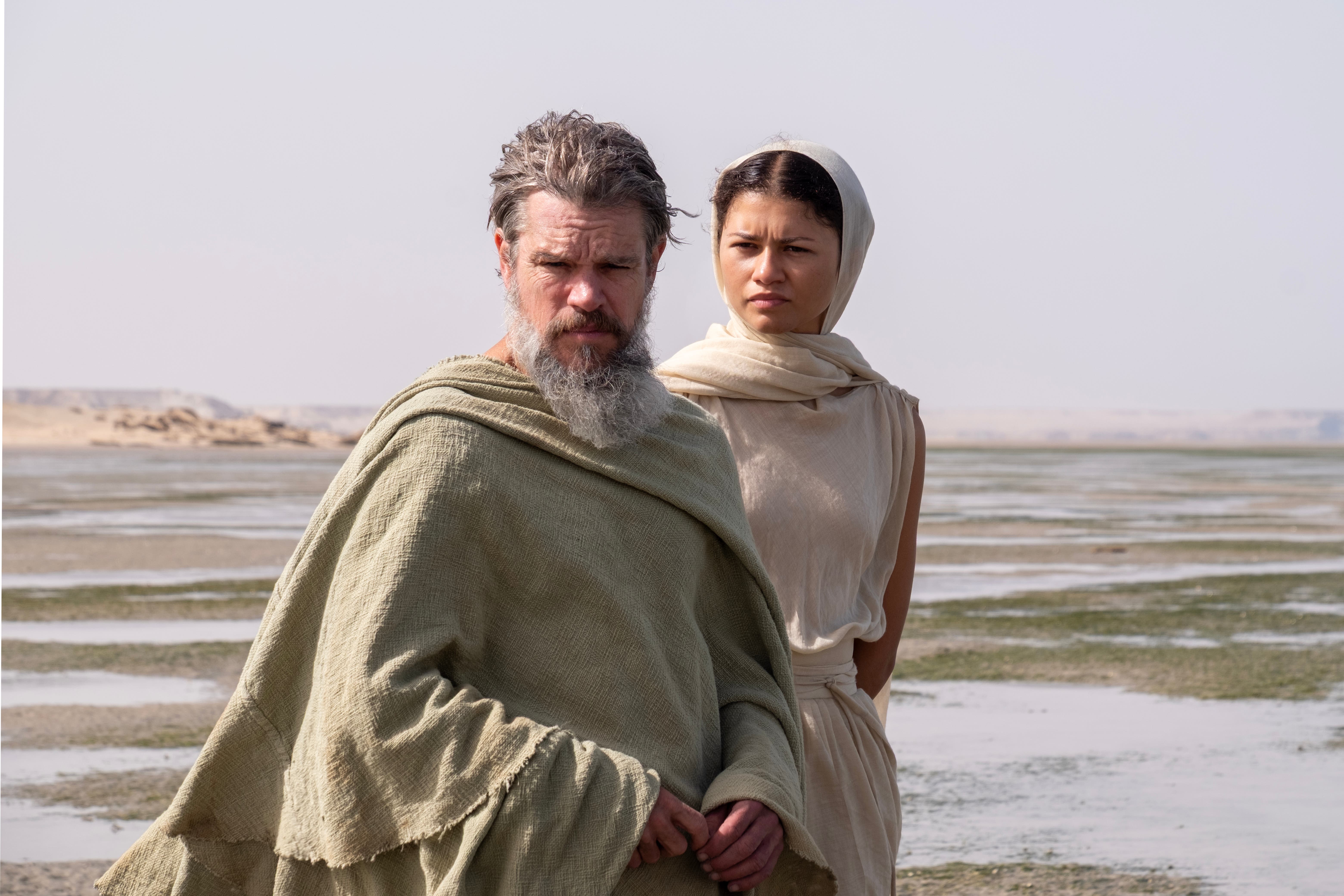 L to R: Matt Damon is Odysseus and Zendaya is Athena in “The Odyssey.” (Universal Pictures)
Nolan’s partnership with cinematographer Hoyte van Hoytema gives “The Odyssey” a visual force that feels elemental and exacting. Shot entirely on large‑format IMAX— a first in feature filmmaking — the film shifts from the sun‑struck realism of Odysseus’s trials to the cooler palette of the divine realm, echoing the story’s pull between human ordeal and cosmic force. Landscapes feel primordial; close‑ups feel confessional; and the sea becomes a character.
Ludwig Göransson, meanwhile, builds the score from a palette drawn from antiquity to create an authentic Bronze Age soundscape — reconstructed aulos and lyre, custom bronze gongs, scrap‑metal percussion, modern synth layers, and the ethereal vocals of James Blake. Together, the visuals and music form a unified expression of myth driven to extremity yet anchored in human urgency.
In the end, Nolan shapes “The Odyssey” into a study of extremity — not as spectacle, but as humanity laid bare. Damon’s Odysseus carries it in the truth forged by ordeal: “No one can stand between me and home. Not even the Gods.”
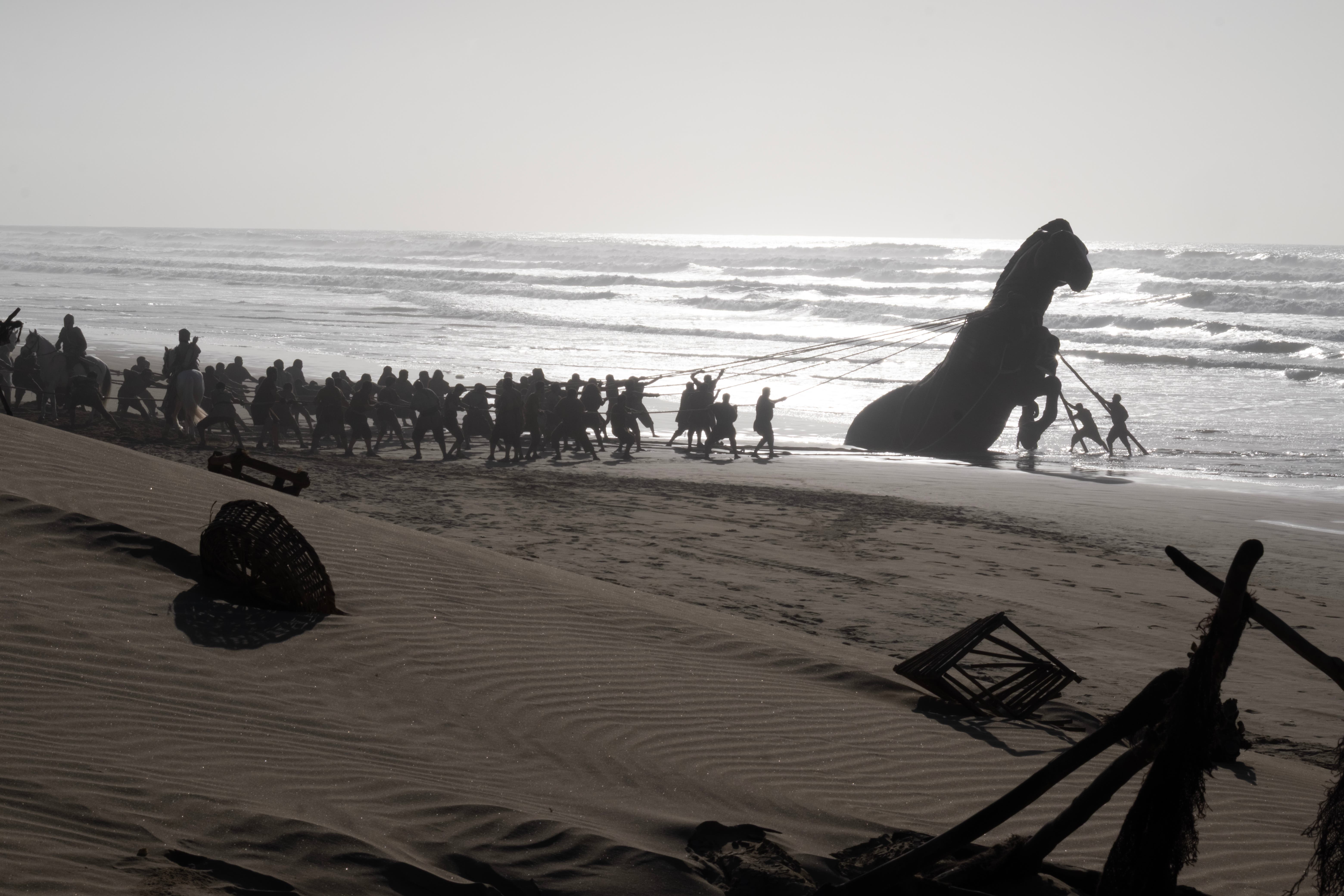 “The Odyssey.” (Universal Pictures)