
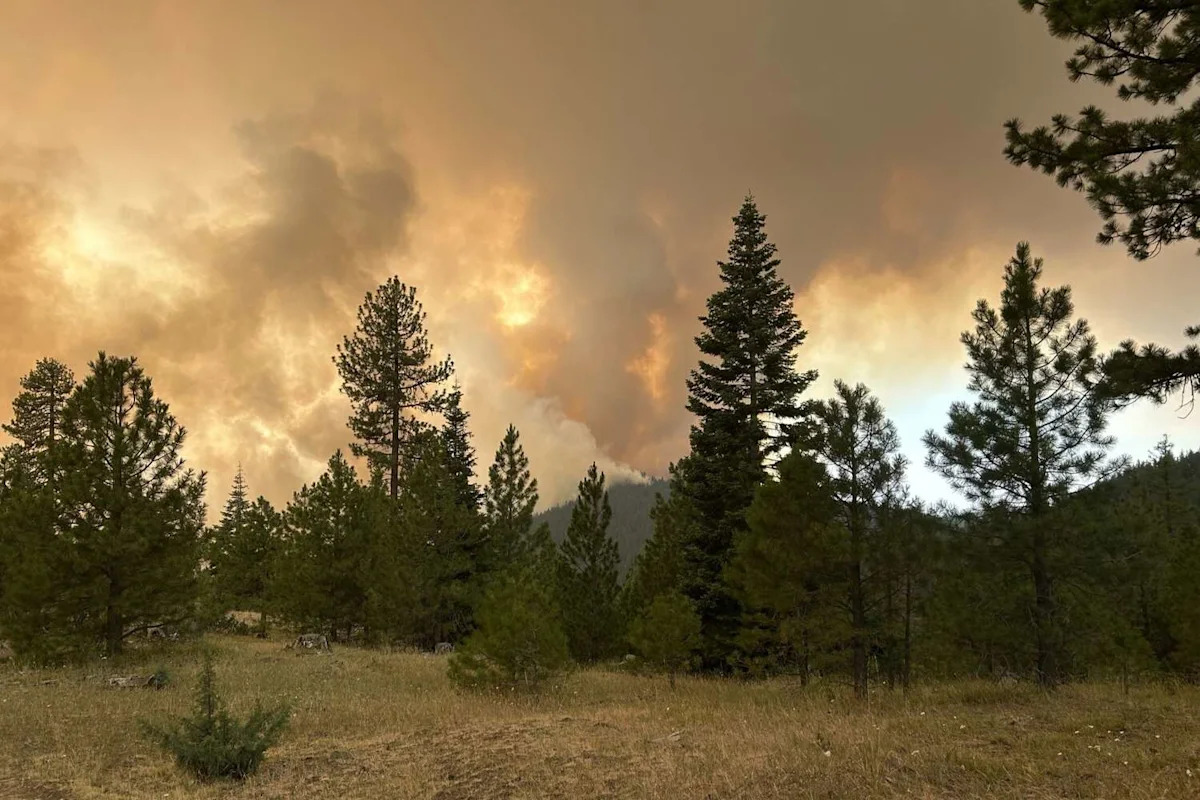
A swarm of lightning-sparked wildfires across Oregon exploded in size over the weekend, turning dozens of new ignitions into one of the most significant fire outbreaks in the West this summer.
Some of the growth was dramatic. The Hay Creek Complex west of Condon has burned more than 92,000 acres, while the Rowe Creek Complex south of Fossil grew to more than 36,000 acres.
The rapid escalation pushed the Northwest to the highest wildfire preparedness level, joining the nation at Level 5. The designation reflects both the number of major fires burning and the growing demand for firefighting crews, aircraft and equipment.
The outbreak traces back to last week, when thousands of lightning strikes peppered Oregon and Washington. Many of the resulting fires initially remained small, but by Saturday, hot, dry and windy conditions helped fuel the explosive behavior. Some fires that covered only a few thousand acres Friday became among the largest burning in the West by Sunday morning.

Smoke from wildfires burning across Oregon is forecast to remain concentrated across the Pacific Northwest and interior West, largely avoiding California. (NOAA Global Systems Lab)
Smoke from the Oregon fires should remain most noticeable across the Pacific Northwest and interior West. Far Northern California is the exception, where smoke could periodically produce hazy skies and reduce air quality around the Klamath region, Mount Shasta and communities near the Oregon border.
But the overall wind pattern should keep the densest smoke away from most of California.
Meanwhile, Oregon’s fire danger is not going away.
High pressure will keep much of the region hot and dry during the next several days, with temperatures reaching the 90s and low 100s east of the Cascades.

Lightning strikes a mountain near Detroit Lake in Central Oregon on Wednesday, one of thousands to hit the state in recent days, sparking wildfires. (Willamette National Forest)
Monsoonal moisture will begin moving north into the region this week, increasing the potential for additional lightning strikes and new ignitions.
California is firmly in fire season, but the ingredients that came together in Oregon are not aligned across the state on the same scale.
Oregon entered last week’s lightning outbreak unusually primed to burn. Large portions of the state were in drought, with vegetation in some areas reportedly drying several weeks ahead of schedule.

Much of Oregon was experiencing drought conditions in mid-July, including areas of severe and extreme drought across the central and eastern parts of the state. (NOAA Drought Monitor )
Parts of Northern and eastern California are dry enough to support rapid fire growth. In fact, new large fires were already being reported Sunday in Northern California, including the Brook Fire in Shasta County.
Thunderstorms are possible this week as monsoonal and tropical moisture moves north, but immediate forecasts do not show the type of widespread lightning outbreak that helped ignite dozens of fires across Oregon and Washington.
Subscribe
There’s more to San Francisco with the Chronicle. Subscribe today for just 25¢.
This article originally published at Oregon’s wildfire outbreak exploded over the weekend. Could California see the same?.