
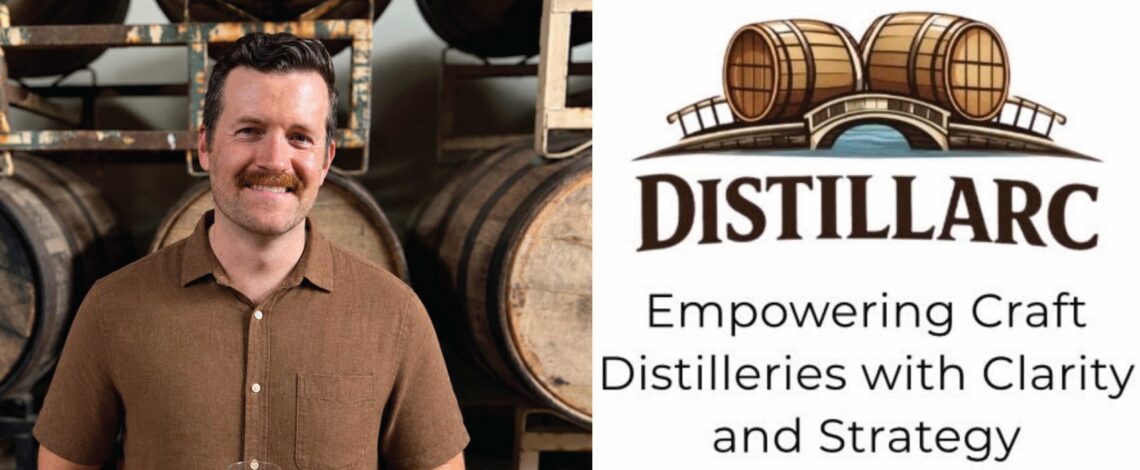
Sean Begen, an entrepreneurship teacher at Patiño School of Entrepreneurship in Fresno, launched Distillarc in January to help craft distilleries with sales, outreach and market insight.
published on July 20, 2026 – 11:04 AM
Written by Frank Lopez
A local entrepreneurship teacher is using his passion for spirits to build a platform that helps distilleries grow their company profiles and gives his students real-world business insight.
Sean Begen, a high school entrepreneurship teacher at Patiño School of Entrepreneurship in Fresno, recently launched Distillarc, an AI-powered sales platform designed to help craft distilleries build structure around account growth, outreach and market activity. The goal is to help distillers build stronger relationships and make more informed market decisions.
Distillarc helps companies identify accounts and opportunities that align with a company’s brand, goals and market potential while increasing market visibility, Begen said, so business leaders can make smarter decisions and drive growth.
Begen said he started Distillarc in January and is looking to grow what began as a personal side project into a business.
The platform is in its pilot stage, but Begen is designing it to help with the day-to-day work of running a distillery, including sales, marketing, relationship-building and compliance. He said he wants to customize the platform for each distillery he works with.
Spirits of entrepreneurship
Begen said he has become a whiskey enthusiast over the past few years, immersing himself in how it is made in the United States and abroad, including in Japan and Scotland, as well as how tequila is made in Mexico.
“I like learning the science, the business, the stories about how these distilleries got started, and just getting to know some of the people that make these products and how they got into the space they are in,” Begen said.
Along with helping distilleries improve and grow their operations, he is using the project to bring more value to the students he teaches at Patiño School. By the end of the year, he said he hopes to have eight to 10 craft distilleries participating in the pilot program to provide feedback and help shape the platform.
Begen said his passion for the industry developed over time and believes that when someone finds a new hobby or passion and wants to build something from it, “really cool things happen.”
His work on Distillarc hasn’t felt like work, Begen said, but rather a fun and engaging process centered on something he genuinely wants to do.
“That’s what being an entrepreneur feels like. When you have an idea for something that you want to try and build or fix something for people or an industry that you feel connected to, I think you really go above and beyond to deliver value in whatever way that looks like,” Begen said.
Distilling issues
Through conversations with distilleries, Begen realized one of the industry’s biggest challenges — distribution — is outside his area of expertise, and he’s not trying to compete in that space.
Other issues distilleries face include not having time to manage tasting events, along with production headaches and other operational challenges, Begen said. Instead of trying to solve one large problem, he said he wants to give distilleries more control over addressing the smaller problems specific to their businesses.
“When I keep hearing all these very strategic pain points, it kind of gave me this idea of ‘what if there is something I could design that could consider the uniqueness of every distillery that I’m working with?’” he said.
He is looking to pilot the platform with distilleries in California but is not opposed to working with businesses in other states or internationally.
A shot at opportunity
Begen said there are not many distilleries based in the Central Valley, but about 200 operate across California. He said he has contacted about 40 distilleries so far, and about five have responded — a rate he considers encouraging.
Begen said the industry is experiencing a downturn because fewer people, particularly younger consumers, are choosing to drink. Many distilleries across the U.S. have excess barrel inventory because they are not seeing the sales volumes they once did, he said.
That challenge could become a branding and messaging opportunity.
“Distilleries can work with their current demographic and whoever their customer is to try to fix that issue and they’re going to have to get creative and think outside the box with how they do that,” Begen said.
Begen said he wants to be part of “moving the needle forward” for the industry. If Distillarc proves successful in the spirits industry, he may eventually adapt the platform for other industries — though he said he doesn’t yet know what that might look like.