
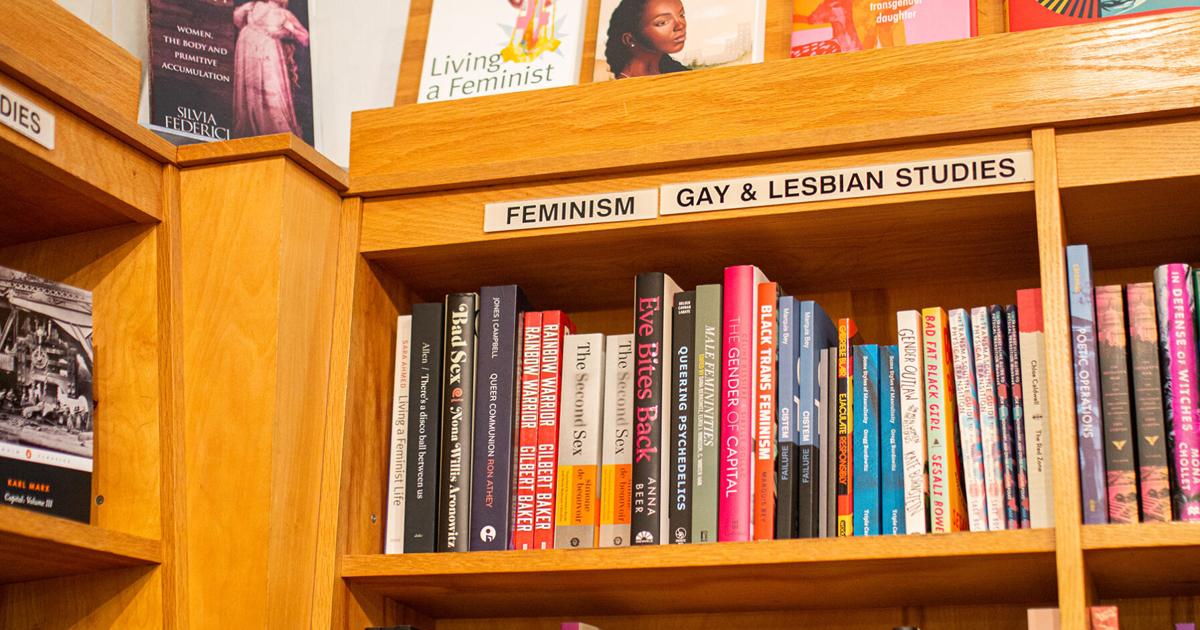
The Trump administration has issued multiple executive orders targeting the display of LGBTQ+ history on multiple government websites and resources. For UC Berkeley professor Bonnie Morris, a lecturer in the history department, these signal a threat to her students’ ability to access uncensored LGBTQ+ history from sources they trust.
Morris is a member of the LGBTQ+ History Association, a coalition of students, educators, authors and activists working to preserve LGBTQ+ history. Morris said the LGBTQ+ History Association began tracking the censorship and alteration of information on LGBTQ+ history on federal websites earlier this year.
“We began early in 2026 to monitor what other material was being removed from national park sites, landmark heritage sites and anything that had a .gov web address,” Morris said. “One of the first things that happened was that all information and references to transgender people were removed from government sites.”
Morris teaches courses in Sports and Gender in U.S. History, The Sound of Women’s History and Survey of LGBTQ History in America. She is particularly concerned about the impacts the erasure of LGBTQ+ history and other historically marginalized groups has on her students.
Morris suggests that because students are often not connected to historical archives, they don’t know what might have been changed online. When seeking LGBTQ+ history, they may visit sites or resources without realizing they have been altered or censored.
“I’m friends with many of the people who are monitoring the attacks on the Smithsonian and the challenge to museums to remove any language that’s critical of the United States,” Morris said. “We’re all very concerned about that, in the Berkeley history department and in every history department in the country.”
On March 27, 2025, President Donald Trump signed Executive Order 14253, which claims that “Americans have witnessed a concerted and widespread effort to rewrite our nation’s history … driven by ideology rather than truth,” referring to race-centered exhibits and language and saying that the Biden administration “advanced this corrosive ideology.”
“Anything that’s in a museum, or a historical source, or a classroom … that looks critically at inequality in American history, the very differences of Black, Brown and LGBT Americans … has been both banned in many places and dissembled,” Morris said.
Morris adds that the robust programs in Black, Latine and LGBTQ+ studies at many universities across the country are facing challenges from state and federal governments, pointing to an Ohio law that banned DEI programs in state universities.
“As long as I’m super transparent and share everything I know and have access to with my students, they actually are getting a great education on what it means to get history into a museum, or on a plaque, or on a database,” Morris said. “And then to watch it be challenged and taken down, that process is great to them as history students.”