
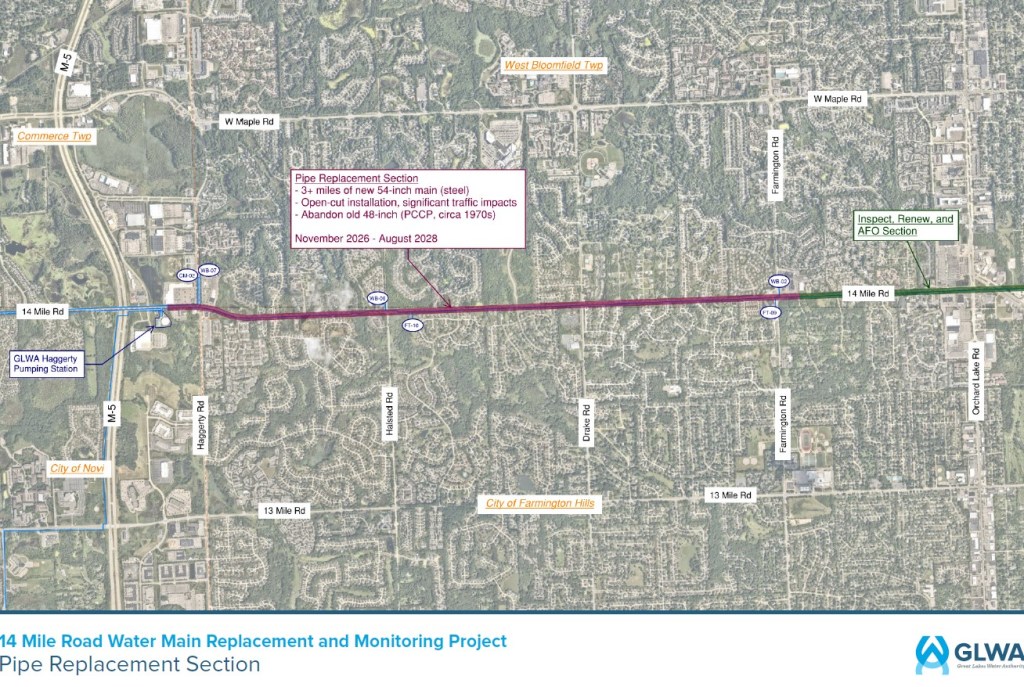
The Great Lakes Water Authority announced a water main improvement plan along 14 Mile Road in Oakland County.
Traffic will be impacted along 14 Mile Road in the construction area. GLWA is working with
the Oakland County road commission to develop a traffic plan for the $81 million project, which will be shared in advance of work beginning in November.
Open houses are being planned to keep communities informed about the project. Those details will be released as soon as they are available.
GLWA anticipates that there will be little to no disruption to water service throughout construction.
 A
A
series of public open houses are being planned to keep the impacted communities
informed about the project.
photo courtesy GLWA
The project will be completed in two phases:
Phase One:
Replaces three miles of 48-inch prestressed concrete cylinder pipe with 54-
inch steel pipe; The segment of pipe is located along 14 Mile Road from just west of
Haggerty Road to just east of Farmington Road
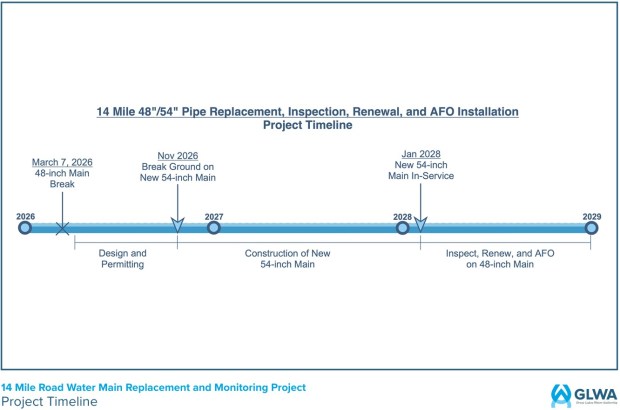
Construction is expected to begin in mid-November 2026 and will run until early 2028.
Phase Two:
Inspection of three miles of 54-inch cylinder pipe along 14 Mile Road from just east of
Farmington Road to GLWA’s Franklin Pump Station, which is located on Inkster
Road, just north of 14 Mile Road.
Renewal of pipe segments identified during inspection, if any and installation of an Acoustic Fiber Optic Monitoring System within the entire three-mile segment.
Phase Two will begin upon completion of Phase One.
“The repeated water main breaks along the 14 Mile corridor made it clear that we need a more comprehensive approach to ensuring the level of service our communities need and deserve,” said GLWA Chief Executive Officer Suzanne Coffey. “This investment reflects our commitment to replacing aging infrastructure, strengthening system operation, and deploying advanced monitoring technology so we can identify problems earlier and potentially reduce future disruptions.”