
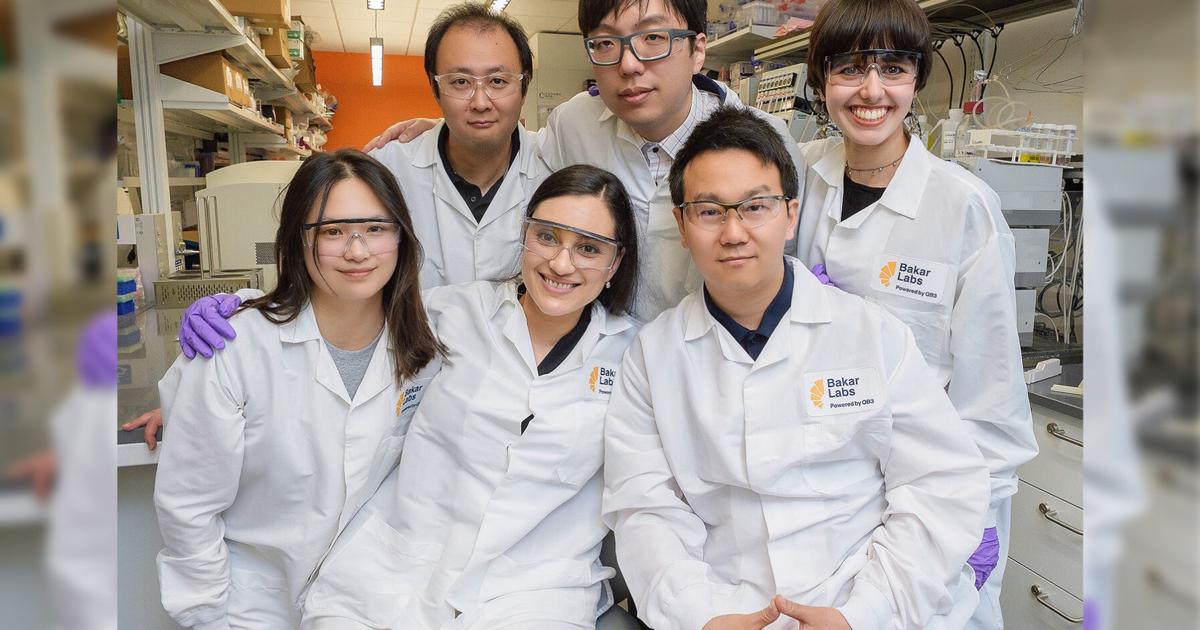
Biotech startup FutureBio, the first tenant of UC Berkeley’s Bakar Labs for Energy and Materials, hopes to produce and recycle a new kind of durable, biorenewable plastic at a lower cost than regular plastic.
Its plastic is made from green materials, unlike petroleum-based plastic. It can be depolymerized, meaning it can be broken down into its building blocks or monomers and then recombined to make new plastic.
This means FutureBio’s plastic is completely recyclable, whereas only small portions of petroleum-based plastic can be reused after it undergoes mechanical recycling.
FutureBio CEO Zilong Wang sees this advantage as a factor that could make their new plastic cost-competitive. Unlike biodegradable plastic often used for fragile items such as disposable plates and straws, FutureBio’s plastic is durable enough to make furniture and packaging.
“There’s only 0.55% of bioplastic in the market. It’s because they are not making profits,” Wang said. “They need a green premium, and we also want that for sure. But if you can make it profitable, then you have the chance to go into the other 99.45% of the market.”
FutureBio rents lab space at Bakar Labs, which introduces them to investors and journalists.
Through the six-month QB3 Workforce Education for bioScience and bioTechnology, or QWEST, internship program, partner companies within Bakar Labs are provided with interns from campus. Evani Chakrabarty Snyder is FutureBio’s current QWEST intern.
Wang emphasized the difference between his work synthesizing the plastic compound in campus professor Jay Keasling’s lab from 2019 to 2025 with his founding of FutureBio after summer 2024.Before creating FutureBio, Wang spent three months meeting with industry professionals and observing manufacturing lines to assess problems and needs. He did this work to tailor the compounds he would go on to invent.
Wang and FutureBio Technical Advisor Victor Holmes said there is strong industry demand for sustainable plastic solutions. Wang notes this particularly comes from regions with stricter environmental regulations, such as Europe.
“If you really can make it profit-driven, you will be more robust and rely less on these policies, which actually can make the company survive and grow better,” Wang said.
Advisers such as Holmes, who formerly worked for the pioneering biomanufacturing company Amyris, help FutureBio face challenges related to mass producing their plastic compound.
Wang intends to have FutureBio’s plastic ready for mass production and sales by 2028.
“The dream is that FutureBio’s plastic will drop in to exactly replace the petroleum plastic people are currently enjoying: no change in quality, no change in price, no change in appearance,” Holmes said. “But on the backend, that plastic will be 100% recyclable so after you created enough of it, you don’t need to be creating more of it.”