
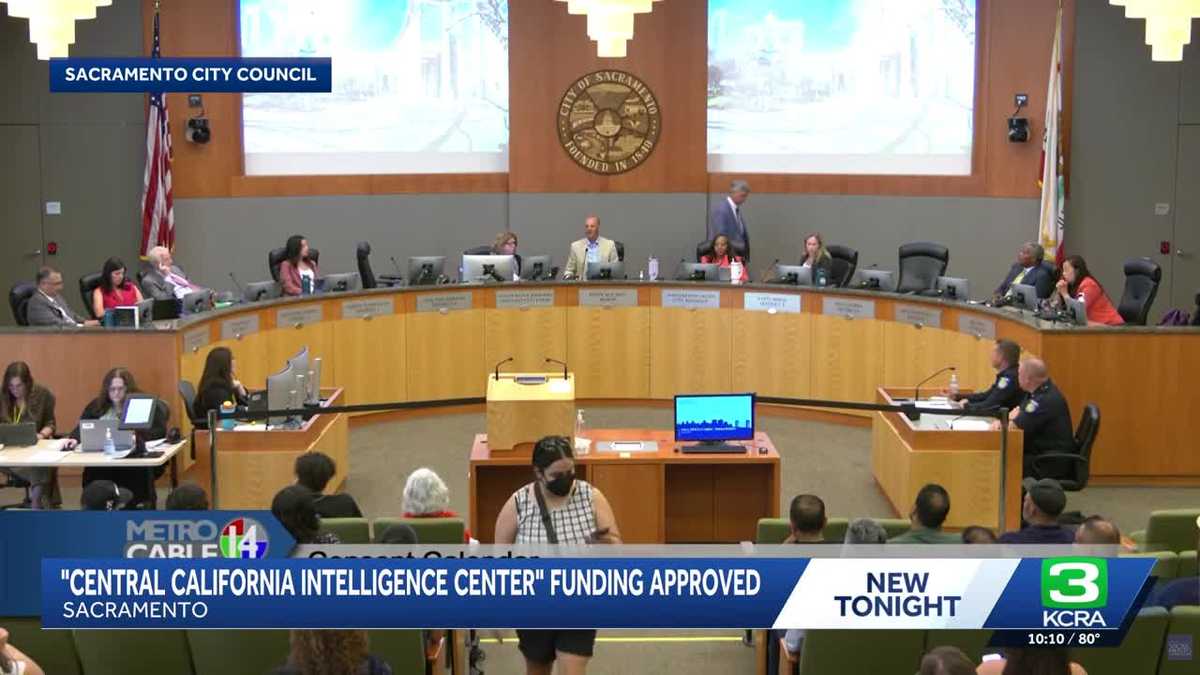
Get the Facts: What information will be shared with the feds after Sacramento passed intelligence center funding?
Sacramento City Council approved federal grant funding for the Central California Intelligence Center, sparking debate over data sharing and immigration enforcement concerns.

Special Projects/Investigations Manager
SACRAMENTO, Calif. —
Sacramento City Councilmember Mai Vang says the city’s participation in federal task force partnerships should be re-evaluated, following a controversial vote on Tuesday.
The council voted to approve passing federal grant funding to the Central California Intelligence Center, a program aimed at improving communication between local and federal authorities to assess terror threats. The CCIC is commonly known as a “fusion center.” There are six centers located across California.
Some council members raised concerns about the potential for personal information to be shared for immigration enforcement purposes. Councilmember Vang, who voted against the funding agreement, said she believes the city should reconsider its federal partnerships.
“We should not give the federal government a backdoor to our data and as a local elected, as a local jurisdiction, we have to do everything we can to hold the line,” she said.
She said cities like Oakland and San Francisco are no longer part of certain federal joint task forces.
“The city of Sacramento has not done this. And a big part of this is because I believe some my colleagues have a fear that that we may lose funding. And what I will share with you, and with the public, is that we need to be bold and courageous in this moment, and we shouldn’t be forced into false choices,” Vang said.
Speaking to KCRA 3 Investigates on Wednesday, Vang said she is particularly concerned with potential interference in elections. “At a time when our elections face multiple threats from this administration, data at the fusion center can be used under the guise of federal national security priorities. And the federal government can leverage this in ways that align with their … national security agenda and in some ways, we will be enabling this.”
Vice Mayor Karina Talamantes spoke in favor of the agreement at Tuesday’s meeting, saying she was concerned that if another city accepted the grant, they might have fewer safeguards in place. Mayor Kevin McCarty also supported the agreement, along with councilmembers Lisa Kaplan, Roger Dickinson and Rick Jennings.
Caity Maple voted “no” and councilmembers Phil Pluckebaum and Eric Guerra weren’t present for the vote.
The funding, part of a Homeland Security grant, will support staffing through March.
City documents outline four main priorities for the funding: identifying cybersecurity threats, intelligence sharing to prevent communication gaps, combating domestic violence extremism, and enhancing election security through site assessments and other measures.
Questions were also raised about what information would be shared and with which departments. Sacramento police clarified that while criminal intelligence may be shared with the Department of Homeland Security, local law enforcement would not share personal information for civil immigration enforcement. Officers stated that doing so would violate California’s sanctuary state law, and they will continue to adhere to that policy.
Officers said the Sacramento County Sheriff’s Office also follows sanctuary state policies.
Vang said she is collaborating with Councilmember Maple on a proposal to re-evaluate the city’s federal partnerships.
See more coverage of top California stories here | Download our app | Subscribe to our morning newsletter | Find us on YouTube here and subscribe to our channel | Make KCRA a preferred news source in Google