
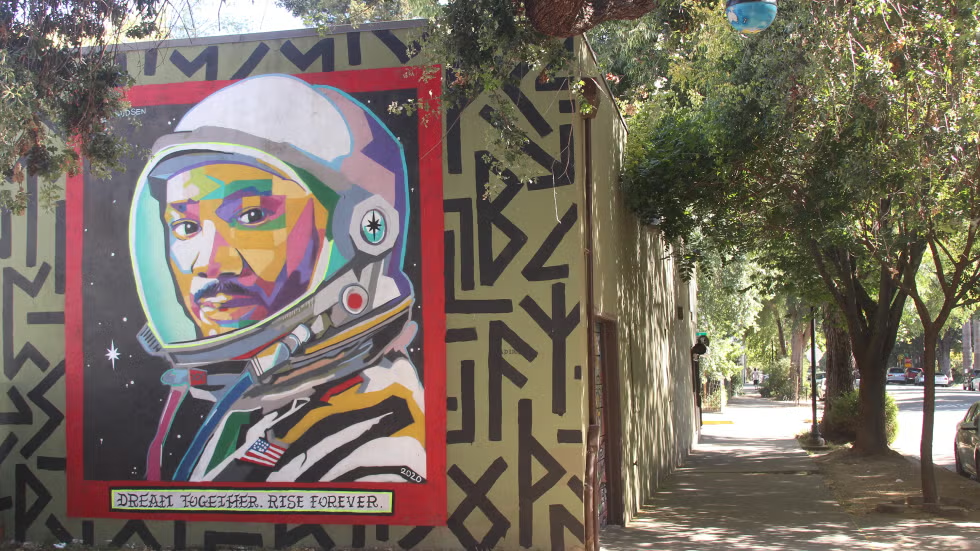
From the breezy dandelion painted
in an alleyway near 19th Street in Midtown to the graceful
ballerina striking a pose on the side of the 17 Central apartment
building, Sacramento might be called the City of Murals. The
capital has long been a sanctuary for public art, with plenty of
vocal support from residents and frequent city-driven projects,
including the collaborative “paint by numbers” murals of 2023,
where community members came together for a painting block party
to fill in numbered segments with small cups of paint.
Following the success of that
program, which was funded by the Clean California initiative, the
city was set to fund eight more community murals in 2025 — but
when they received word about a legal snag muralists across the
state were running into, they, along with many other cities,
paused mural funding until a solution could be found. The issue?
A more than 50-year-old law that, to the best of anyone’s
knowledge, had never been widely enforced.
Under the Business and
Professions Code established in the 1970s, California muralists
were grouped in with house painters and sign painters as general
painting contractors, requiring them to hold the same license — a
C-33 contractor’s license — that other types of commercial
painters are held to for legal operation.
But before 2023, most muralists
throughout the state of California were operating without a
contractor’s license — in fact, many of them only became aware of
the requirement when they, along with developers and public arts
programs throughout the state, began to receive letters from the
Contractors State License Board informing them of the violation.
Hundreds of thousands of dollars of funding across the state were
paused, and some projects were even halted midway through. It was
a tough fact for artists throughout the state to digest.
“Having this understanding that,
‘Oh, everything I’ve been doing over the past several years has
been illegal,’ that was heavy,” Sacramento muralist Jaya King
says.
So why did the overlooked detail
come to light now, after so many decades? Public arts workers
throughout the state aren’t entirely sure, but say their best
guess is that the large share of public funding that went toward
murals as part of Gov. Gavin Newsom’s Clean California initiative
— the same initiative that funded several community murals in
Sacramento — resulted in more attention and scrutiny being given
to public arts projects. Regardless, once the rule was out in the
open, it couldn’t be ignored. So instead, a team of people formed
with the goal of pursuing legal change.
“At the end of the day, you
shouldn’t feel like you should have to hide in doing your art,”
says Donald Gensler, the art in public places manager for the
Sacramento Office of Arts and Culture. “You might know the law is
getting it wrong, but my advice to artists is to always follow
the law, and if the law is not working, then find a way to change
it.”
There is legal precedent, Gensler
says, for the separation of muralists from other kinds of
painters. Under the federal Copyright Act of 1976, as well as the
California Art Preservation Act, muralists who create fine art
are distinguished from ordinary wall painters. The former are
given “moral rights” to their work, protections separate from
copyright that include the right to be credited (or remain
anonymous) and the right to object to changes that would impact
the artist’s reputation.
Using a similar argument,
Gensler’s plan, developed with California for the Arts CEO Julie
Baker, was to carve out an exemption for muralists to exempt them
from needing a C-33 license.
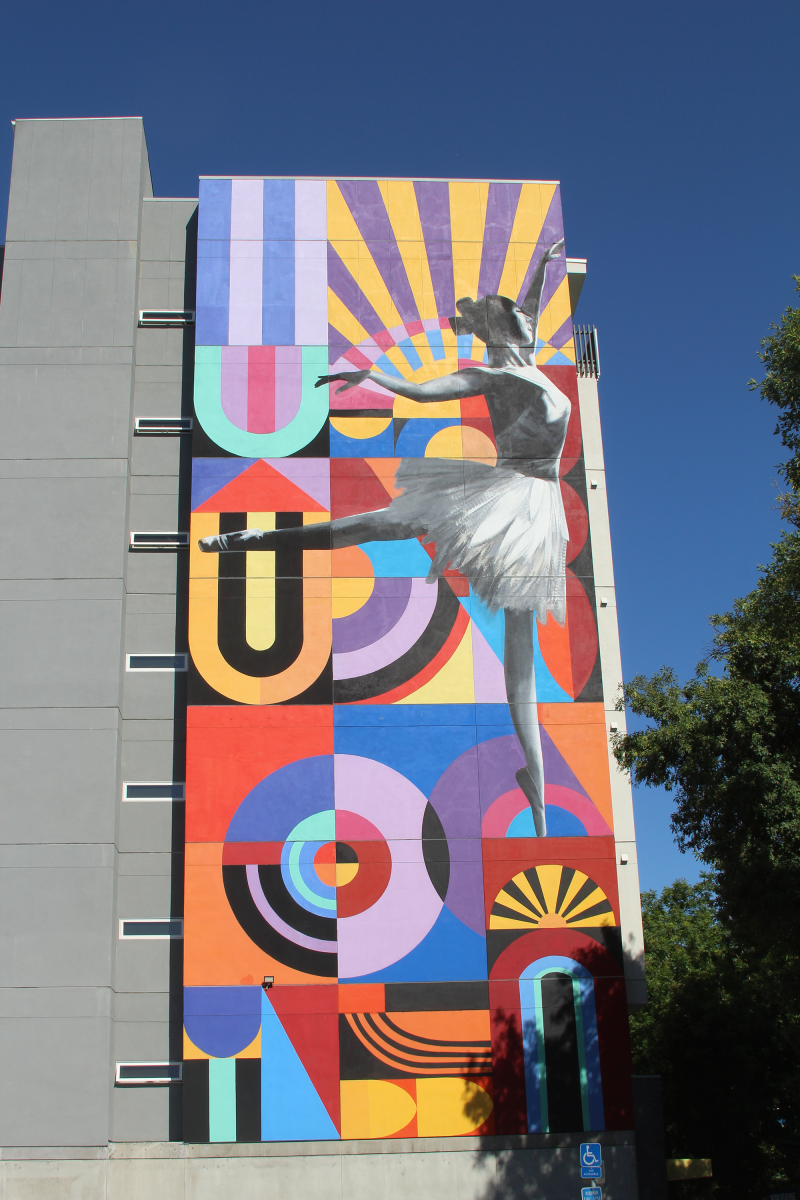
This mural by Sacramento artist Valeriy Kagounkin covers the west
side of the 17 Central apartment building at 1026 17th Street in
Midtown Sacramento. (Photo by Sonora Slater)
The
reason contractors have to acquire a C-33 license is for the
purpose of education and safety — but the process of the
certification is tailored to their work, not the work of
muralists. It requires passing a business exam, which focuses on
contracting rules and employment law, as well as a trade exam
that focuses on technical details including lead safety, rollers
and masking, in addition to completing four years of full-time
work under a licensed contractor and paying upfront and ongoing
administrative costs.
But Gensler and others argued
that mentorship tends to happen in a more organic manner when it
comes to artists and that annual licensing fees are an undue
burden for muralists who might only paint one mural a
year.
“The idea that they would have to
pay to have a commercial painter’s license just to do that one
project is unreasonable and really creates a chilling effect for
the art form,” Gensler says.
Gensler and Baker approached
District 8 state Sen. Angelique Ashby, asking her to champion a
bill creating the exemption. They also recruited King to provide
testimony representing muralists. Both Ashby and King
agreed.
“Donald called me, and I remember
pacing up and down in my living room,” King says. “He said, ‘This
is what’s happening, this is what we’re planning on doing, and
this is what it is going to look like’ — you know, testimony and
people in suits and big government buildings. And I’m like, I’m
100 percent all in. I’m ready to do this to make sure that we can
keep painting murals.”
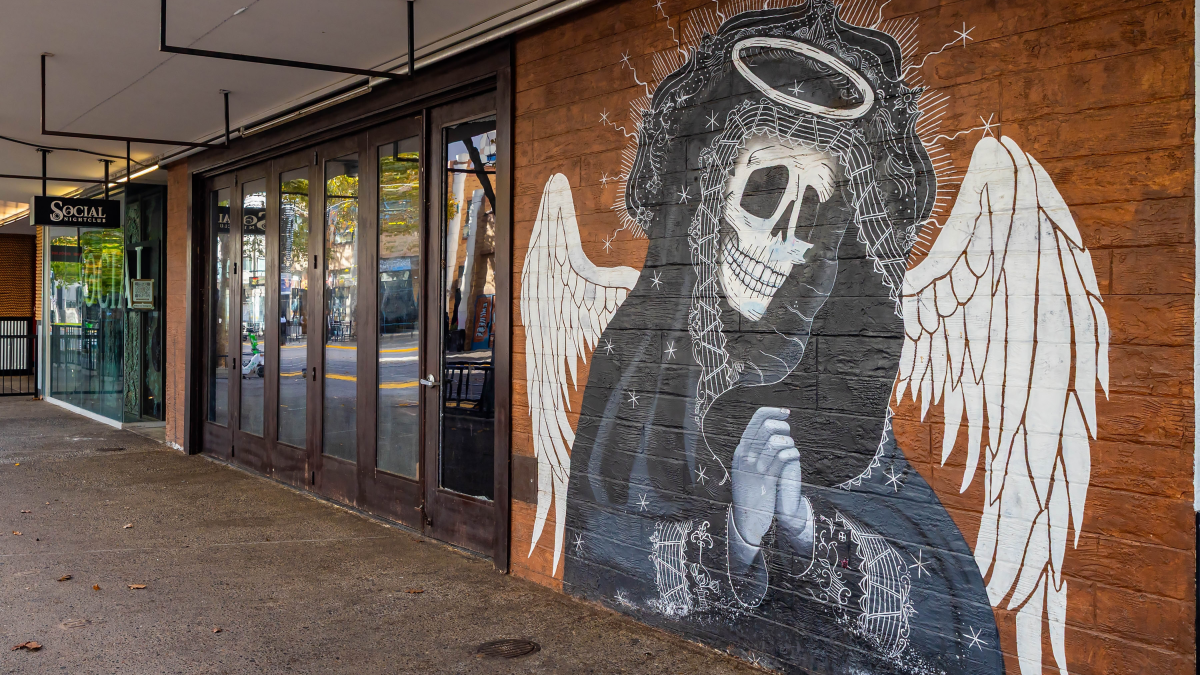
A mural decorates a wall outside Social Nightclub in downtown
Sacramento. (Shutterstock photo)
Over the next year, they met with
committees and councils, and waited for the bill, now named SB
456 or “The Mural Bill,” to move through the lengthy legislative
process. They also heard from people about how much murals meant
to them.
“With each committee it was a
trip, because there was no opposition from any of the lawmakers,”
King says. “Whenever they would comment, it was positive, and
they would share about the public art in their cities and how
important it is to have public art and to have artists do their
thing, and how that uplifts their communities.”
There was initially some
opposition to the bill from non-legislative entities, including
the CSLB and the International Union of Painters and Allied
Trades, mainly centered around safety and insurance concerns for
muralists. However, the licensing board never filed a formal
letter of opposition, and a point of agreement was eventually
reached. Part of what quashed safety concerns is that muralists
working on a project over $1,000 in value have to follow Cal/OSHA
safety requirements, and anyone using a scissor lift for a mural
is also required to obtain that safety certification.
The bill ultimately passed with
unanimous, bipartisan support and went into effect Jan. 1,
2026.
“Every single person who voted on
this voted for it,” King says. “That was how much support this
bill had. It just showed how important murals are to our
communities. The unanimous win in this political climate felt
very special.”
As King put it, the new law
didn’t eliminate licensure, and there are likely still some
muralists for whom getting a C-33 license could be useful for
their business model. But they don’t have to, and they are
distinguished from other wall painters with a clear definition.
King says going on this journey helped her feel empowered to
engage in the legislative process going forward.
“I hope that this was something
where artists could see that they can help to shape the systems
that they work in,” King says.
Funding has officially reopened
for mural projects, and it’s safe to say that artists in
Sacramento are getting back in the swing of things. Gensler says
plans to continue the community murals project are officially
back in action, currently set for 2027. And King said that she’s
seen a significant increase in art calls throughout the state. As
Gensler put it, the support behind this legislation was
Sacramentans and Californians at large saying that public art is
a priority and something they want funded.
“Great cities and great cultures
throughout history have always had a collection of art, have
found value in art and have put money towards it,” Gensler says.
His hope is that Sacramento will continue to do the same.
In the meantime, if you want to
explore the murals that currently decorate the city’s walls,
there are several online maps and tools to help you learn more about the stories
behind the art, including the recently announced Midtown Mural
Trail, a self-guided
mural and public art walk through Midtown with information about
each mural along the way. Otherwise, you can just start walking
and keep your eyes peeled — there could be a work of art just
around the corner.
–
Never miss a story: Get Comstock’s weekly newsletter delivered to your
inbox.