
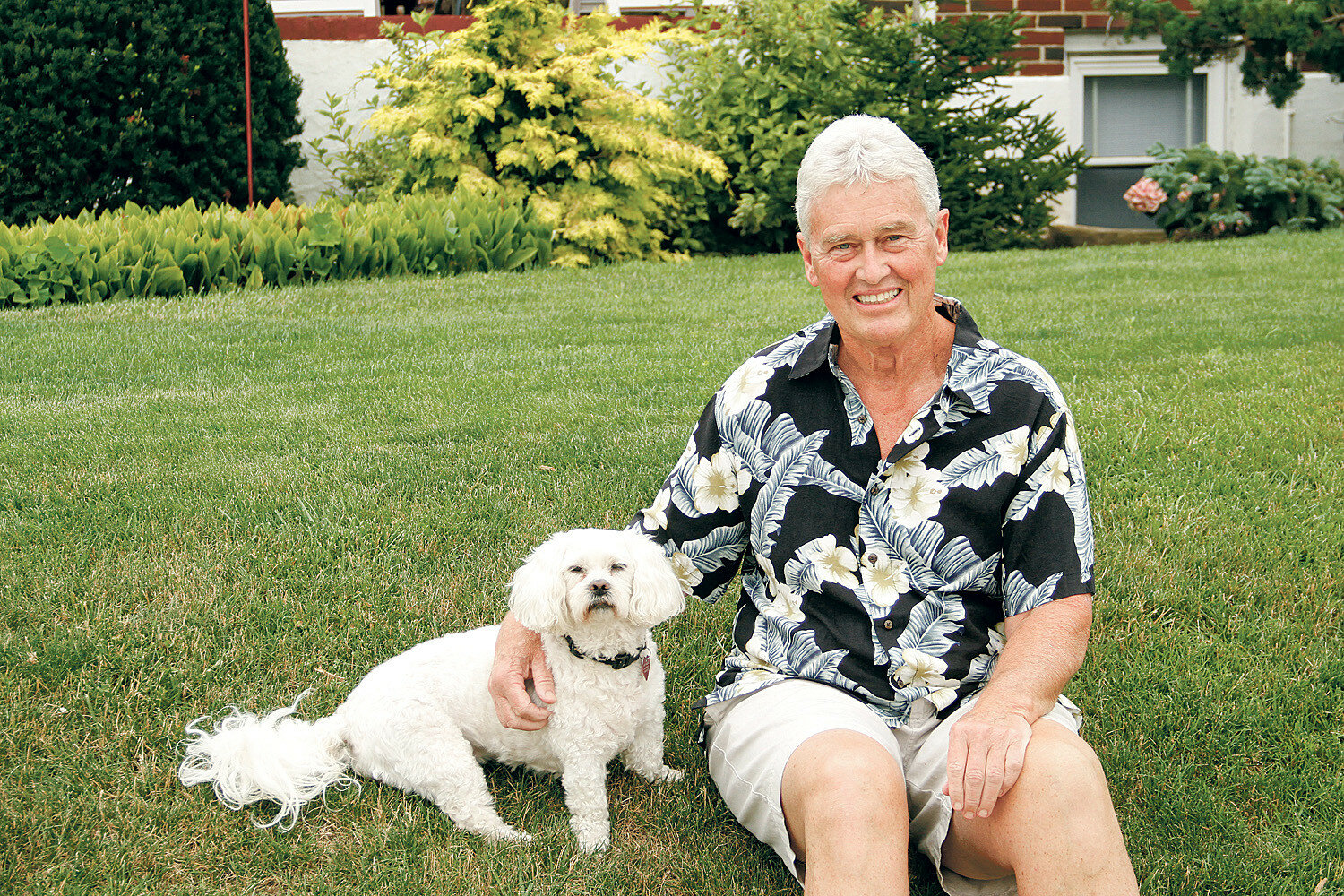
“There was a big election in in Long Beach in 1979,” former City Councilman Roy Tepper recalled. “A coalition government with Republicans and Democrats was elected. The city was at a low point then. But in January of 1980, when they took office, everything really changed when they hired Ed as city manager.”
Tepper was referring to Ed Eaton, who went on to serve as city manager for nearly 25 years in three separate terms, from 1980 to 1999, briefly in 2001, and once more from 2006 until he retired in 2008.
Eaton died on July 16 at age 83, after a long illness.
In a 2015 interview with the Herald, Eaton described the early 1980s as the period of his career he was most proud of. “To me, it was the best of times,” he said. “Because [for] four or five years there, all of the efforts were going toward saving the town, and not party politics.”
When he first became city manager, Long Beach was in the midst of a significant financial crisis that had begun over a decade earlier. In 1980 the city earned all of $20,000 on its investments. Just two years later, after Eaton helped to implement a range of fiscal and real estate policies, as well as more stringent code enforcement, the city’s annual earnings reached $500,000.
“His time as a city manager was a really good time for Long Beach,” current City Council President Brendan Finn said of Eaton. “He saw Long Beach through some difficult times. We’ve always had our economic problems, and I think that he was a really good custodian of Long Beach. He took good care of us.”
“Ed was a hands-on city manager,” said Tepper, who served on the 1979 council that hired Eaton. “He brought people together, put politics aside and helped save our city.” Tepper and Eaton remained friends in the ensuing decades, spending time together virtually every week. When Tepper served as a city judge, he officiated Eaton’s 2006 marriage to Carolyn Roganti. (Carolyn Eaton died in 2024.)
“I’ll always be grateful to have served alongside of him and called him my friend,” Tepper, 81, said. “Everything Ed did when he was city manager — all those years led to the resurgence of prosperity and making Long Beach the beautiful place that it is now.”
One result of Eaton’s work is used daily by hundreds of residents and out-of-towners alike: the city’s Long Island Rail Road station, which was renovated in the 1980s after Eaton reached out to then Sen. Alfonse D’Amato for grant assistance. Eaton was also instrumental in keeping the Waldbaum’s supermarket in the city — at the time, one of the last big-name chain stores in the area — by incentivizing its relocation in 1983 from a small shopping strip on East Park Avenue near Long Beach Boulevard to the large East Park Avenue shopping center adjacent to the train station, where it remained until it shut down in 2015, replaced by Stop & Shop.
Longtime Long Beach activist and former Assemblyman Harvey Weisenberg, another member of the 1979 City Council, reflected on Eaton’s dedication and genuine concern for the community. “He always worked in the best interest of the people of the City of Long Beach,” Weisenberg, 92, said, “because the city was his home. People thank me for things, and a lot of things that I’m being thanked for is because Eddie and I worked together.”
Eaton’s first wife, Loretta, died in 2004. He was also predeceased by his brother, Jimmy. He is survived by a stepdaughter, Jennifer Frangella, her husband, Albert, and their children, Andrew, Alexa and Justin.
A memorial service took place at the Christopher T. Jordan Funeral Home, in Island Park, on July 22, as the Herald went to press, and a Mass was scheduled at Sacred Heart Church, in Island Park, on July 23 at 9:15 a.m. An inurnment ceremony is planned for July 27, at 10 a.m., at Holy Rood Cemetery, in Westbury.