
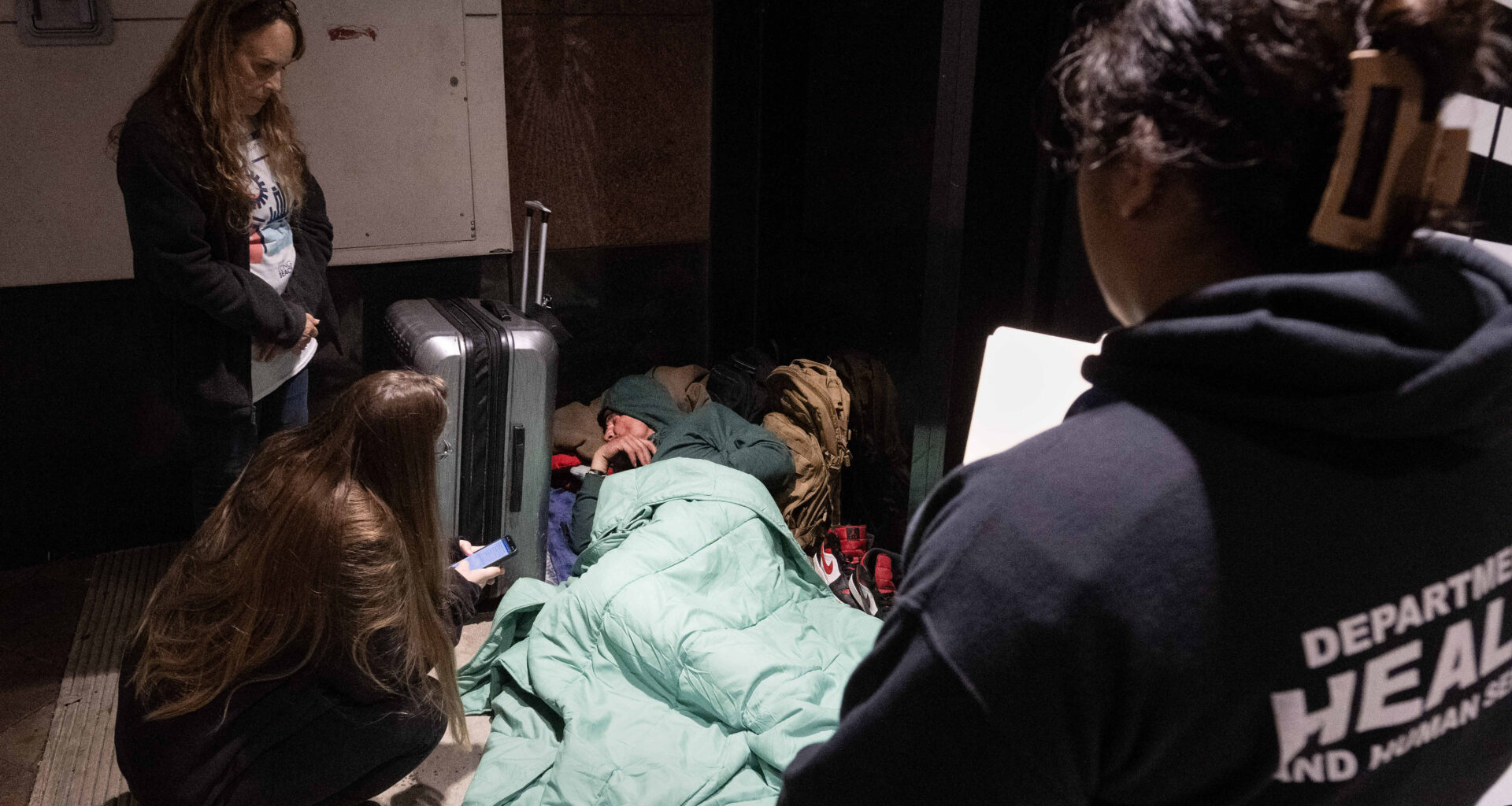
Long Beach is facing several funding challenges ahead in its efforts to address homelessness in the city, officials said recently.
The city released the results of the 2026 homeless count this week. The data showed that fewer people were homeless people were unsheltered, though there was a slight increase — 3.7% — in the overall number of people without permanent housing compared to last year. Despite that overall increase, there were several encouraging trends, including a 15.4% increase in people staying in shelters and a decline in the proportion of unsheltered homeless people to 69.4 % — the lowest level recorded in the past four years.
Long Beach will continue to invest in addressing homelessness and supporting preventative measures, city officials said — but being able to provide those resources has also been impacted.
Federal funding cuts made by the Trump administration have impacted local resources, officials said, including a reduction in available housing vouchers that many residents already in temporary homes have come to rely on.
Long Beach’s looming budget deficit, officials added, is also causing additional concerns.
Across the country, public health programs are experiencing the effects of reduced and uncertain funding, according to the city’s homelessness report, which officials released on Monday, July 20. In Long Beach, the Department of Health and Human Services relies on a combination of city, state and federal funding to provide homelessness prevention, outreach, housing assistance and other critical services.
But beginning in the 2026-2027 fiscal year, which in Long Beach will begin on Oct. 1, the department anticipates significant funding disruptions and volatility, including reductions in annual allocations of grant awards made available from its public funders, according to the report.
Funding from Los Angeles County’s Measure A Comprehensive Homeless Services, for example, will see a 32% reduction next fiscal year, from $13.08 million in 2025-26 to $8.92 million for 2026-27, the report said. County funding is forecast to decline by another 43%, to $5.13 million, in the 2027-28 fiscal year.
The city will also likely lose $4.8 million in federal funding in 2027-28, the report said, as a result of changes to the U.S. Department of Housing and Urban Development’s Continuum of Care program. Final funding levels, however, are still pending budget adoption and other federal legislative action, officials said.
But the effects of these budget cuts are already being felt, officials said, with programs such as the federal Emergency Housing Vouchers coming to a premature end.
The Emergency Housing Voucher program, created by Congress in 2021, provided rental assistance to households who are homeless or at rick of becoming homeless during and after the COVID-19 pandemic. Although the program was originally expected to continue through 2030, the city’s report said, housing authorities nationwide were notified that federal funding will end several years earlier than anticipated.
In Long Beach, the program helped 582 families achieve housing stability, officials said, but that’s now down to about 480 households — a 17.5% decline.
With federal funding ending several years earlier than originally planned, fewer new households will be able to access emergency vouchers, reducing one pathway to housing stability for those who are or could become homeless.
Long Beach’s Housing Authority has requested additional funding and is awaiting a response from HUD to address the loss of emergency housing vouchers, the health department said on Friday, July 24.
“Currently, as vouchers become available, HACLB is transitioning eligible EHV households to Housing Choice Vouchers (HVCs) and Project-Based Vouchers (PBVs) to help maintain housing stability while awaiting HUD’s decision,” the department said in an email. “EHV households on the HCV and PBV waitlists were placed with a preference for participants displaced due to government action.”
City officials are also concerned with Long Beach’s overall financial challenges as it navigates a budget deficit and changing revenue streams. In September, the City Council adopted a balanced $3.7 billion budget for the current fiscal year. But the city is still facing a $60.5 million general fund deficit through the 2030-31 fiscal year as economic uncertainty grows because of federal funding cuts, a continued decrease in Long Beach’s oil revenue, rising costs of labor, state budget challenges and tariffs, among other factors.
Despite these challenges, the city’s Los Angeles County Measure A-funded homelessness prevention initiatives remain in place, including Upstream LB, an initiative focused on helping residents remain stably housed and prevent a housing crisis that can lead to homelessness.
Through Measure A, the city has made its largest investment in homelessness prevention to date, investing about $6.65 million to expand prevention services, according to Monday’s report. Together, the report said, these investments strengthen the city’s efforts to help people remain housed while reducing the number of people who become homeless in the future.
But over time, officials said, reduced and delayed funding may affect the health department’s ability to sustain outreach, housing assistance and other services that rely on state and federal funding.