
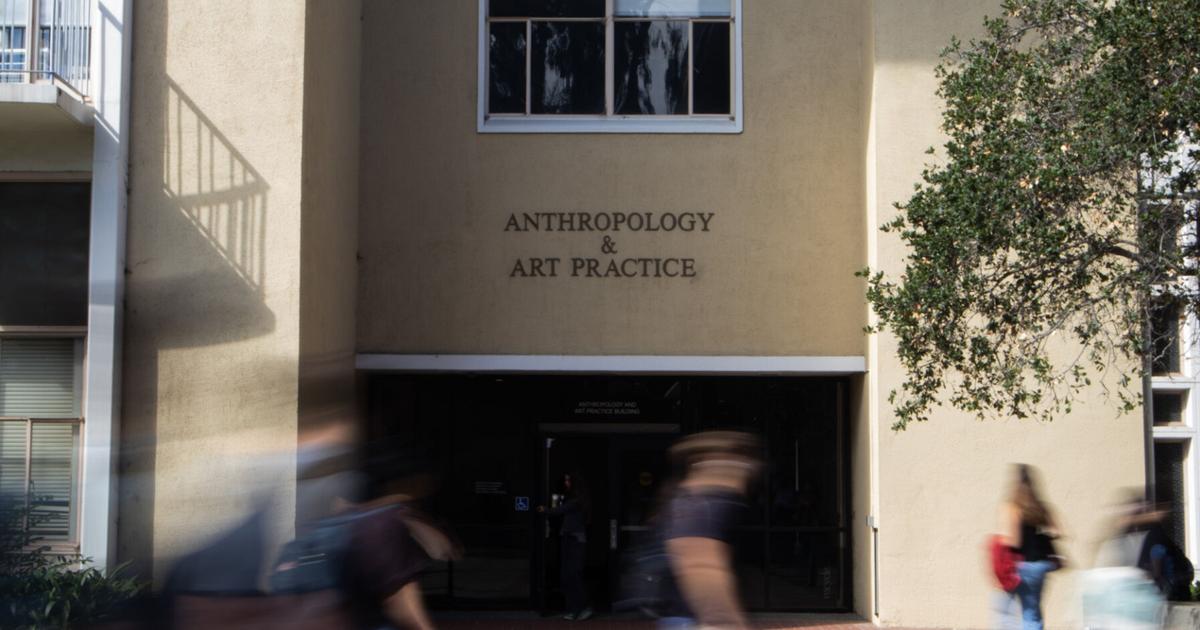
The California Language Archive, housed in UC Berkeley’s linguistics department, is the largest, most comprehensive collection of records of indigenous language materials in North America.
The archive has preserved California’s dying indigenous languages since 1949. It has built its records through dialect surveys and donations for many decades and has begun sponsoring similar preservation efforts in Latin America.
The archive began under Mary Haas, who was the first director of the linguistic department’s Survey of California and Other Indian Languages — an organization whose goal was to create a robust resource as well as rebuild and support indigenous communities using their documentation.
According to Zachary O’Hagan, manager of the CLA, dialect and survey donations are the backbone of the archive and typically come from outside researchers and indigenous people or organizations.
In recent years, many resources in the archives have been digitized and made more accessible to those unable to visit UC Berkeley in person.
In the past, the archive has been funded by the National Science Foundation and the National Endowment for the Humanities, such as the NEH grant “Archiving legacy documentation from southern California and the southwest: Toward a new collaborative model” from 2020-23.
Under the current federal administration, the NSF is seeing massive funding cuts across all categories. As such, programs such as the NSF Dynamic Language Infrastructure – NEH Documenting Endangered Languages program that support archives like this one may be at risk.
While O’Hagan acknowledges that federal funding cuts “definitely casts a pall over the whole landscape,” he said the archives themselves are not in immediate danger of losing direct resources as a result of NSF cuts.
Instead, they have been operating under nonfederal grant resources that will last through 2027, including a grant from Arcadia, a British philanthropic organization, and the campus linguistics department itself.
For Wesley Leonard, an associate professor of ethnic studies at UC Riverside and frequent attendee of CLA’s annual workshop, language reclamation is more than just a way of communication — it’s an entire identity. For him, such funding losses point toward a shift in national priorities.
“The loss of funding … has been devastating,” Leonard said. “I think (museums and archives) are not being cut because there isn’t enough money in the world; things are being cut for political reasons. I find it disheartening and horrible.”
This article was authored by Chioma Onyema and Scarlett Huang, participants in The Daily Californian’s High School Journalism Intensive. Onyema’s participation was made possible by the Contra Costa Youth Journalism program.